Every dog owner understands the sinking feeling when an unexpected accident happens, whether it’s a minor cut from a broken branch or a sudden bout of tummy trouble. In those moments, having a well-stocked and accessible dog first aid kit is not just convenient, it can be life-saving. Quick action can stabilize your dog until you reach professional veterinary care.
Preparing a custom DIY dog first aid kit ensures you have exactly what your specific pet needs, rather than relying on an impersonal, generic store-bought option. This guide will walk you through compiling the essential supplies, organizing your kit for quick access, and including critical information. Don’t wait for an emergency; let’s gather the materials and build your dog’s safety net today.
Why a Prepared Kit is Critical for Pet Safety
A first aid kit provides you with the means to manage a sudden injury or illness, preventing a minor incident from escalating into a major emergency. It gives you the necessary tools to clean wounds, stop bleeding, and provide temporary support for a sprain. Being prepared reduces panic and allows you to respond calmly and effectively.
The Golden Rule: Stability, Not Cure
It is important to remember the purpose of a dog first aid kit. It is designed to provide immediate, temporary care. Your goal is always to stabilize your dog’s condition and prevent further harm until you can get professional veterinary treatment. Never attempt to diagnose a serious condition or administer medications beyond basic first aid without a vet’s instruction.
Life Saving Measures
The contents of your emergency pet kit give you the ability to perform life-saving measures such as applying a muzzle for safe handling or stabilizing a broken limb. Think of it as your toolkit to buy precious time until professional help is secured.
Essential Supplies to Include in Your Kit
A complete DIY dog first aid kit should be divided into three main categories: necessary contact and information, basic medical supplies, and non-medical support items. This structure ensures you can find what you need quickly during a stressful situation.
Vital Contact and Information Card
This information is the most important part of your kit and should be secured on the lid or inside the top compartment. It saves valuable time during a crisis.
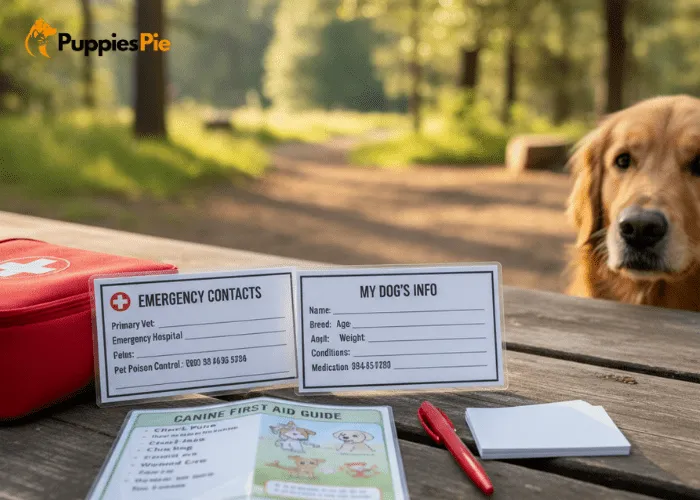
1. Veterinarian’s Contact: Your primary vet’s name, phone number, and address.
2. Emergency Vet Hospital: The number and address for the nearest 24/7 animal hospital.
3. Pet Poison Control: The national Pet Poison Control hotline number.
4. Your Dog’s Information: Your dog’s name, breed, age, weight, existing medical conditions, and current medications.
5. First Aid Guide: A small, laminated card or pamphlet outlining basic canine first aid procedures (e.g., how to check a pulse, how to deal with choking).
Medical and Wound Care Items
These supplies allow you to clean, dress, and protect wounds or areas of injury. They are the core of your emergency pet kit.
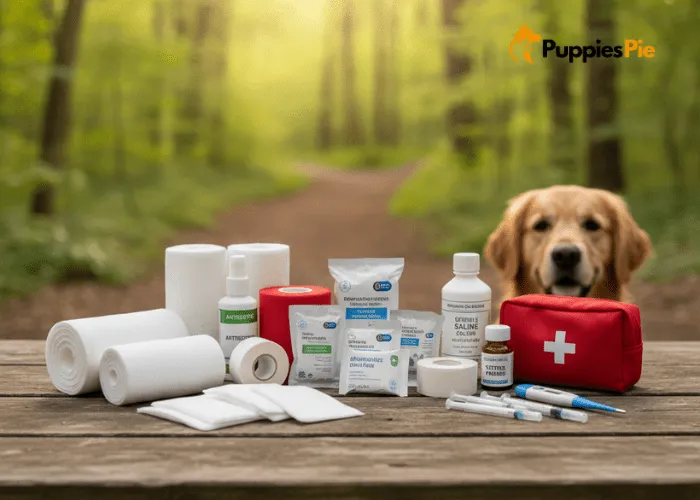
1. Gauze Pads and Rolls: Various sizes for cleaning and wrapping wounds.
2. Non-Stick Dressings: To cover wounds without sticking to the injury.
3. Vet Wrap/Self-Adhesive Bandage: Essential for securing dressings. It sticks to itself, not your dog’s fur.
4. Antiseptic Wipes/Wash: Povidone-iodine solution (like Betadine) or chlorhexidine. Never use hydrogen peroxide as it can damage tissue.
5. Medical Tape: For securing gauze and non-stick bandages.
6. Styptic Powder or Cornstarch: To stop bleeding from minor nail quick cuts or small superficial wounds.
7. Sterile Saline Solution: For flushing debris from eyes or cleaning wounds gently.
8. Digital Rectal Thermometer: Never use a glass one. Normal temperature is 100°F to 102.5°F.
9. Syringes (Needleless): For administering liquid medication or oral hydration.
Non-Medical and Support Tools
These are tools to safely handle your dog, remove foreign objects, and prepare the injury site.
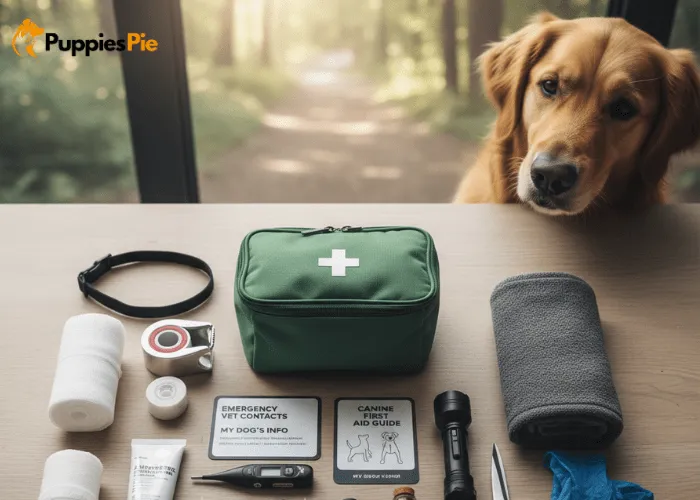
1. Scissors (Blunt-Tipped): To cut gauze, tape, or to safely cut fur away from a wound.
2. Tweezers: To safely remove splinters, ticks, or foreign objects.
3. Towels/Blanket: A small, clean towel or blanket to provide warmth (for shock) or to use for cleaning.
4. Flashlight: Essential for examining wounds in dark areas or during the night.
5. Latex or Vinyl Gloves: To maintain sterility when treating a wound and protect yourself.
6. A Simple Muzzle: A fabric muzzle or a piece of soft gauze to fashion a makeshift one. Even the sweetest dog may bite when in pain.
For routine grooming essentials beyond emergencies, you can also check out our complete guide on creating a practical Dog Nail Care Kit at home.
Choosing and Organizing Your Kit Container
The best container for your dog first aid kit is durable, airtight, waterproof, and clearly marked. Its size should be manageable enough for travel but large enough to hold all the essential items without being crammed.
Selecting the Ideal Container
A small, hard-sided toolbox, a latching plastic storage container, or a durable tackle box works perfectly. A bright color (like red or orange) makes it easy to spot in an emergency. Ensure the lid has a secure clasp to prevent accidental spills or opening, especially if your dog is curious.
For car travel, a soft-sided nylon bag with multiple compartments (like a gear bag) is a great option. It can be easily stored in the trunk or under a seat and has the benefit of being flexible. Always label the outside of the container clearly with “PET FIRST AID KIT” using a permanent marker.
Organization for Quick Access
Organize your DIY dog first aid kit using clear pouches or small, labeled zip-top bags within the main container. Divide supplies by function: “Wound Care,” “Instruments,” and “Medications.” This organization saves valuable seconds when you are under stress.
Place the emergency contact information right on top. Items that expire or need frequent checking, such as antiseptic wipes and medications, should be easily visible. Tools like scissors and tweezers should be placed in a dedicated, secured section to prevent accidental injury.
Advanced Additions for Specific Needs
Depending on your dog’s breed, age, and activities, you may need to customize your emergency pet kit with specific items. A hunting dog, for example, will have different needs than an apartment-dwelling lap dog.
Travel and Outdoor Essentials
If you hike, camp, or travel frequently, include items to deal with outdoor hazards.
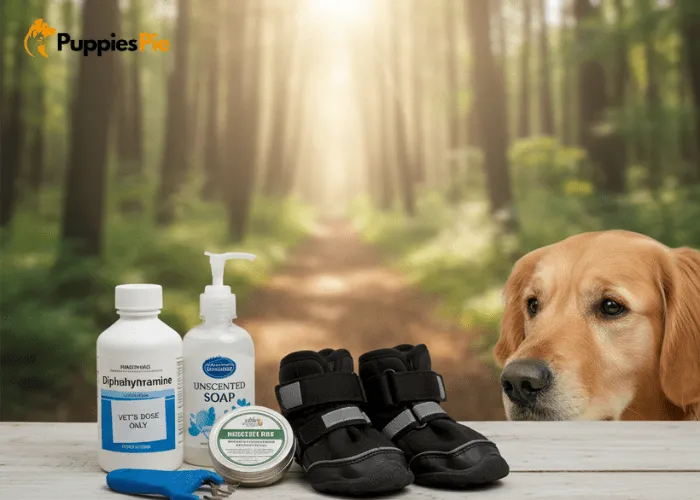
1. Benadryl (Diphenhydramine): Use only as directed by your vet, but it can be essential for treating allergic reactions (like bug bites).keep your dog protected from fleas during outdoor activities, you may also find our simple Homemade Flea Spray guide extremely useful.”
2. Tick Remover Tool: A specialized tool designed to safely remove ticks without leaving the head embedded in the skin.
3. Paw Protection: Dog booties or a paw wax for protecting pads from extreme temperatures (hot pavement or ice).
4. Liquid Hand Soap: Can be necessary for decontaminating after contact with toxic substances like skunk spray.
Customizing for Chronic Conditions
If your dog has a known condition, your dog first aid kit must include a backup supply of their specific treatment.
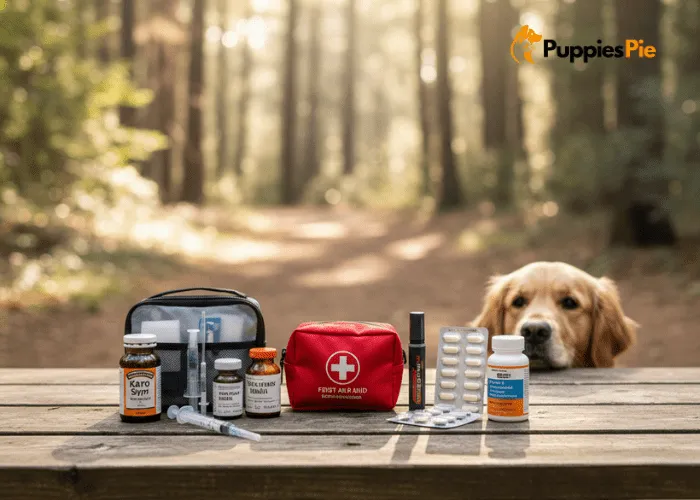
1. Diabetic Dogs: Extra insulin (stored according to instructions), syringes, and an easily administered sugar source (e.g., Karo syrup) for hypoglycemic episodes.
2. Allergic Dogs: Epinephrine auto-injector (if prescribed by a vet) and a supply of their prescribed allergy medication.
3. Arthritic Dogs: A supply of their prescribed anti-inflammatory medication in case they run out or drop a dose.
Regular Maintenance and Replenishment
A DIY dog first aid kit is only useful if its contents are up-to-date and fully stocked. Set a reminder to perform a full audit of your kit at least twice a year.
Checking Expiration and Supply Levels
Discard any items that have passed their expiration date, especially medications, antiseptic solutions, and sterile wipes, as they can lose their effectiveness or become harmful. Check that all medications and ointments have been stored at the correct temperature.
Ensure all single-use items, such as sterile gloves and bandages, are accounted for and fully stocked. After any incident where you had to use the kit, no matter how minor, immediately replace the used items. This is a crucial step in maintaining preparedness.
Reviewing Knowledge and Procedures
A quick review of your canine first aid procedures is as important as checking the supplies. Take a few moments to review the emergency contact card and the first aid guide. Familiarize yourself with basic procedures, such as how to safely check for a pulse, administer basic CPR, or properly fit the muzzle you included in the kit. The better you know the procedures, the calmer you will be when you need them most.
For everyday health maintenance beyond emergencies, don’t miss our easy DIY guide on making Homemade Dog Toothpaste for safe and effective dental care.
Conclusion
Assembling a personalized DIY dog first aid kit is one of the most responsible and loving actions you can take for your pet. You have created a comprehensive, organized system designed to provide life-saving care in the critical moments before professional help arrives. By including essential information, medical supplies, and support tools, you have established a vital safety net for your companion. Now that your kit is complete and safely stored, you can enjoy your time with your dog with greater peace of mind, knowing you are prepared for almost anything.