If you’ve ever winced at the sound of your dog’s nails clicking on the floor, you’re not alone. Regular nail trimming is one of the most overlooked parts of grooming, mostly because many pet owners dread it. The good news? You can skip the groomer visits and expensive tools by building a DIY Dog Nail Care Kit right at home.
This guide shows you exactly how to put it together, how to use it safely, and how to turn nail care into a stress-free routine for both you and your dog.
Why Nail Care Matters for Dogs
Long nails aren’t just noisy, they’re uncomfortable and even dangerous. Overgrown nails can:
- Change how your dog walks, straining joints and paws.
- Curl into the paw pad, causing pain or infection.
- Make standing or running awkward, especially on hard floors.
Keeping nails short helps maintain good posture, prevents injuries, and saves you from unexpected vet bills.
With a DIY nail care kit, you can handle everything at home, safely, calmly, and without breaking the bank.To keep your dog’s overall grooming routine complete, you can also try a gentle DIY Dog Shampoo for clean, healthy skin and coat.
What You’ll Need for a DIY Dog Nail Care Kit
No fancy salon tools needed. Just practical, affordable items you can find at home or in a local pet shop.
Essential Tools:
- Dog nail clippers or grinder: Your main trimming tool.
- Nail file or emery board: To smooth edges after clipping.
- Styptic powder or cornstarch: Stops bleeding instantly if you cut too short.
- Towel or mat: Keeps your dog steady and comfortable.
- Dog treats: Your secret weapon for cooperation.
Optional Add-ons:
- LED flashlight: Helps you see the quick (especially on dark nails).
- Muzzle: If your dog tends to squirm or nip.
- Brush or cloth: To clean away nail dust after trimming.
Keep everything in a pouch or box so it’s organized and easy to grab for quick sessions.
Step-by-Step Guide to Building and Using Your Kit
Step 1 – Choose the Right Clippers or Grinder
Not all tools fit every dog.

- Scissor-style clippers: Best for small to medium breeds.
- Guillotine-style clippers: Good for quick, precise cuts.
- Grinders (rotary tools): Ideal for dogs with thick or black nails.
Grinders reduce the risk of cutting too deep, but some dogs dislike the vibration or noise, so introduce it slowly.
Step 2 – Add a Nail File

Step 3 – Include Styptic Powder
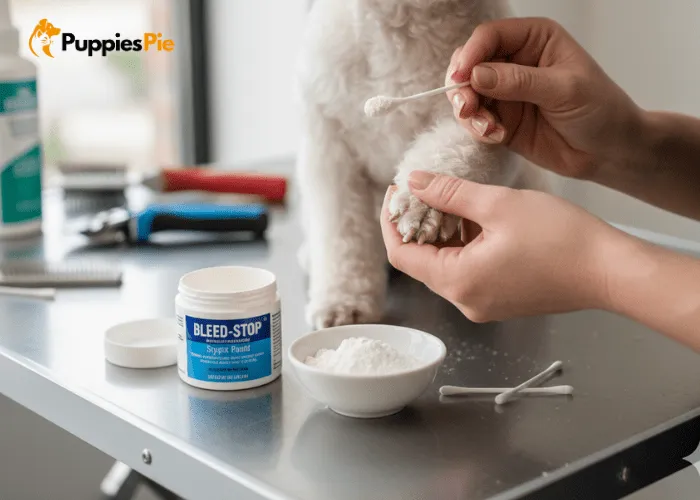
Step 4 – Prepare a Non-Slip Surface

Step 5 – Stock Up on Rewards

Every successful trim deserves a treat. Use small, soft snacks to keep your dog’s attention and reinforce calm behavior.
How to Trim Your Dog’s Nails Safely
1. Get your dog comfortable. Let them sniff the tools first.
2. Hold the paw gently but firmly. Keep your thumb under the pad and fingers on top.
3. Cut small bits at a time. Never go too close to the pink area (the quick).
4. Use a flashlight for dark nails. Stop when you see a lighter, chalky texture, that’s just before the quick.
5. File the edges. Smooth them out to prevent scratching.
6. Reward immediately. Keep it positive, every time.
Short, calm sessions work far better than forcing it all at once.
Make Your Own Nail Grinder (Optional DIY Project)
If you like tinkering, you can build a simple nail grinder using affordable tools.
You’ll need:
- A small rotary tool (like a Dremel)
- Fine sanding bands (180–240 grit)
- Rubber grip or padding for control
Attach the sanding band, set the speed low, and test it gently. Move the grinder in short strokes and avoid staying on one spot too long, friction creates heat that can hurt your dog’s nail.
It’s a great low-cost alternative to store-bought grinders, especially if you already own a rotary tool.
Keeping Nail Trimming Stress-Free
Let’s be honest, some dogs act like you’re trying to steal their soul when you pick up clippers. But with patience, you can make it easier over time.
Try this routine:
- Handle your dog’s paws daily without trimming.
- Tap the clippers near their paw so they get used to the sound.
- Reward calm behavior, even when you don’t trim.
- Do one paw per session if needed, no rush.
Dogs learn through repetition and positive association. Stay calm, go slow, and celebrate small wins.
When and How Often to Trim
It depends on your dog’s lifestyle:
- Indoor dogs: Every 3–4 weeks.
- Outdoor or active dogs: Every 6–8 weeks (natural wear helps).
- Toy breeds or seniors: Often need more frequent trims.
A quick test: if you hear clicking on floors, it’s time. Also check dewclaws, those side nails don’t wear down naturally and grow fast.
Safety Tips for DIY Dog Nail Care
A few simple habits keep things smooth and safe:
- Trim small bits at a time, don’t rush.
- Avoid trimming after a bath (wet nails are softer and split easily).
- Always have styptic powder ready before starting.
- Use bright lighting so you can see the nail clearly.
- If your dog panics, stop immediately and try later.
Patience matters more than precision. The goal is to keep your dog calm and safe, not to finish in record time.For unexpected nicks or minor injuries during trimming, having a DIY First Aid Kit nearby makes the process even safer and stress-free.
Cleaning and Maintaining Your Nail Kit
After each use:
- TWipe clippers with rubbing alcohol or disinfectant.
- Replace grinder sanding bands often.
- Store tools in a dry place to prevent rust.
A clean kit not only lasts longer but also prevents infections if your dog has a small cut or scratch.
Cost Breakdown (Estimated)
Here’s how affordable a full kit can be:
Item
Clippers or Grinder
File or Emery Board
Styptic Powder
Dog Treats
Mat or Towel
Estimated Cost
$10–15
$2
$3
$3–5
Free–$5
Total: around $25 or less, the price of two professional nail trims.
Why DIY Is Worth It
Aside from saving money, doing nail trims yourself builds trust. Your dog learns that grooming isn’t scary, and you gain confidence with each session. It also gives you control, no rushed appointments, no stressed-out pets, and no waiting weeks for an opening at the groomer.
A DIY nail care kit puts you in charge of your dog’s comfort and health, and that’s a win for both of you.
Troubleshooting Common Issues
If you cut the quick: Stay calm, apply styptic powder, and comfort your dog. It looks worse than it is.
If nails split or crack: File them smooth, skip trimming for a few days, and keep them clean.
If your dog resists: Go back to basics, touch paws gently without trimming until they relax.
If nails are very long: Trim a small amount weekly to slowly recede the quick over time.To soothe dry or irritated paws after trimming, applying a natural Dog Paw Balm can help moisturize and protect your dog’s paw pads.
Consistency is the secret, small steps build lasting results.
Conclusion:
A DIY dog nail care kit saves money, stress, and unnecessary trips to the groomer. With just a few affordable tools, clippers, a file, styptic powder, and treats, you can handle nail maintenance safely and confidently at home.
Once you’ve done it a few times, it stops feeling like a chore and starts feeling like a bonding routine. Your dog stays comfortable, healthy, and stress-free, and your floors stay scratch-free.