Bathing a dog is one of those chores that always feels messier than it should. You set down the shampoo, reach for the towel, knock over the brush, and somehow end up with a soaked floor and a half-clean dog. A DIY dog bath caddy solves that chaos instantly. It keeps every tool in one place, cuts down the stress, and turns bath time into a predictable little routine instead of a frantic scavenger hunt.
This guide walks you through building your own bath caddy from scratch, stocking it properly, choosing the right materials, and maintaining it so it lasts. Everything is simple, accessible, and made to work in real homes with real pets—not in those unrealistic, spotless grooming studio photos.
Why a Dog Bath Caddy Makes Bath Time Easier
A bath caddy replaces clutter with intention. When you can reach everything without searching, bath time stops feeling like a rushed emergency drill.
It also helps you avoid using expired products, prevents contamination, and makes traveling to the tub or yard faster. The goal isn’t perfection; the goal is predictability.
Materials You’ll Need for a DIY Dog Bath Caddy
The caddy you build should match your home, your dog’s size, and how often you bathe them. Start with dependable materials that can handle moisture.
Core materials
• Wooden crate, plastic bin, or small toolbox
• Waterproof liner or clear sealant
• Small containers for organizing (jars, mesh cups, silicone holders)
• Hooks or adhesive clips
Tools you might want
• Sandpaper
• Paint or stain
• Waterproof sealant
• Glue gun
• Drill (for wooden caddies only)
Build Your Custom Dog Bath Caddy Step-by-Step
This part is simple and surprisingly fun. You’re essentially making a grooming station on the go, tailored to the way you work rather than the way stores want you to.
Step 1: Pick the right base
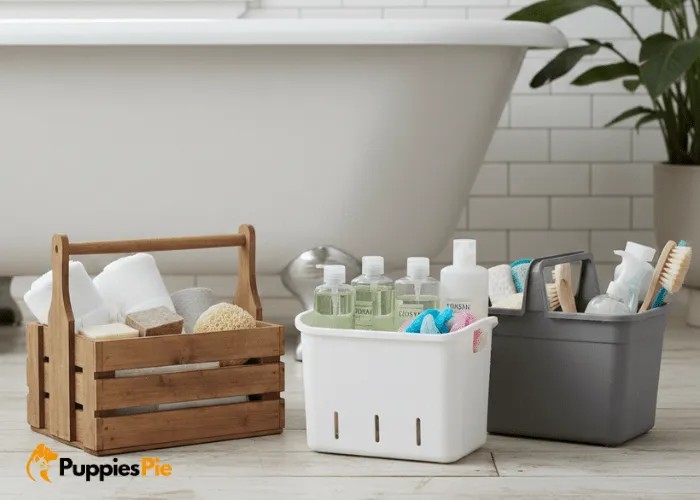
Choose a container that fits your space. A handled wooden crate works well if you want it to look stylish and live permanently beside the tub.
If you prefer something lightweight, a plastic shower caddy or cleaning tote is perfect. It handles moisture, requires no sealing, and rinses clean.
Step 2: Prep and seal the surface
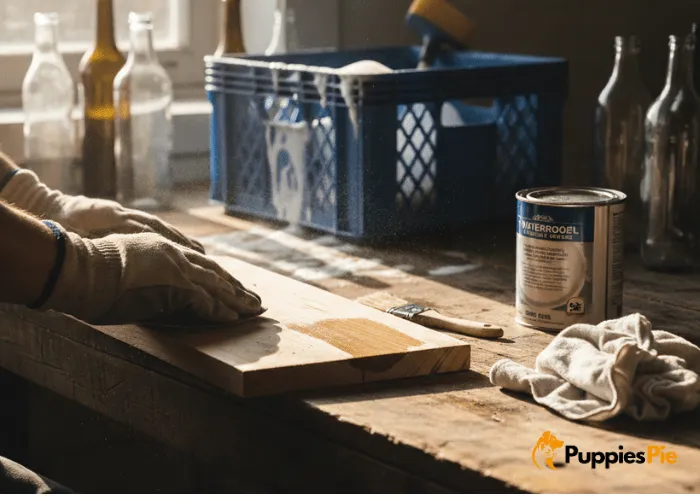
If you’re using wood, sand lightly so the finish won’t splinter. Wipe it down and coat with waterproof sealant to protect it from wet bottles and spills.
For plastic, just clean it thoroughly with warm soapy water to remove any residue.
Step 3: Add organizers for smaller tools
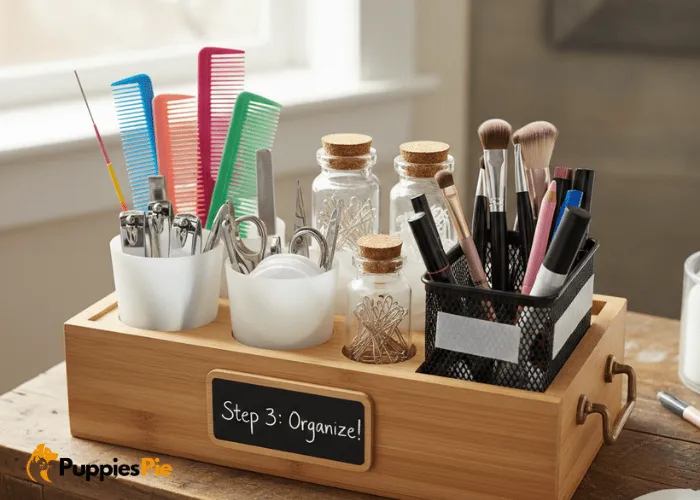
Loose tools get lost. This fixes that.
Use silicone cups, small jars, or mesh pencil holders to sort combs, cotton pads, and nail tools. Attach them with glue or adhesive strips so they stay put even when the caddy moves.
Step 4: Create sections for bottles
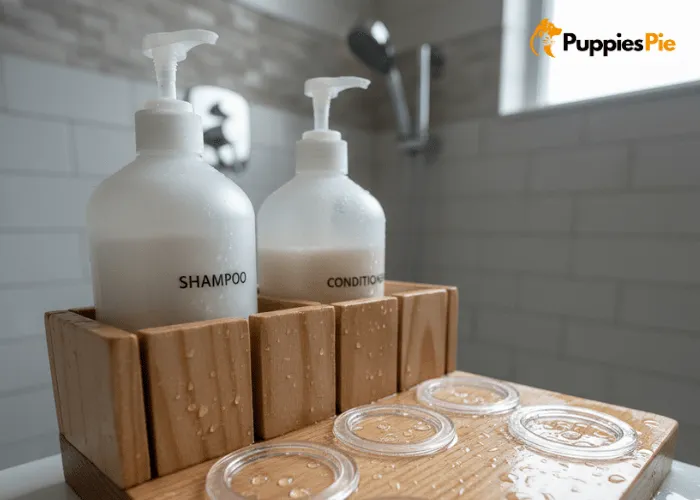
Shampoo and conditioner need a stable place.
If your base doesn’t have compartments, add dividers from thin scrap wood or glue down silicone bottle grips. Anything that keeps slippery bottles from tipping is worth the effort.
Step 5: Add hooks or clips
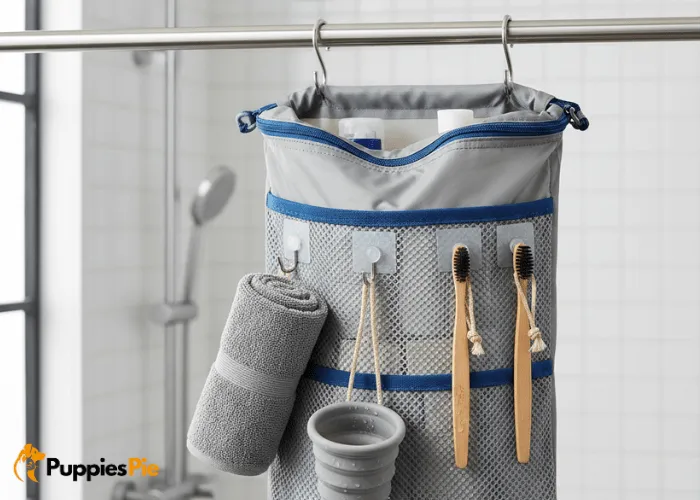
These help you store towels, brushes with loops, and collapsible cups.
Place hooks on the outside so you maximize interior space and keep wet items from soaking the rest of the caddy.
What to Stock Inside Your Dog Bath Caddy
A bath caddy only works if it holds exactly what you need—not everything you own. Think minimal but complete.
Bath essentials

Dog shampoo and conditioner
Deshedding or smoothing brush
Microfiber towel
Cup for rinsing
Rubber grooming glove
Helpful extras
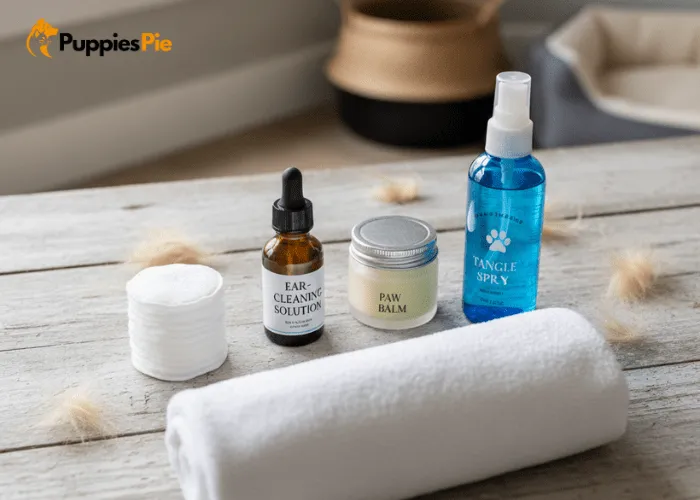
Cotton pads
Ear-cleaning solution
Paw balm
Tangle spray
Small drying cloth for faces
Tips for Choosing the Best Dog Bath Products
Every dog’s coat behaves differently. Your caddy should reflect your dog, not generic advice.
For sensitive skin
Go fragrance-free and avoid bright colors that signal heavy dyes. Look for oatmeal, aloe, or chamomile blends.
If your dog has recurring rashes, ask your vet about medicated options before experimenting.
For heavy shedders
Conditioner is your best friend here. Use a detangling conditioner and a brushing glove to break up loose fur during the bath.
A silicone scrubber also helps lift undercoat without irritating skin.
Organizing Your Bath Caddy for Maximum Efficiency
A caddy is only useful if it feels intuitive. Arrange items based on how you move during bath time.
Front section: the immediate tools
Put shampoo, cup, and brush in the front because those are your first reaches.
Your dog won’t wait while you shuffle through containers.
Middle section: secondary tools
Store conditioner, ear cleaner, and towels here.
They need to be close but not cluttering the essentials.
Side hooks and pocket
Use these for gloves, cloths, or anything that gets wet.
Pockets also hold snacks if your dog bathes best with bribes.
Extra Features to Add if You Want a More Advanced Caddy
You can keep things simple or level up. There’s no wrong version.
Built-in drying shelf
Glue a mesh panel to the inside wall for items that need airflow.
This keeps brushes from growing mold.
Anti-slip base
Stick rubber feet on the bottom to keep the caddy steady on wet floors.
This is especially helpful if your dog bathes outdoors or on tile.
Keeping Your Dog Bath Caddy Clean
A caddy that handles water and products needs occasional maintenance.
The goal is quick cleaning, not perfection.
Weekly wipe-down
Wipe the inside with warm soapy water to remove residue.
Check for sticky conditioner spills—they attract dust fast.
Monthly deep clean
Take everything out and rinse every container.
Dry completely to avoid mildew and keep your tools fresh.
How to Use Your Caddy for Outdoor Baths
A bath caddy shines outdoors. You’re mobile, the dog has space, and you don’t stress about splashing.
What changes for outdoor baths
Add a portable water sprayer, extra towel, and collapsible bowl.
Sun dries dogs faster, so skip the conditioner if you’re in a hurry.
Backyard-friendly tools
Use rubber-soled shoes for better traction.
Keep treats in a sealed jar to avoid attracting ants or bees.
Ideas for Customizing Your Dog Bath Caddy
A good caddy feels personal yours should match your routines, your dog, and your home.
Add labels
Label each section so everyone in the house knows where things belong.
It keeps the caddy organized even after a messy bath.
Personal touches
Paint the crate in your dog’s colors or add their name.
Decorative touches make the caddy feel like part of your home instead of “just storage.”
Budget-Friendly Alternatives to a Handmade Caddy
If building from scratch isn’t your thing, you still have great options.
Repurpose an old cleaning tote
Clean it, add dividers, and you instantly have a functional caddy.
Most cleaning totes already have compartments shaped for bottles.
Use a shower caddy
Metal or plastic shower caddies are perfect for bath tools.
They’re lightweight, waterproof, and usually under ten dollars.
When to Upgrade or Replace Your Bath Caddy
Caddies take a beating over time. You’ll eventually need repairs or a replacement.
Signs you should refresh it
If the caddy smells, warps, or keeps tipping, it’s past its prime.
Replace cracked silicone grips and tighten hooks regularly.
When your supplies change
If you add medicated products or different brushes, reorganize the layout.
A caddy should evolve with your dog’s needs.
Benefits of Using a Bath Caddy for Nervous Dogs
Bath-shy dogs rely on routine, and routine comes from consistency.
A caddy helps you move smoothly and calmly, which transfers to your dog.
Reduces abrupt movements
When everything is within reach, you don’t have to leave your dog’s side.
This builds trust and prevents panic.
Helps with reward-based baths
Keep treats, lick mats, or peanut butter in sealed containers.
Rewarding in small steps eases anxiety and makes baths predictable.
Final Checklist for a Ready-to-Use Dog Bath Caddy
This quick list keeps you stocked without overthinking it.
Essentials to confirm
• Shampoo
• Conditioner
• Microfiber towel
• Brush
• Rinse cup
• Ear cleaner
• Cotton pads
• Paw balm
• Treats
• Small cloth for drying faces
Optional add-ons
• Detangler spray
• Nail file
• Portable sprayer
• Wet-brush alternative
• Extra gloves
Conclusion
A DIY dog bath caddy isn’t fancy—it’s practical. It gives you one organized place for everything you need and cuts bath-time stress in half. When your tools are sorted and easy to reach, you can focus on the dog instead of the mess. Build it once, stock it well, and refine it as you learn what works for your home and your dog’s coat. With a little effort, bath time becomes predictable, calm, and maybe even enjoyable.