If you’ve got an active dog and a yard, you know how tricky it can be to balance freedom and safety. Buying a ready-made fence gate can get expensive fast, and most of them don’t even fit perfectly. But with a few pallets, some basic tools, and a free afternoon, you can build a sturdy, good-looking dog fence gate that does the job just as well, if not better.
This guide walks you through everything: where to find the right pallets, how to dismantle and cut them safely, how to assemble a solid gate frame, and even how to make it look good enough to match your yard. Whether you’re building a full enclosure or replacing a single gate panel, this DIY method is affordable, eco-friendly, and satisfying to build with your own hands.
Why Build a Dog Fence Gate from Pallets
Let’s start with the big question, why pallets? Because they’re cheap, sturdy, and versatile. Pallets are designed to hold heavy loads, so when reinforced correctly, they’re strong enough to contain even large dogs.
Here’s why this project makes sense:
- Cost-effective: You can find free pallets from warehouses or hardware stores.
- Eco-friendly: Reusing wood keeps waste out of landfills.
- Customizable: You can tailor the height, width, and finish.
- DIY-friendly: All you need are basic tools and patience.
In short, it’s a smart way to build something functional and durable without spending hundreds of dollars on store-bought gates.
Tools and Materials You’ll Need
Before diving in, get everything in one place. Here’s your checklist:
Materials:
- 2–3 wooden pallets (standard size, heat-treated)
- 2 heavy-duty hinges
- 1 gate latch or lock
- Wood screws (1.5” to 2”)
- Sandpaper or an electric sander
- Optional: metal brackets for reinforcement
- Optional: outdoor paint, varnish, or wood sealant
Tools:
- Hammer or crowbar (for dismantling pallets)
- Electric drill or screwdriver
- Measuring tape
- Saw (hand saw or circular)
- Level
- Pencil and safety gloves
These are basic tools, nothing fancy or expensive. If you already do small home repairs, you probably have most of them lying around.
Step-by-Step Guide to Building the Gate
Step 1 – Choose the Right Pallets
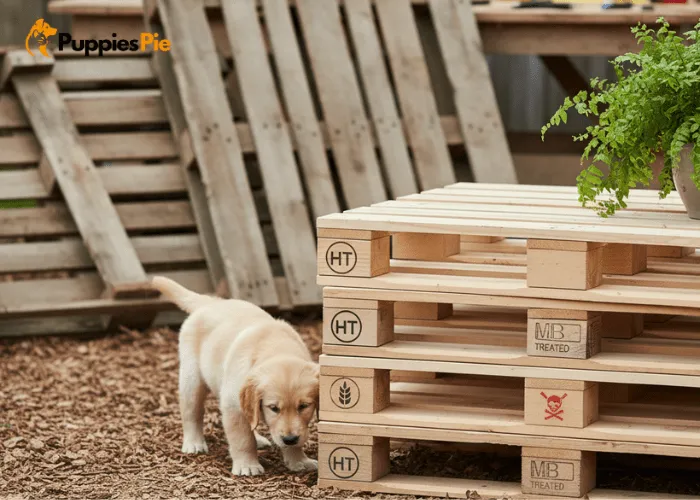
Not all pallets are created equal. Look for those marked “HT” (heat-treated) instead of “MB” (methyl bromide), as the latter indicates chemical treatment that can be harmful to pets. Make sure the wood isn’t cracked, splintered, or rotting.
Step 2 – Take Apart or Trim the Pallet
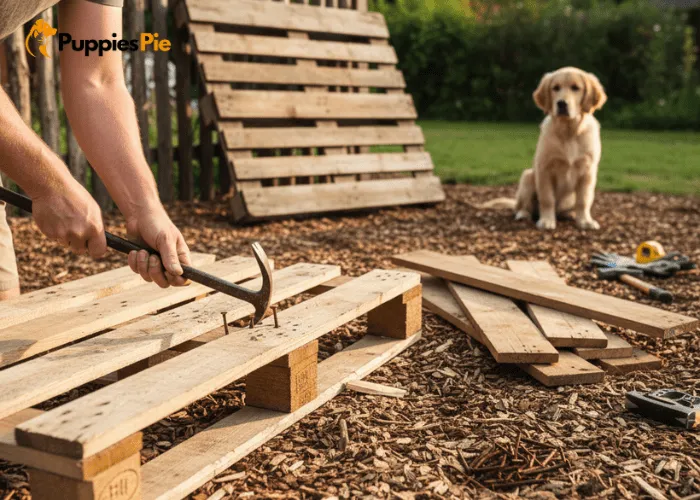
Decide whether to use the pallet as a whole or cut it down to size. For smaller dogs, you can often use a full pallet as the gate. For larger or taller breeds, you might need to combine two pallets vertically or add height extensions.
If dismantling:
1. Use a crowbar or hammer to loosen the planks carefully.
2. Remove nails and screws.
3.Keep the slats intact, they’ll form the main gate panels later.
Step 3 – Measure and Frame It
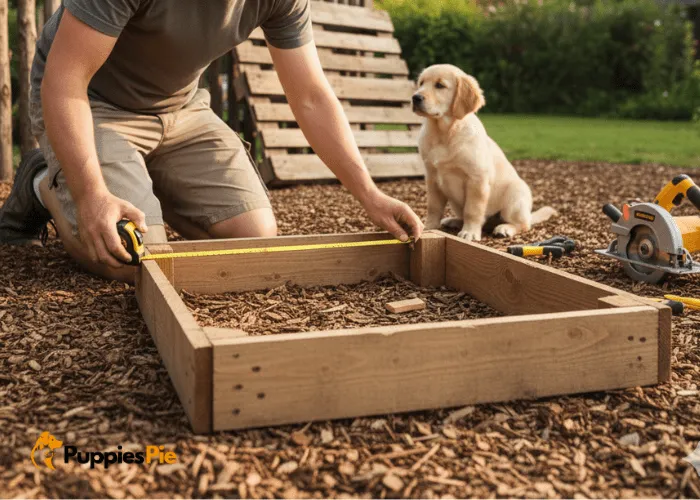
Measure your gate opening. Subtract about 1 inch from the total width so the gate can swing freely. Cut your pallet boards or slats to match the size you need.
Then, build a rectangular frame using 2×4 wood or the thicker pallet planks. The frame should be slightly smaller than the gate opening but sturdy enough to hold up under daily use. Use screws and brackets to keep it square.
Step 4 – Attach the Slats
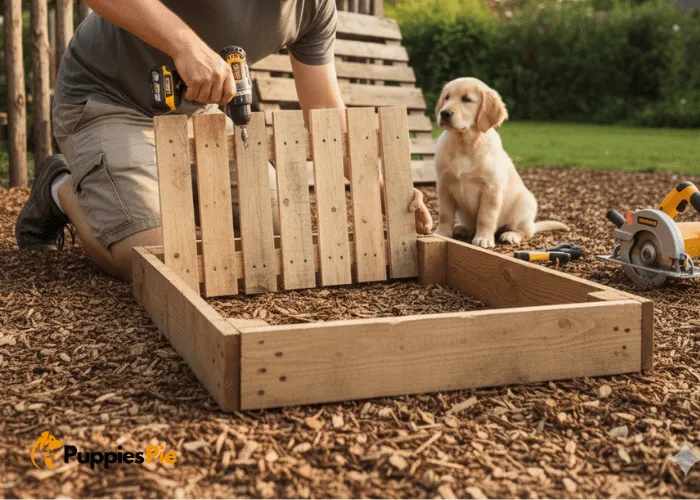
Lay the frame flat on the ground. Position the pallet boards vertically across the frame, spacing them evenly for a classic picket look, or side by side for full coverage. Secure each slat with screws, two per side, to make sure they stay solid.Want a rustic look? Leave small gaps between boards. Want full privacy? Tighten the spacing.
Step 5 – Add Hinges and Latch
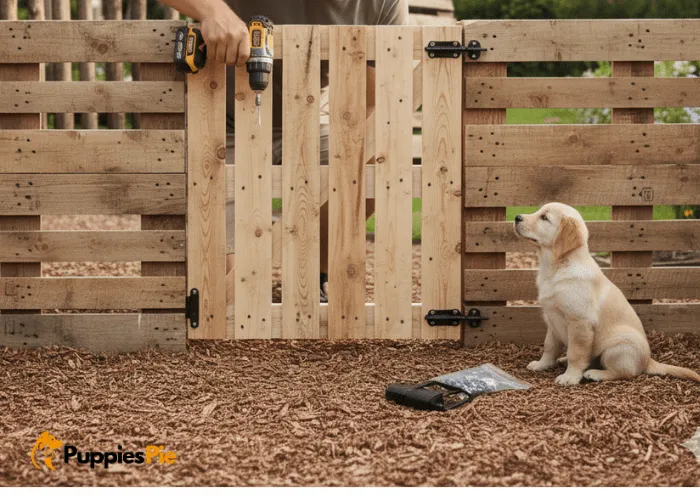
Mark hinge placement about 6–8 inches from the top and bottom of the gate. Drill pilot holes before attaching the hinges to avoid splitting the wood. Then, mount the gate to the fence post using screws that can handle outdoor weather.
Next, attach your latch on the opposite side, make sure it aligns perfectly so the gate closes securely. If you have a large dog, go for a locking latch or bolt system to prevent accidental escapes.
Step 6 – Sand and Seal the Wood
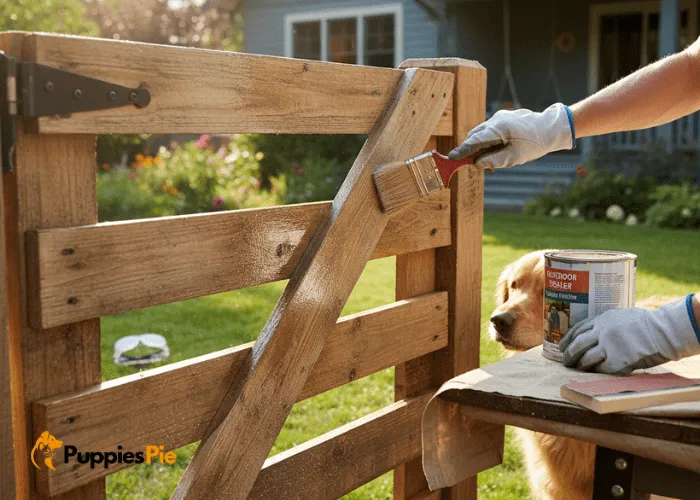
Before you call it done, give your gate a quick sanding. Pallets can be rough, and you don’t want your dog brushing up against splinters. After sanding, apply outdoor paint, varnish, or sealant to protect the wood from rain and sun.
If you want a natural look, go with a clear sealant. For something stylish, try a matte black or deep brown finish.
Safety Tips to Keep in Mind
Building with pallets is easy, but a few small mistakes can make the gate unsafe or short-lived. Here’s what to watch for:
- Avoid treated wood with chemicals. Always check for the “HT” stamp.
- Secure all screws tightly. Loose hardware can catch fur or paws.
- Smooth every surface. Splinters and rough edges are no fun for pets or kids.
- Test the swing. The gate should open and close smoothly, without dragging.
- Weatherproof it. A good coat of sealant prevents warping and mold.
If you live in a rainy area, consider adding a small metal strip at the bottom of the gate to reduce water damage over time.
Adding a Professional Touch
Even though it’s a DIY project, there’s no reason it can’t look clean and well-built. Here are a few tricks to make it look like a store-bought gate:
- Add diagonal braces for that classic barn-door look and extra support.
- Paint it to match your fence or house trim.
- Install decorative hardware like wrought iron hinges or antique handles.
- Use a top arch or curve for a custom aesthetic.
These details cost little but make the final result feel more polished and intentional.
Budget Breakdown (Approximate Costs)
Here’s what the average DIYer spends on this project:
- Pallets: Free to $10 each
- Hinges and latch: $15–25
- Screws and brackets: $10
- Paint or sealant: $15–20
Total: Around $40–60, far cheaper than the $200+ you’d pay for a store-bought gate.
And the best part? You can build it in a single afternoon.
Benefits of Using Pallets for a Dog Gate
Durable and Strong
Pallets are built to carry weight, usually hundreds of pounds, which makes them ideal for creating a secure barrier for dogs.
Environmentally Friendly
Every pallet you repurpose means less waste. It’s a small but real contribution to sustainability.
Easy to Customize
Need a taller gate for your Great Dane or a shorter one for your Beagle? Pallets let you adjust dimensions easily without specialized tools.
Repairable and Replaceable
If one plank breaks, swap it out. No need to replace the entire gate, another reason this project lasts years.
Common Mistakes to Avoid
- Skipping the sanding step: Even if you’re in a rush, don’t. Splinters can hurt both you and your dog.
- Using the wrong hinges: Weak hinges can sag over time, making the gate uneven.
- Not sealing the wood: Pallets absorb moisture easily, which leads to rot.
- Misaligned latch: Take a few extra minutes to align everything perfectly, it saves frustration later.
How to Maintain Your Pallet Dog Gate
- Inspect monthly: Tighten screws and check for loose hinges.
- Reapply sealant yearly: Keeps the wood water-resistant.
- Clean regularly: A quick rinse with mild soap keeps it looking fresh.
- Check latch alignment: Wood can expand or shrink with weather.
If you ever notice mold or deep cracks, replace the damaged boards immediately.
Add-Ons and Custom Features
Once your basic gate is done, you can get creative:
- Install a pet viewing window: A small cut-out covered with mesh lets your dog peek outside safely.
- Add a built-in lockable flap if you have smaller pets that need controlled access.
- Solar lights or reflectors: Great for visibility at night.
- Planter boxes: Attach small planters to the top for a natural look.
Little upgrades like these make your gate more functional and add personality to your yard.
Conclusion:
A dog fence gate made from pallets is one of those rare DIY projects that’s practical, affordable, and genuinely rewarding. You save money, reduce waste, and end up with something that keeps your dog safe while looking great. With a few pallets, basic tools, and an afternoon of effort, you can build a custom gate that fits your space and your dog’s needs perfectly.
If you’re tired of flimsy plastic barriers or overpriced hardware-store options, try building your own pallet gate this weekend. You’ll be surprised how strong, stylish, and satisfying the result turns out to be.