Every dog owner knows that look, your pup shivering during cold walks, giving you those “why me?” eyes. You could buy a dog jacket, sure, but most store-bought ones are overpriced, synthetic, and never quite fit right. What if you could make one yourself, using something you already have?
In this guide, you’ll learn how to transform an old sweater into a warm, snug dog jacket. It’s sustainable, simple, and surprisingly satisfying. By the end, you’ll have a one-of-a-kind coat your dog will actually love wearing.
Why Upcycle a Sweater into a Dog Jacket?
This idea isn’t just cute, it’s practical. You get to save money, reduce textile waste, and create something that feels personal.
Here’s why it works so well:
1. Warmth: Sweaters are made for insulation. Perfect for small or short-haired dogs.
2. Fit: Stretchy fabric molds to your dog’s shape for comfort.
3. Sustainability: One less textile in the landfill.
4. Style: Each sweater gives your pup a unique look.
Plus, it’s a fun weekend project that requires minimal sewing skills. Even if you’ve never touched a sewing machine, you can do this with scissors and a needle.
Materials You’ll Need
Keep it simple. You probably have most of this already.
Gather these items:
Keep it simple. You probably have most of this already.
1. An old sweater (preferably knit or fleece)
2. Scissors
3. Measuring tape
4. Pins or fabric clips
5. Needle and thread (or sewing machine)
6. Chalk or fabric marker
7.Velcro or elastic band (for closure)
Optional but helpful:
8. Fabric lining for extra warmth
9. Decorative patches or buttons
Measure Your Dog for the Perfect Fit
Before you start cutting, take a few key measurements. Accuracy here saves frustration later.
Measure:
1. Neck circumference: Around the base of your dog’s neck.
2. Chest girth: Around the widest part of the chest, right behind the front legs.
3. Back length: From the base of the neck to the base of the tail.
Write these down. When cutting your sweater, compare them often to avoid making it too tight or too loose.
Step-by-Step: Turning a Sweater into a Dog Jacket
This is where the fun begins. Clear your table and get ready to craft.
Step 1: Choose the Right Sweater
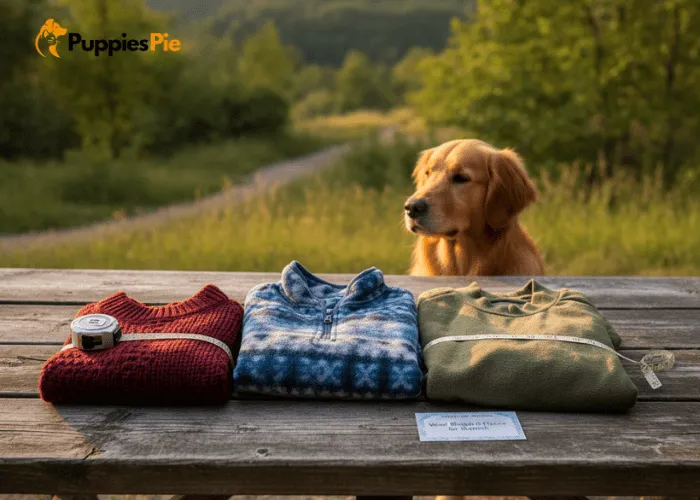
Pick one that matches your dog’s size. A child’s or small adult sweater works well for small breeds, while larger dogs might need an adult medium or large. Look for soft, stretchy material, wool blends and fleece are best for comfort and warmth.
Step 2: Cut the Body Section
Lay the sweater flat. Cut across just below the armpits, this will be the main body of your dog’s jacket. If your dog is tiny, use the sleeve instead of the body section. Sleeves fit perfectly on miniature breeds like Chihuahuas or Yorkies.
Step 3: Create Openings for Legs
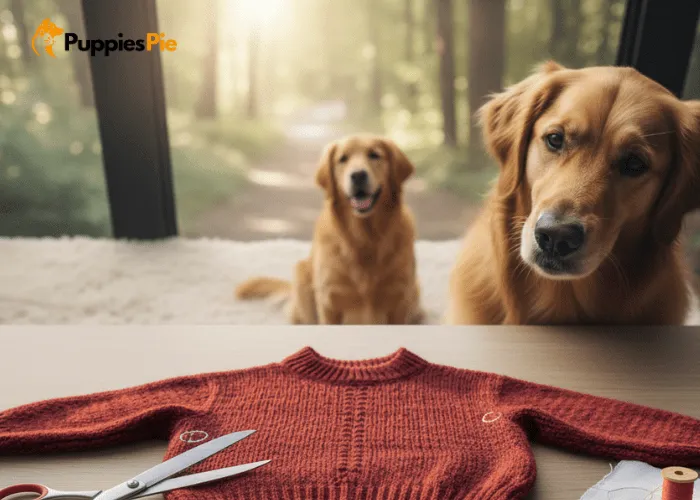
Slip the sweater section over your dog gently to mark where the front legs will go. Use chalk or pins to note the spots. Then cut small holes, start smaller than you think; you can always enlarge them.
Step 4: Adjust the Neckline
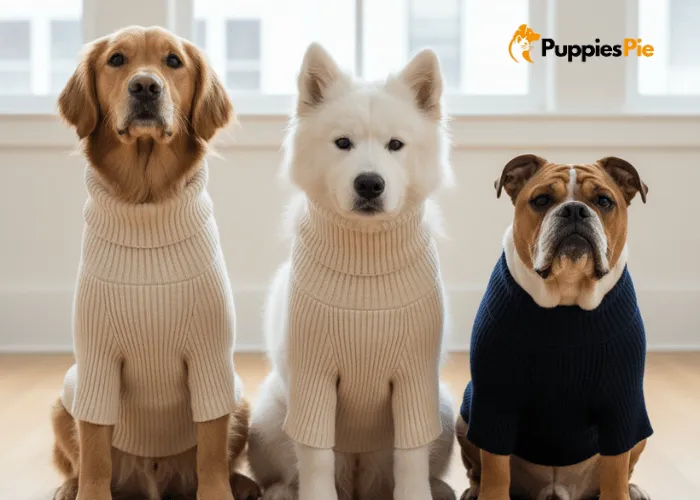
If the collar is too tight, trim and hem it for comfort. For extra warmth, keep a turtleneck portion intact. Dogs with shorter necks might prefer a simple round opening.
Step 5: Finish the Edges
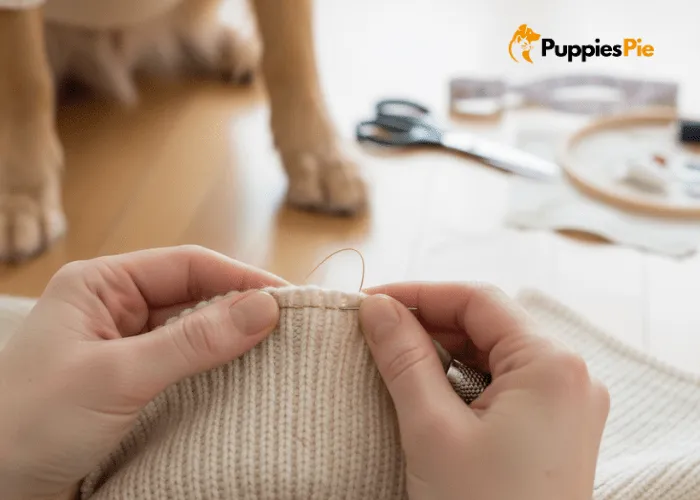
Fold any raw fabric edges inward and stitch them down. This prevents fraying and gives a clean, professional look. A basic running stitch works fine.
Step 6: Add Closure (Optional)
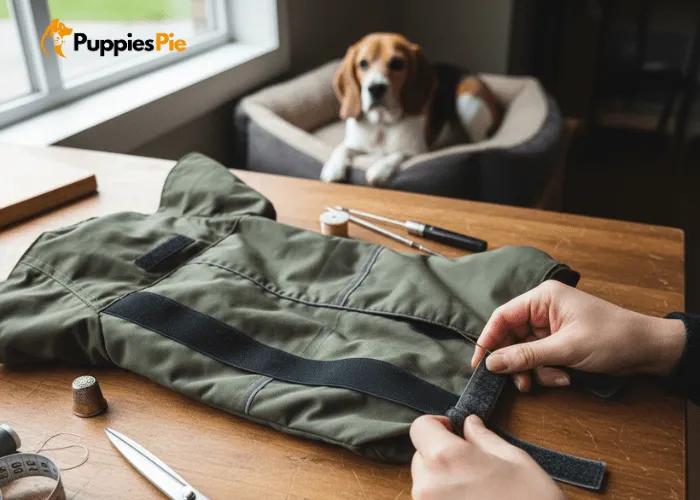
For easy wear, cut the jacket along the belly and attach Velcro strips or elastic bands. This makes it adjustable and quick to put on.
Step 7: Try It On Your Dog
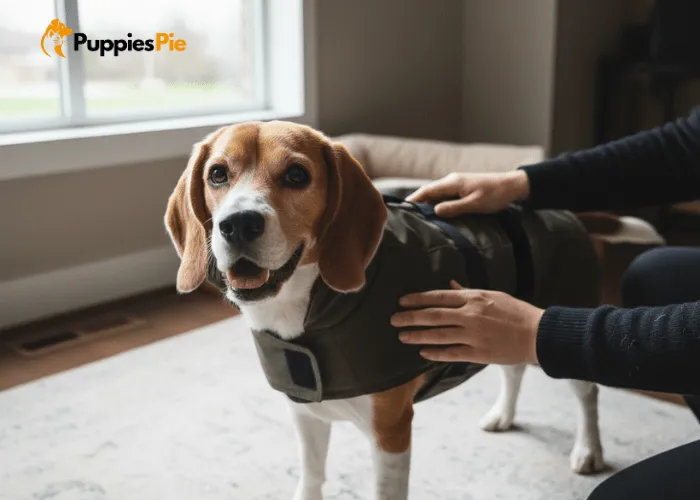
Gently put the jacket on your dog and check for movement. Your dog should be able to walk, sit, and lie down comfortably. Adjust if needed, sometimes small tweaks make all the difference.
Styling and Customizing Your DIY Dog Jacket
This is where creativity takes over. Add personality and flair.
Ideas to personalize your dog’s jacket:
1. Sew on a small pocket or patch for charm.
2. Add a reflective strip for night walks.
3. Use contrasting fabric around the collar.
4. Try embroidery, your dog’s name or a tiny paw print looks great.To complete the look, you can also make a matching Dog Bandana using leftover fabric for a coordinated, stylish outfit.
If you’re handy, you can even line the inside with fleece for extra insulation. Think of it as your dog’s winter armor, soft, warm, and totally one-of-a-kind.
Safety Tips for DIY Dog Clothing
Homemade doesn’t mean being careless. Keep your pup safe and comfortable.
1. Avoid tight areas that restrict breathing or movement.
2. Don’t use buttons or beads if your dog tends to chew.
3. Make sure seams are strong but soft against the skin.
4. Use non-toxic fabric markers and materials.
5. Check fit regularly, dogs move, stretch, and grow.
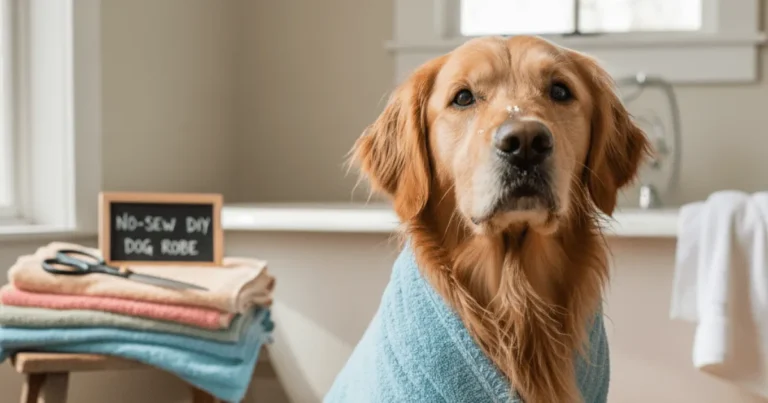
If your dog resists wearing it, don’t force it. Some dogs prefer lighter fabric or sleeveless styles. Comfort always comes first.After bath time, your pup might enjoy a soft Dog Bath Robe made from upcycled towels or sweaters to stay warm and comfy.
How to Wash and Maintain Your Upcycled Jacket
The great thing about using sweater material is easy care.
Cleaning tips:
1. Wash in cold water on a gentle cycle.
2. Use mild detergent, no fabric softener.
3. Air dry flat to maintain shape.
4. Trim loose threads as needed.
After a few washes, the fabric softens further, your dog will appreciate that.
Eco-Friendly Bonus – Why This Matters
Turning an old sweater into a dog jacket is a small act with big meaning. The textile industry is one of the biggest polluters on Earth. Every reused garment saves energy, water, and landfill space.For wet weather walks, you could also try making a Dog Raincoat from repurposed fabric, keeping your pup dry while staying eco-friendly.
You’re not just making something useful — you’re rejecting throwaway culture. It’s a quiet rebellion against overconsumption. And your dog gets to wear it proudly.
Conclusion
You’ve just learned how to turn something forgotten into something beloved. An upcycled dog jacket isn’t just a craft it’s a story of care, creativity, and sustainability.
Grab that old sweater, clear your workspace, and make your pup’s new favorite outfit today. You’ll both stay warmer for it.