Handmade felt dog toys hit a sweet spot for dog owners who want something playful, safe, and inexpensive. Store-bought toys fall apart fast, especially when your dog has opinions about chewing. Making your own lets you customize size, softness, and durability. You choose the colors. You control the stuffing. Most importantly, you can design toys that actually match your dog’s play style, tugging, fetching, stalking, or gently carrying around a favorite “baby.”
This guide walks you through the best felt to use, essential tools, safe construction methods, and step-by-step instructions for several toy designs. Everything here is beginner-friendly, pet-safe, and practical to make in an afternoon. If you’ve ever wanted toys that last longer, cost less, and feel more personal, felt is the perfect material to start with.
Why Choose Felt for Dog Toys
Felt brings a few advantages that make it a perfect DIY toy material. It doesn’t fray when cut, which means edges stay neat without sewing them over and over. It’s soft but strong, especially wool felt, and it’s gentle on teeth. Felt also absorbs scent, so toys become more “the dog’s” over time, which many pups love.
Synthetic felt works for light chewers, but wool felt has better durability. It handles moisture, rough play, and repeated squeezing. For dogs who love to “dissect” toys, wool gives you a fighting chance.
Materials You Need
You don’t need a craft store’s entire inventory. Just a few basics.
Essential Supplies
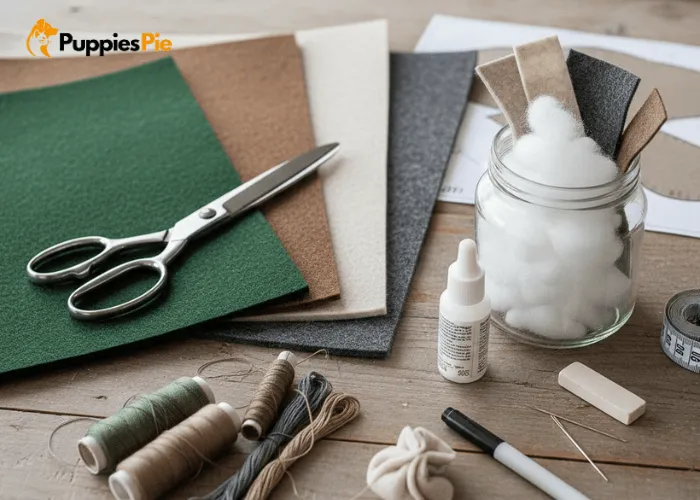
Wool felt sheets (2–4 mm thick for durability)
• Heavy-duty thread or embroidery floss
• Fabric scissors
• Fabric glue (optional, for reinforcement)
• Polyester stuffing or scrap felt pieces
• Needle
• Tailor’s chalk or marker
• Optional squeakers
Skip anything fragile like ribbon, googly eyes, or bead decorations. Dogs chew first, ask questions never.
Choosing the Right Felt
Not all felt behaves the same.
Wool Felt
Wool felt lasts longer, resists tearing, and handles saliva better. It’s more expensive, but when a toy survives weeks instead of days, the cost becomes irrelevant.
Acrylic Felt
Acrylic felt is cheaper and works well for gentle chewers or decorative toys. It’s fine for small, soft toys, but heavy chewers will shred it in minutes.
Aim for felt around 2–4 mm thick. Anything thinner gets floppy. Anything thicker becomes frustrating to sew.
Safety Considerations
A handmade toy should be fun, not hazardous.
• Avoid small parts dogs can swallow.
• Make seams strong enough that stuffing won’t spill out during rough play.
• Skip long strings or loose threads that might tangle around tongues.
• Keep toys sized appropriately, too small becomes a choking risk.
If your dog is a destroyer, supervise play or use tougher toy styles like felt ropes.
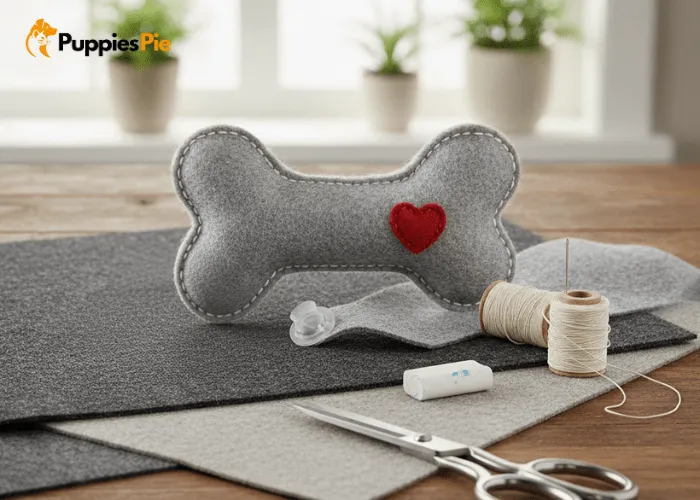
Toy Design #1: Classic Felt Bone
This toy gets the most love because it’s simple, iconic, and perfect for dogs that like carrying things around.
Materials
Two sheets of wool felt
• Needle and heavy thread
• Tailor’s chalk
• Stuffing or scrap felt
• Optional squeaker
Steps
1. Draw a bone shape on one sheet. Keep proportions even, thicker ends, thinner middle.
2. Cut out the shape and use it as a template for the second piece.
3. Begin stitching around the edges with tight blanket stitches.
4. Leave a small opening and stuff the toy firmly but not like a bowling ball.
5. Add a squeaker if you’re feeling generous.
6. Close the opening with reinforced stitches.
This bone lasts surprisingly long when made from thick wool felt. The squeaker gives it immediate celebrity status in your dog’s personal toy hierarchy.
Toy Design #2: Felt Tug Ring
Some dogs want a toy they can grip, shake, and challenge you with. Felt works beautifully because multiple layers rolled together create a sturdy, soft rope-like structure.
Materials
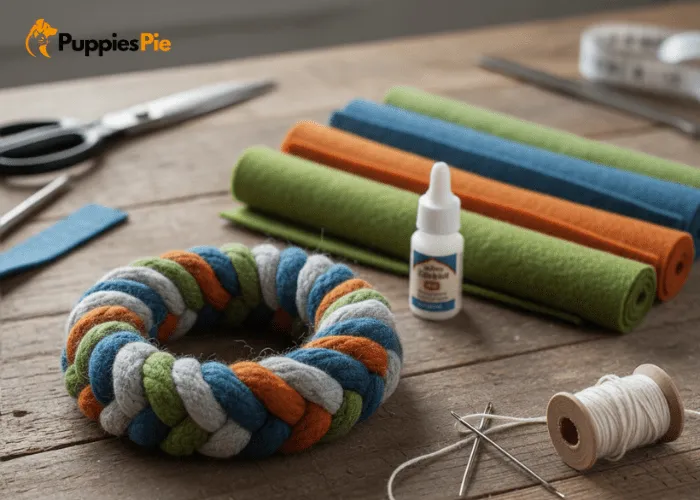
Long strips of wool felt
• Fabric glue (optional)
• Needle and thread
Steps
1. Cut three long felt strips, each about one inch wide.
2. Stack them and stitch or glue the ends together.
3. Braid the strips tightly, it should feel dense, not loose.
4. Stitch the other ends closed.
5. Join both ends to create a ring and stitch securely all around.
This tug ring gives you a controlled grip and offers a safe, soft alternative to ropes with fraying fibers.
Toy Design #3: Stuffed Felt Carrot
Silly toys make dogs weirdly happy. A felt carrot is adorable, lightweight, and great for fetch indoors.
Materials
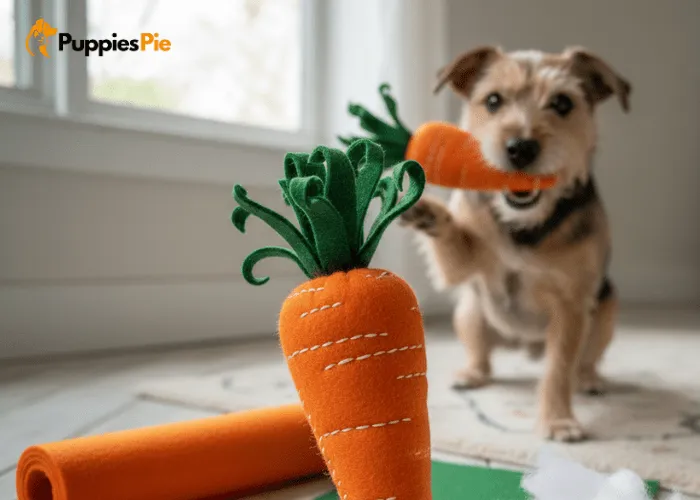
Orange felt
• Green felt
• Thread and needle
• Stuffing
Steps
1. Cut a triangle for the carrot body and a leafy pattern for the top.
2. Roll the triangle into a cone and stitch along the edge.
3. Attach the leaf piece to the top before closing the cone’s opening.
4. Stuff the carrot lightly to keep it throwable.
It’s simple, sturdy, and highly stealable, perfect for dogs who love hoarding.
Toy Design #4: Felt Donut
A donut toy gives dogs something fun to chomp down on without rough edges.
Materials
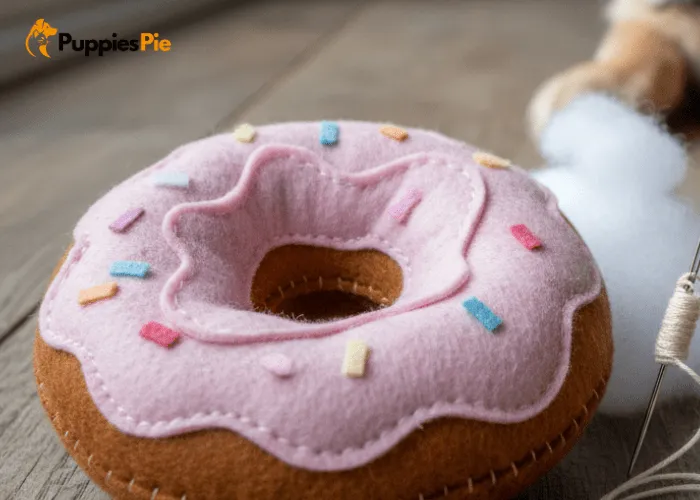
Two circles of felt
• Needle and thread
• Stuffing
• Optional contrasting “frosting” layer
Steps
1. Cut two identical circles with a smaller circle removed from the center.
2. If adding a frosting layer, cut a wavy circle and attach it to one ring.
3. Stitch both rings together, stuffing as you go.
4. Close the seams tightly.
Dogs love the softness and bounce of this toy. Humans like that it looks like dessert.
Toy Design #5: Flat Felt Critters
Dogs have a strange love for flat, floppy toys, shapes like fish, foxes, ducks, or random weird blobs.
Materials
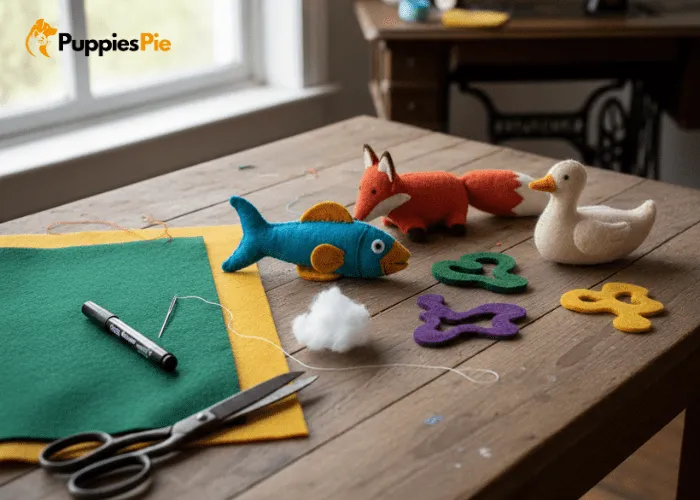
Two felt sheets
• Marker
• Needle
• Light stuffing
Steps
1. Draw your critter outline. Keep it simple, four limbs max.
2. Cut out two identical shapes.
3. Stitch around the edges, stuffing just enough for softness but keeping it mostly flat.
4. Reinforce limbs well; those take the most abuse.
Flat toys are perfect for dogs that like shaking prey-like shapes.
Adding Squeakers Safely
Squeakers instantly upgrade DIY toys, but they need secure placement. Always place squeakers inside a small inner pouch made from scrap felt. Stitch the pouch separately, then embed it within the toy. This adds a fail-safe layer if your dog breaks through the outer layer.
Sewing Techniques That Improve Durability
The stitching makes or breaks a toy, literally.
Blanket Stitch
Great for edges. Decorative but strong. Good for bones, donuts, and critters.
Backstitch
Excellent for seams under tension. Looks plain, holds like a champ.
Whip Stitch
Fast and neat. Works well when doubled.
Use heavy thread. Embroidery floss, split into thicker bundles, works even better. Reinforce any weak spots by stitching twice.
Filling Options for Felt Toys
Stuffing influences how a toy feels and behaves.
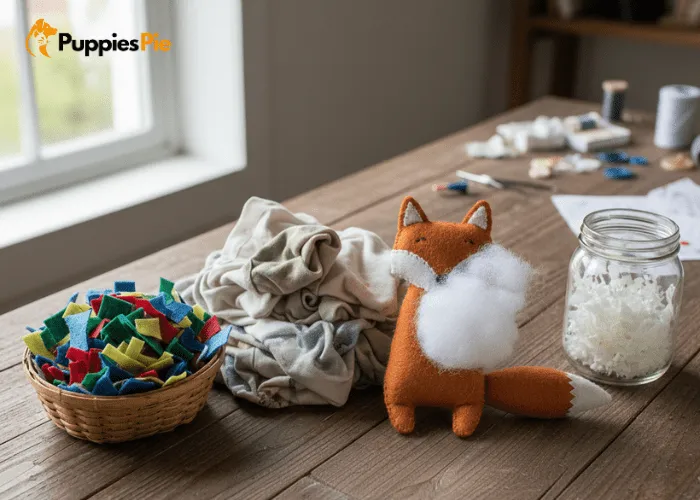
• Polyester fiberfill: Soft and springy.
• Scrap felt: Dense and long-lasting.
• Old T-shirt pieces: Eco-friendly and comfy.
• Crinkle paper: Fun sound, best for gentle chewers.
Avoid anything that breaks into dangerous pieces, such as foam chunks.
Customizing Toys for Your Dog’s Personality
Some dogs want soft toys. Others want resistance. Customizing makes the toy more satisfying.
• Power chewers: Thicker felt layers, dense stuffing, reinforced seams.
• Shakers: Long shapes like critters or carrots.
• Tuggers: Felt ring or braided ropes.
• Fetch lovers: Donut or bone shapes for easy gripping.
When you know the way your dog plays, you can tailor every stitch.
Keeping Felt Toys Clean
Felt absorbs scents and slobber over time.
• Hand wash in cool water with mild soap.
• Squeeze gently without twisting.
• Air dry fully to prevent mildew.
Wool felt shrinks under heat, so avoid hot water or machine drying.
When to Replace Felt Toys
Even great handmade toys have a lifespan.
Replace a toy if you see:
• Holes forming around seams
• Loose threads
• Stuffing peeking out
• Squeakers exposed
• Torn layers of felt
The toy should be fun, not adventurous in the wrong way.
Troubleshooting Common Problems
Felt Tearing Too Easily
Upgrade to wool felt and use double layers.
Toy Losing Shape
Increase stuffing or tighten stitches.
Dog Ignoring the Toy
Add scent. Rub it on your hands, your dog’s blanket, or hide a treat inside a pocket.
Toy Getting Slimy
Wash more often and rotate toys so each one dries fully before reuse.
Making Eco-Friendly Felt Toys
You can build toys entirely from eco-conscious materials.
Use wool felt, organic stuffing, and cotton thread. Stuff toys with shredded old clothing instead of buying new filling. Dogs don’t judge. They judge how fun something is to throw across the room.
Why Handmade Toys Matter
Handmade toys carry something mass-produced toys can’t: intention. You chose the colors. You cut the shapes. You built the toy with your dog’s quirks in mind. Dogs might not appreciate craftsmanship, but they notice how a favorite toy smells, feels, and moves. When you make it yourself, it becomes part of your bond.
Conclusion:
Handmade felt dog toys combine creativity, practicality, and a bit of heart. They’re inexpensive, customizable, and surprisingly sturdy when made with the right materials. From flat critters to stuffed bones, tug rings to carrot toys, you can build a whole toy basket that actually matches your dog’s play preferences. Your dog gets new favorites. You get the satisfaction of crafting something useful and fun. It’s a win on both ends of the leash.