Fleas are the uninvited guests every dog owner dreads. They bite, itch, and spread fast, but here’s the thing: you don’t need harsh chemicals to get rid of them. A homemade flea spray can be just as effective as store-bought treatments when made with the right natural ingredients.
This isn’t just about killing fleas; it’s about repelling them before they even settle in. The best part? You probably already have most of what you need in your kitchen. In this guide, we’ll walk through how to make, apply, and safely use natural flea sprays that actually work, no toxins, no side effects, just relief for your pup.
Why Go Natural Instead of Store-Bought?
Commercial flea treatments often rely on pesticides like permethrin or fipronil. They work, but they also carry risks, especially for sensitive dogs.
Here’s why more pet owners are switching to homemade solutions:
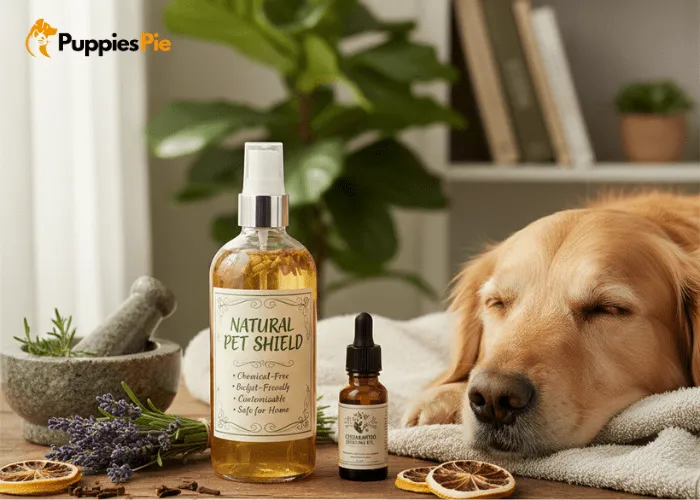
- Chemical-free: No harsh toxins or synthetic fragrances.
- Budget-friendly: Costs a fraction of store-bought sprays.
- Customizable: Adjust scents and strengths to your dog’s needs.
- Safe for home use: No chemical residue on floors or bedding.
Natural doesn’t mean weak. When made correctly, essential oil-based sprays can repel fleas, ticks, and even mosquitoes, all while keeping your dog’s coat healthy and smelling great.
Understanding How Fleas Work
Before mixing anything, it helps to understand what you’re fighting.
Fleas go through four stages, egg, larva, pupa, and adult. Only adults live on your dog; the rest hide in carpets, bedding, and furniture. That means your spray needs to target both the pet and their environment.
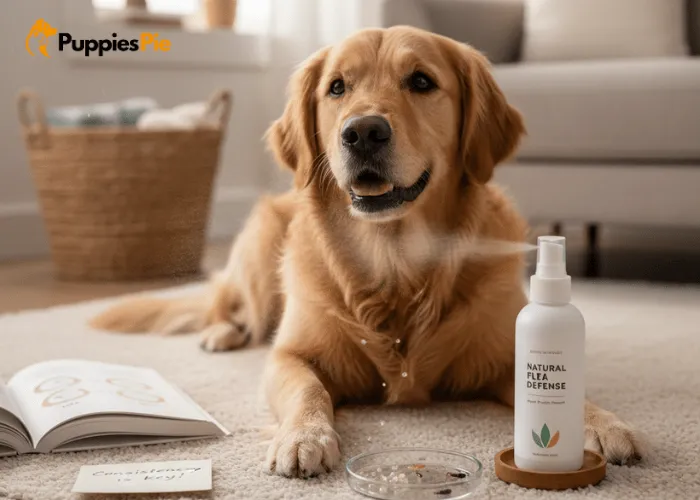
A good homemade flea spray should:
- Repel fleas on contact.
- Break their life cycle by targeting eggs and larvae.
- Be safe for daily or frequent use.
The goal is consistency, prevention beats cure every time.
Ingredients for a Homemade Flea Spray
You don’t need a chemistry degree, just a few natural ingredients that repel fleas naturally.
Core Ingredients:
- Apple cider vinegar (ACV): Fleas hate its acidity and smell.
- Water: Dilutes the mix for safe application.
- Lemon juice: Natural flea deterrent and deodorizer.
- Essential oils (optional but effective): Lavender, cedarwood, peppermint, or eucalyptus.
Important: Always dilute essential oils heavily and never use them directly on cats, dogs can tolerate some oils, but cats cannot.
Tools Needed:
- Spray bottle (preferably glass or BPA-free plastic)
- Funnel
- Measuring cup
- Soft cloth or grooming brush
DIY Flea Spray Recipes (3 Variations)
1. Basic Vinegar Flea Repellent
Perfect for first-timers, gentle, simple, and effective.

You’ll need:
- 1 cup apple cider vinegar
- 1 cup water
- 1 teaspoon lemon juice
How to make it:
1. Mix all ingredients in a clean spray bottle.
2. Shake well before each use.
3. Lightly mist your dog’s coat (avoid eyes, ears, and nose).
4. Let it air dry naturally.
Why it works:
The vinegar’s acidity and lemon’s citrus compounds repel fleas without irritating your dog’s skin.
2. Essential Oil Flea-Repelling Spray
For dogs that tolerate scents and have thicker coats.
For dogs that tolerate scents and have thicker coats.
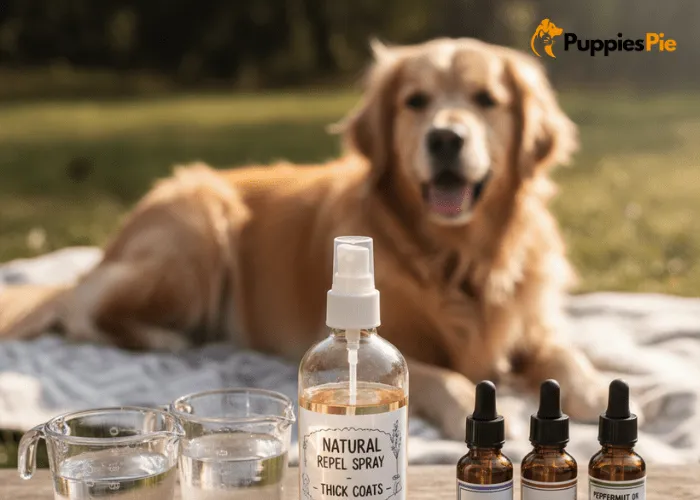
You’ll need:
- 1 cup distilled water
- 1 cup witch hazel or white vinegar
- 4–6 drops lavender oil
- 4 drops cedarwood oil
- 2 drops peppermint or eucalyptus oil
How to make it:
1. Combine ingredients in a spray bottle.
2. Shake before use.
3. Mist lightly over your dog’s coat or onto a grooming brush for even distribution.
Pro Tip: Test a small patch first to ensure no irritation. Essential oils are potent, a few drops go a long way.
3. Household Flea Control Spray
Designed for your dog’s bedding, carpets, or furniture, not direct use on pets.
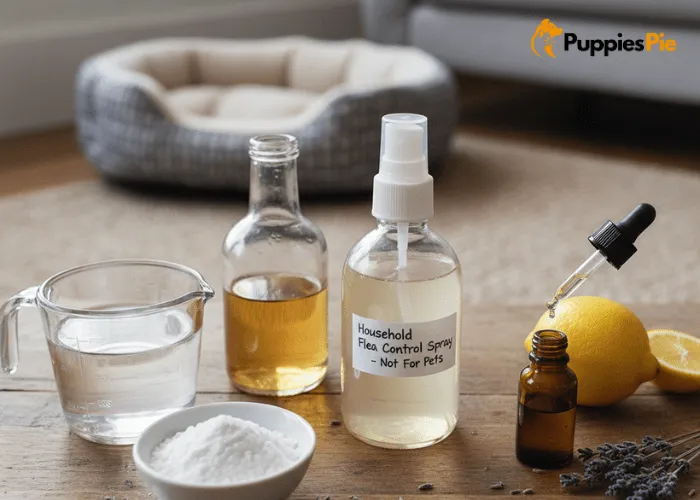
You’ll need:
- 2 cups water
- 1 cup apple cider vinegar
- 1 tablespoon baking soda
- 5 drops lemon or lavender oil
How to make it:
1.Add vinegar and water first (to prevent fizz overflow).
2. Add baking soda slowly, then oils.
3. Shake and spray onto dog beds, rugs, and corners.
This mix not only kills lingering fleas but deodorizes your home naturally.
How to Apply Flea Spray Safely
Spraying your dog might sound easy, but technique matters, too much or too little, and it won’t work.
Follow these tips:
- Shake the bottle before each use.
- Apply lightly, damp, not soaked.
- Focus on the neck, belly, tail base, and behind ears (flea hotspots).
- Avoid eyes, nose, and mouth.
- Let it air dry naturally before brushing through the coat.
Repeat daily for active infestations or 2–3 times a week for prevention.
Keeping Fleas Away for Good
Spray alone won’t solve everything, it works best as part of a routine.
Weekly Flea Prevention Checklist:
- Wash bedding in hot water once a week.
- Vacuum carpets and pet areas regularly.
- Bathe your dog with natural flea shampoo monthly.To help keep your dog’s coat clean while repelling fleas, consider using a gentle DIY Dog Shampoo once a month.
- Keep outdoor areas (lawns, patios) clean and dry.
- Reapply spray before walks in tall grass or wooded areas.
Consistency keeps fleas from returning. One missed week can restart the cycle.
Extra Natural Remedies to Combine with Your Spray
If your dog’s dealing with a serious infestation, pair your spray with these safe additions:
- Coconut oil: Rub a small amount onto your dog’s fur to smother fleas and soothe bites.After applying flea sprays or coconut oil, you can also protect and soothe their paws with a nourishing Dog Paw Balm.
- Diatomaceous earth: Sprinkle a light dusting on carpets or kennels (never directly on your pet’s face).
- Lemon-infused water rinse: Slice one lemon, steep in boiling water overnight, strain, and use as a coat rinse before spraying.
- Herbal flea collars: Soak a bandana in diluted essential oil spray and tie loosely around your dog’s neck.
Think of it as a layered defense system, each part helps the other work better.
Safety Tips and Vet Advice
Natural doesn’t mean risk-free. Always check with your vet before using essential oils or home remedies, especially for:
- Puppies under 10 weeks
- Pregnant or nursing dogs
- Dogs with skin conditions or allergies
Avoid these oils entirely: Tea tree, clove, cinnamon, and wintergreen, they can be toxic for dogs.
Always label your spray bottles clearly and store them away from children and food areas.
For overall pet wellness, maintain dental hygiene as well with a safe DIY Dog Toothpaste.
Signs Your Spray Is Working
You’ll know it’s effective if you see:
- Reduced scratching or biting behavior
- Fewer flea droppings (tiny black specs) on your dog’s skin
- No new bites or red patches appearing
- Fleas avoiding your dog’s coat when brushed
It takes about a week of consistent use to see full results. Patience and persistence pay off.
Cost Comparison: Homemade vs. Store-Bought
Option
Homemade Flea Spray
Store-Bought Chemical Spray
Vet-Prescribed Spot Treatment
Cost
$5–10
$25–40
$50+
Lifespan
2–3 weeks
1–2 months
1 month
Safety
Natural, customizable
May contain toxins
Effective, but chemical-based
Homemade sprays may need more frequent use, but they’re safer for your home, wallet, and dog’s skin.
Why This DIY Solution Works Long-Term
You’re not just masking a problem, you’re preventing it. Homemade flea sprays balance natural repellents with skin-friendly ingredients, creating an environment fleas can’t stand.
It’s easy to maintain, cheap to refill, and better for both your dog and the planet. That’s a long-term win in every way.
Conclusion:
A homemade flea spray is one of those simple, satisfying pet-care wins. It keeps your dog comfortable, your home fresh, and your peace of mind intact, all without chemicals or unnecessary expense.
Start with one of these easy recipes, stay consistent, and you’ll turn flea season from panic mode into just another walk in the park.