Introduction
Dental health is one of the most overlooked parts of dog care. Many owners focus on food, grooming, and exercise but forget that clean teeth can add years to a dog’s life. Unfortunately, store-bought dog toothpaste often contains unnecessary additives or artificial flavors. That’s why more pet parents are turning to homemade dog toothpaste.
This guide will show you how to make your own toothpaste at home, using safe, natural ingredients your dog will actually enjoy. We’ll also cover brushing tips, ingredient safety, and how to make it part of your dog’s weekly routine.
Why You Should Care About Your Dog’s Dental Health
Dogs can’t tell you when their teeth hurt. By the time you notice bad breath or gum swelling, dental disease may already be advanced. Regular brushing helps prevent:
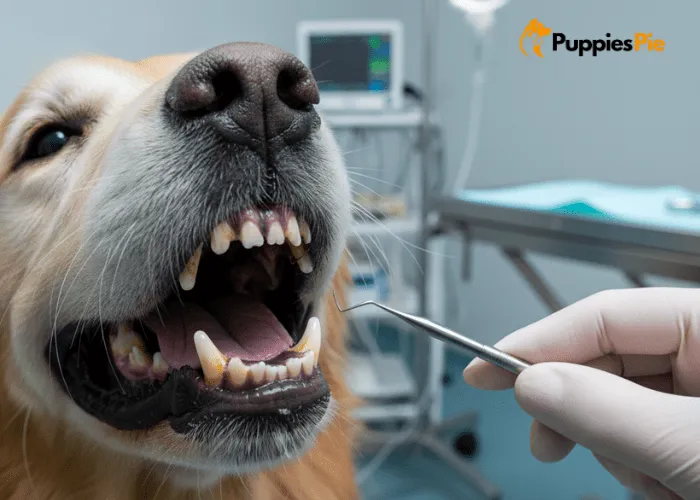
1. Plaque and tartar buildup
2. Gum infections (gingivitis)
3. Painful tooth decay
4. Costly vet cleanings under anesthesia
A good dental routine can also prevent bacteria from spreading to your dog’s heart, liver, or kidneys, something many owners don’t realize is possible. So, brushing your dog’s teeth isn’t cosmetic; it’s preventive healthcare.
Why Go for Homemade Dog Toothpaste?
Homemade toothpaste gives you control over what goes in your dog’s mouth. You avoid harsh chemicals, foaming agents, and artificial flavorings that can cause stomach upset or allergies.
Some benefits of DIY dog toothpaste include:
Natural ingredients: Simple, safe, and often already in your kitchen.
Cost-effective: One batch can last several weeks.
Customizable flavors: You can tailor it to your dog’s taste (like chicken, coconut, or peanut butter).
Peace of mind: You know exactly what your dog is ingesting.
It’s also surprisingly easy to make, no fancy equipment or chemistry degree required.
Ingredients to Avoid in Dog Toothpaste
Before diving into recipes, it’s critical to know what not to use. Dogs’ bodies process ingredients differently than ours, and some things safe for humans are toxic for them.
Never use the following:
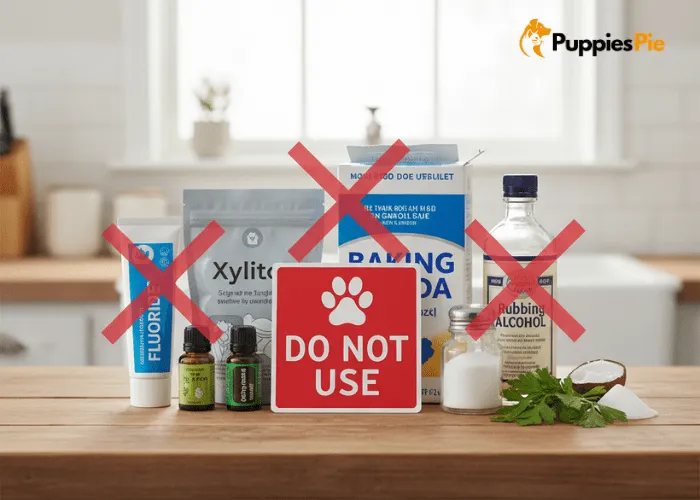
- Fluoride: Common in human toothpaste but toxic to dogs.
- Xylitol: A sugar substitute that can cause rapid insulin release and liver failure.
- Baking soda (in large amounts): Can upset your dog’s stomach if swallowed.
- Essential oils: Many (like tea tree or peppermint) are unsafe for dogs.
- Salt or alcohol: Both irritate gums and can dehydrate your dog.
When in doubt, keep it natural, mild, and simple. If you’d hesitate to eat it yourself, don’t give it to your dog.
Safe Ingredients You Can Use
Here are the safest, most effective ingredients for a homemade toothpaste that actually works:
Coconut oil: Natural antibacterial and helps reduce plaque buildup.
Baking soda (a small amount): Gentle abrasive that helps clean teeth.
Turmeric: Natural anti-inflammatory that can reduce gum swelling.
Parsley or mint leaves: Helps neutralize bad breath.
Beef or chicken broth: Makes it tasty so your dog doesn’t resist brushing.
These ingredients are safe when used correctly and won’t irritate your dog’s mouth.
Basic Homemade Dog Toothpaste Recipe
Here’s a simple recipe that most dogs love.
Ingredients:
1 tablespoon coconut oil
½ teaspoon baking soda
½ teaspoon beef or chicken broth
A pinch of turmeric (optional)
Instructions:
1. Soften the coconut oil slightly (do not melt it completely).
2. Mix in the baking soda and turmeric until smooth.
3. Add the broth and stir until fully combined.
4. Store in an airtight container at room temperature.
Shelf Life: About 2 weeks. Keep it in a cool, dry place or refrigerate if it’s hot.
Alternate DIY Toothpaste Recipes
If your dog is picky or has allergies, here are two more variations you can try.
Peanut Butter & Coconut Oil Toothpaste
1 tablespoon natural peanut butter (no xylitol!)
1 tablespoon coconut oil
¼ teaspoon baking soda
Mix into a creamy paste. Dogs love the nutty flavor, making brushing less of a battle.
Fresh Breath Parsley Paste
1 tablespoon coconut oil
1 teaspoon finely chopped parsley
½ teaspoon baking soda
1 teaspoon chicken broth
This one works wonders for bad breath. The parsley acts as a natural deodorizer and mild antiseptic.
How to Brush Your Dog’s Teeth with Homemade Toothpaste
Making the toothpaste is only half the job. The brushing technique matters too.
Here’s how to do it right:
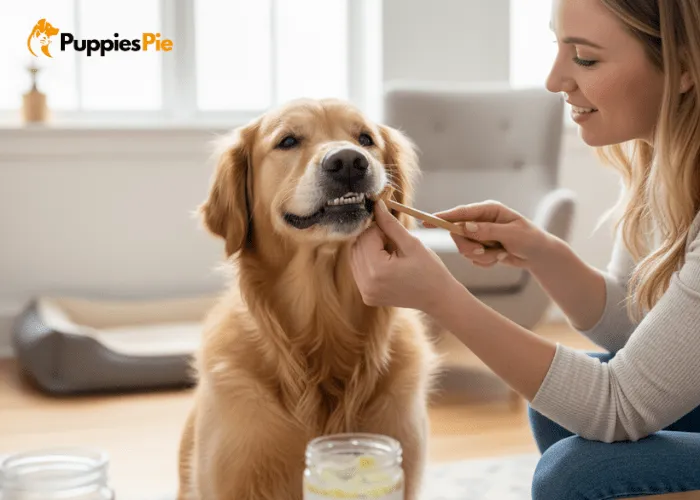
Pick the right brush: Use a soft-bristled dog toothbrush or a finger brush for small dogs.
Start slow: Let your dog sniff and lick the toothpaste first so they associate it with something pleasant.
Lift the lips gently: Brush in small circular motions, focusing on the outer surfaces where plaque builds up.
Keep sessions short: Two minutes is enough. Praise your dog throughout to make it positive.
Reward: End with a favorite treat or cuddle time to reinforce good behavior.
Aim to brush your dog’s teeth 2–3 times a week. Daily brushing is ideal, but consistency matters more than perfection.
Tips for Making Toothbrushing Easier
Dogs aren’t born liking toothbrushes. Here are some tricks to make it smoother:
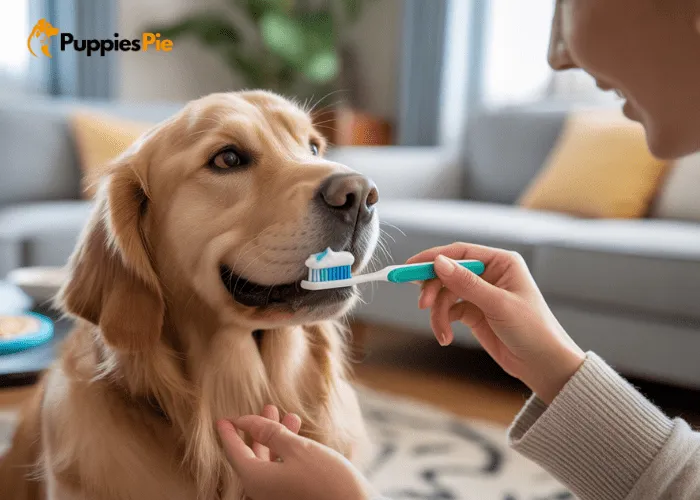
- Introduce the toothpaste and brush slowly over several days.
- Always brush in a calm, distraction-free environment.
- Praise and reward after every session.
- Don’t use too much paste, a pea-sized amount is enough.
- If your dog resists brushing, try applying the paste on a chew toy or lick mat at first.
Signs of Good Dental Health
You’ll know your brushing routine is working when you notice:
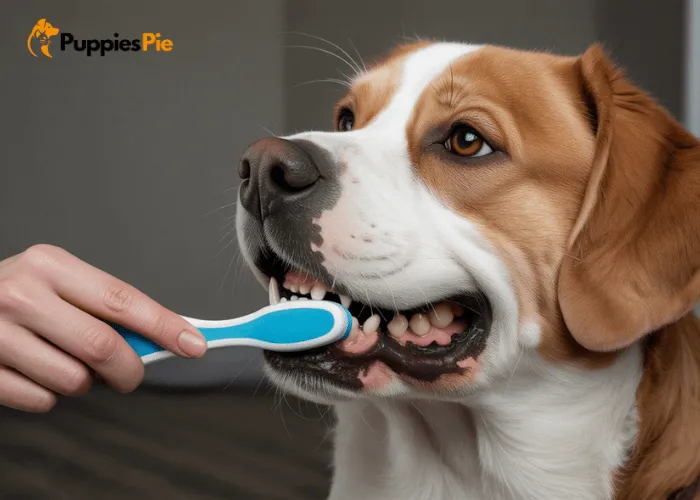
1. Fresh breath (no more “dog breath”)
2. Pink, healthy gums without swelling
3. No visible tartar or yellow buildup
4. No bleeding when brushing
If your dog shows discomfort, bleeding, or bad breath that doesn’t go away, check with a vet. Those can be signs of gum disease or infection.After brushing, treat your dog’s paws with a soothing Dog Paw Balm to keep them soft and protected, especially after walks or outdoor play.
How Often Should You Replace the Toothpaste?
Since homemade toothpaste has no preservatives, it doesn’t last as long as store-bought options.
1. Room temperature: Up to 2 weeks.
2. Refrigerated: 3–4 weeks.
Always check for changes in smell or texture before using it again. If it smells sour or looks discolored, toss it and make a fresh batch.
Vet-Approved Advice for Brushing at Home
Veterinarians generally support using simple, natural toothpaste, as long as the ingredients are safe. Most vets recommend brushing as often as you brush your own teeth, but realistically, even two or three times a week can make a big difference.
Pair your homemade toothpaste routine with annual professional cleanings if possible. Think of your brushing as maintenance, not a replacement for vet care.
For a complete hygiene routine, pair your homemade toothpaste with a gentle DIY Dog Shampoo to keep your pup’s coat clean and healthy.
Common Mistakes to Avoid
Even the best DIY efforts can go wrong if you skip these basics:
1. Using human toothpaste, even a small amount can cause stomach upset or poisoning.
2. Adding flavors meant for humans like cinnamon or mint extract.
3. Storing the paste too long or letting it sit in sunlight.
4. Brushing too aggressively and causing gum irritation.
A gentle touch and clean ingredients are always the winning combo.
Keep a DIY First Aid Kit nearby to quickly handle any minor accidents during brushing or other at-home grooming routines.
Homemade Dog Toothpaste Storage Tips
1. Use a small airtight jar or squeeze tube.
2. Label it clearly so no one mistakes it for your own toothpaste.
3. Store it away from heat and sunlight.
4. If refrigerated, let it sit at room temperature for 5–10 minutes before brushing.
These small habits make your DIY toothpaste last longer and stay fresh.
Quick Recap
Homemade dog toothpaste is:
- Easy to make
- Cost-effective
- Customizable for flavor and sensitivity
- Safe with natural ingredients
By brushing regularly with your DIY paste, you’ll save on vet bills, strengthen your bond, and give your dog a healthier mouth and happier life.
Conclusion
Making your own dog toothpaste is simple, affordable, and healthier for your furry friend. With just a few kitchen staples, you can protect your dog’s teeth from decay and keep their breath fresh, no chemicals required.
Start small, be patient, and enjoy the process. You’re not just cleaning teeth, you’re giving your dog a better quality of life, one brush at a time.