If your dog can’t resist turning your garden into a crater field, it’s not because they’re misbehaving, it’s instinct. Dogs dig for fun, for cooling off, for hiding toys, or just for the thrill of it. Instead of fighting nature, channel it. A backyard digging pit gives your dog a designated place to do what they love, without wrecking your landscaping.
In this guide, you’ll learn exactly how to build a digging pit that’s safe, easy to maintain, and perfectly matched to your dog’s personality. From materials and setup to enrichment ideas and training tips, this is your blueprint for backyard peace.
Why Dogs Need a Digging Pit
Digging isn’t bad behavior, it’s instinctive. Many dogs are natural excavators. Breeds like terriers, huskies, and dachshunds were bred to dig. Even calm breeds may dig for comfort or entertainment.
Here’s what drives this behavior:
- Exploration: Dogs love finding scents, bugs, or hidden treasures underground.
- Temperature control: Cool soil helps them beat the heat.
- Stress relief: Digging is an outlet for energy or anxiety.
- Burial instinct: Dogs often bury toys or treats for later.
A digging pit gives them a “yes space.” It’s enrichment that keeps both your dog and your yard happy.
Choosing the Perfect Spot in Your Backyard
Placement is everything. You want a spot your dog naturally gravitates to but that won’t create problems.
Tips for choosing a location:
- Shady area: Prevents overheating during summer play.
- Dry ground: Avoid areas prone to pooling water.
- Away from fences: Prevents digging escape attempts.
- Near play zones: Dogs are more likely to use it if it’s close to their usual activity area.
If you have multiple dogs, make it central and visible so everyone feels included.If you want to keep your dog safe while giving them space to dig, consider installing a Fence Gate from Pallets around the play area for a sturdy, budget-friendly enclosure.
Materials You’ll Need for a Dog Digging Pit
Building a digging pit doesn’t require fancy materials. Most of it can be repurposed or bought cheaply.
Basic supplies:
- Wooden planks, plastic tub, or kiddie pool (for the frame)
- Non-toxic sand or loose soil
- Landscaping fabric (to separate soil layers)
- Small shovel or trowel
- Screws or outdoor nails (if using wood)
- Optional: dog-safe gravel for drainage
Pro tip: Avoid construction sand, it can clump and irritate paws. Choose playground-grade sand or soft topsoil.
Step-by-Step Guide to Build a Backyard Digging Pit
Step 1: Mark and Prepare the Area
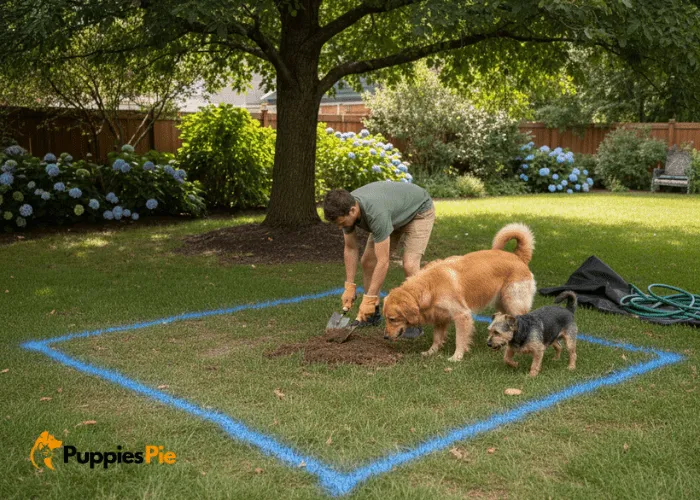
Outline the pit with spray paint or rope. A size around 4×4 feet works for most medium dogs. For large breeds, go bigger. Remove any grass or debris.
Step 2: Create a Base Layer
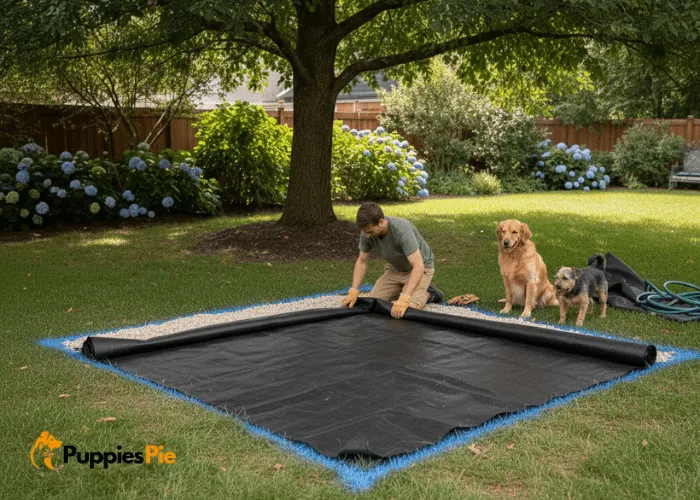
Lay down landscaping fabric to keep weeds out and separate your dig zone from the ground. If you live in a wet area, add a thin layer of gravel for drainage.
Step 3: Build the Frame
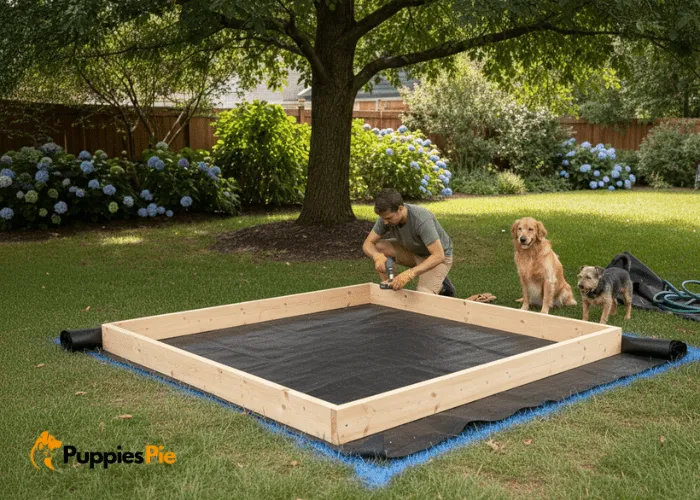
Use wooden boards or a plastic kiddie pool as a container. Wooden frames look natural and can blend with your garden design. Sand down sharp edges and secure the corners tightly.
Step 4: Add the Digging Material
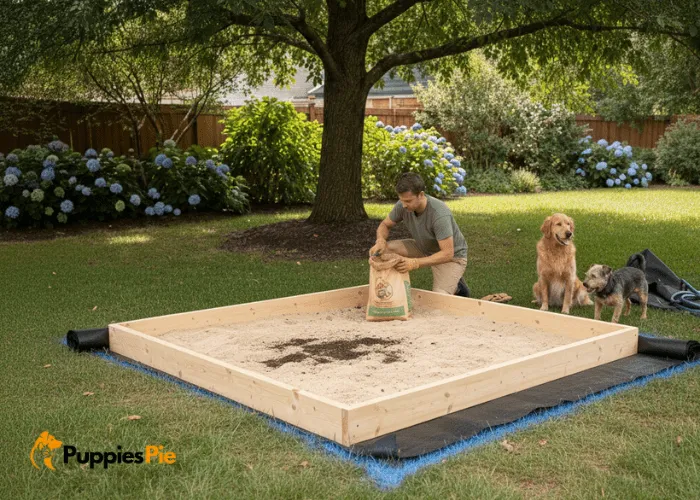
Fill it with clean, soft sand or soil about 10–12 inches deep. Mix in a little soil on top if your dog prefers an earthy scent. Avoid mulch, it can cause splinters or be toxic.
Step 5: Make It Fun and Inviting
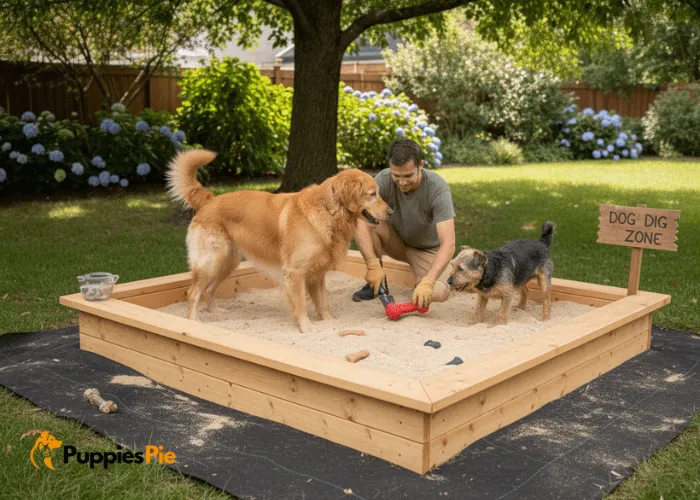
Hide a few toys or treats inside before letting your dog explore. This positive reinforcement helps them understand: “This is where digging is allowed!”
Training Your Dog to Use the Pit
Some dogs figure it out instantly. Others need a nudge. Training takes patience, but once they get it, you’ll never have to worry about your roses again.
Here’s how to teach it:
1. Introducing the pit. Bring your dog over and let them sniff around.
2. Bury a toy halfway. Encourage them to dig it up using a playful tone.
3. Reward immediately. Praise or give a treat as soon as they start digging.
4. Redirect bad digging. If they dig elsewhere, calmly lead them to the pit.
5. Repeat daily. Consistency turns this into a habit.
If your dog keeps ignoring it, refresh the area by re-burying toys or adding scent (like a little kibble).For multi-level backyards or garden access, adding a Dog Ramp can help your dog safely move between areas without risking injury while heading to their digging pit.
Dog-Safe Materials for the Dig Zone
Dogs sometimes taste or chew what’s in their pit. Choose materials that won’t harm them.
Best options:
- Playground sand (smooth and clean)
- Organic topsoil (no fertilizers or chemicals)
- Mix of both for texture
Avoid:
- Treated wood
- Pebbles, rocks, or mulch
- Any soil with pesticides or fertilizer residues
Check your dog’s paws regularly for irritation, especially in hot weather.
Keep It Clean and Maintained
A digging pit isn’t set-and-forget. Regular care keeps it fun and hygienic.
Maintenance checklist:
- Weekly raking: Fluff the sand to prevent compacting.
- Monthly refresh: Add new sand or soil if it’s getting low.
- Waste removal: Scoop out any droppings or debris immediately.
- Winter check: Cover it with a tarp if it’s not in use.
If you notice your dog losing interest, hide new toys to renew curiosity.
Make It Enriching With Creative Additions
You can level up your pit into a full sensory play zone.
Ideas to upgrade it:
- Treasure hunts: Bury toys, chew bones, or frozen treats.
- Scented sand: Add a bit of dog-safe essential oil (like lavender) for stimulation.
- Toy rotation: Switch out buried items weekly to keep it novel.
- Cooling station: Add a shaded canopy or water feature nearby.
Dogs thrive on variety. A few changes can make the pit their favorite spot in the yard.
Safety Tips to Remember
A digging pit should be fun, not risky. Keep it secure and supervised.
Key precautions:
- Never use treated wood, it may contain chemicals.
- Check for sharp objects in the sand or soil.
- Keep the area shaded during peak sun hours.
- For multi-dog homes, provide enough space to avoid conflict.
- Watch for overexcitement, some dogs can dig obsessively.
If you notice your dog swallowing sand or showing irritation, pause play and consult your vet.
Benefits of a Backyard Digging Pit
It’s more than a play zone, it’s behavioral enrichment with practical perks.
Here’s what it does for your dog:
- Reduces boredom and destructive digging
- Provides mental stimulation
- Promotes healthy exercise
- Strengthens muscles and coordination
- Gives cooling relief during hot days
For owners, it means a cleaner garden, fewer holes, and a happier dog.A digging pit reduces indoor chaos, and for extra protection, you might use a Dog Couch Cover to safeguard your furniture from paws and playful dogs.
Easy DIY Alternatives to a Full Pit
No yard? No problem. You can still create digging fun in small spaces.
Try these options:
- Portable sandbox: Use a large plastic bin filled with sand.
- Indoor dig box: Use shredded paper or fabric scraps.
- Balcony setup: Choose a sturdy planter box and fill it with soft soil.
Even apartment dogs can enjoy the thrill of digging with a little creativity.
Conclusion
Building a backyard digging pit for dogs is one of the simplest ways to make their world richer and your yard calmer. It channels instinct into play, giving them a safe, satisfying outlet. You’ll save your garden, and your dog will gain a playground made just for them.
So grab a shovel, gather your supplies, and start building their new favorite spot. Once they discover it, those garden holes will finally disappear for good.