Why Make a Homemade Dog Bed?
Do you ever find yourself looking at your dog curled up on the hard floor and wishing you could give them a cozy, comfortable spot that’s just for them? Store-bought dog beds can be expensive, and they don’t always come in the exact size or style you want. But what if you could create a soft, inviting bed for your best friend using something you likely already have at home?
In this guide, you’ll learn how to make a beautiful, no-sew dog bed from a simple pillow. This project is perfect for anyone, even if you’ve never picked up a needle and thread. Not only is it a fun DIY dog craft, but it also gives you a fantastic way to show your pet how much you care. We’ll cover everything from the materials you need to advanced tips for personalizing your new creation.
The Benefits of a DIY Dog Bed
It’s More Than Just a Bed
A cozy spot to rest is more than a luxury; it’s a crucial part of dog care. A dedicated bed provides your dog with a sense of security and a safe space they can call their own. For older dogs or those with joint issues, a soft, supportive bed helps relieve pressure and provide comfort. Think of it as their personal sanctuary, a place to decompress after a long walk or a vigorous play session.
The Joy of a Personalized Space
This project lets you tailor the bed to your dog’s specific needs. Is your dog a burrower who loves to snuggle? You can add extra blankets or a cozy cover. Do they get hot easily? You can choose breathable fabrics. Plus, the act of making something for your dog can strengthen the bond you share. It’s a special way to show them you’ve thought about their comfort and happiness.
What You’ll Need: Your DIY Tool Kit
The beauty of this no-sew dog bed is that it requires very few materials, and you might already have them.
Main Materials
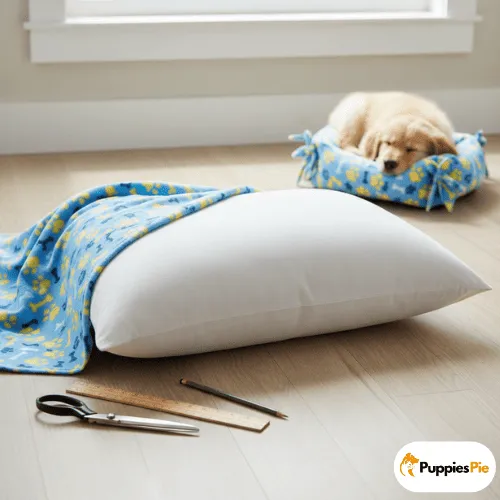
A large, firm pillow: The size of the pillow will determine the size of your bed. A standard queen or king-sized pillow works well for medium to large dogs. For smaller dogs, a smaller bed pillow or even a few decorative pillows can work. Make sure the pillow is clean and doesn’t have any feathers that could poke through.
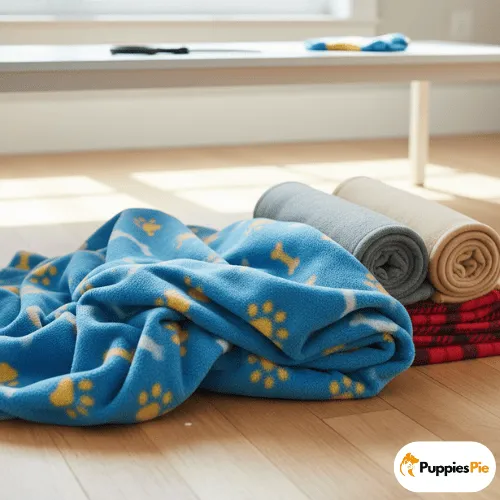
Fleece fabric: You will need two pieces of fleece fabric, each about a yard and a half long. Fleece is the perfect choice because it doesn’t fray when cut, so it’s ideal for a no-sew project. It’s also soft, warm, and easy to clean. Look for pet-safe fabrics.
Tools
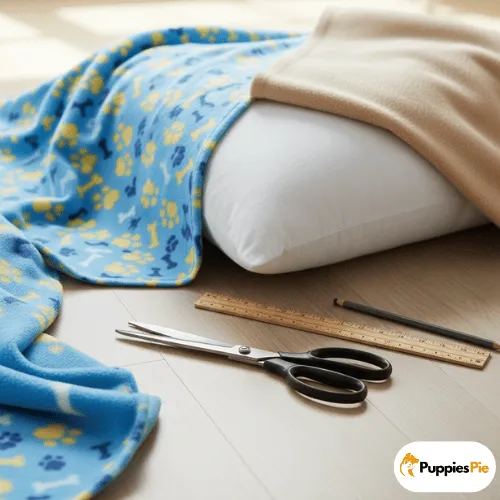
Sharp scissors: You’ll be doing a lot of cutting, so a good pair of fabric scissors is essential.
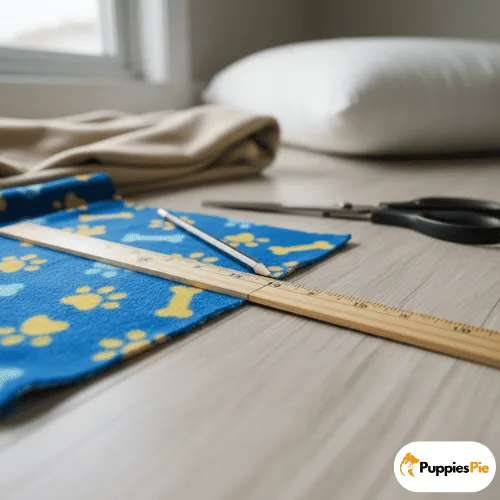
A ruler or measuring tape: To ensure your cuts are straight and even.
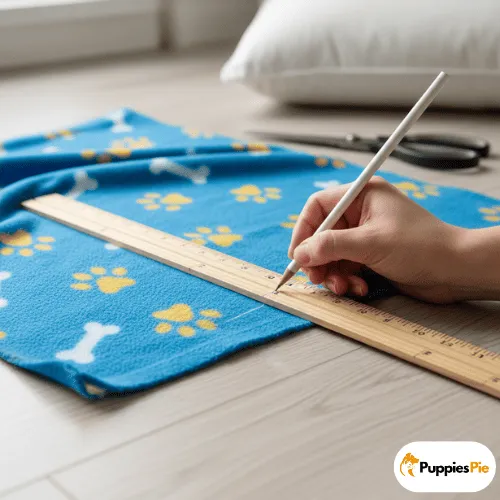
Marker or pencil: For marking your cutting lines on the fabric.
Pro-Tip on Materials
Consider using recycled or upcycled materials. An old, clean comforter or blanket can be used instead of a new pillow. Look for fabric remnants at a craft store for a more eco-friendly and affordable option.
Step-by-Step DIY Guide to a No-Sew Dog Bed
Time Estimate: 30–45 minutes
Difficulty Level: Beginner
Let’s get crafting! Here are the steps to create your pet’s new favorite spot.
Step 1: Lay Out Your Fabric

Lay one piece of your fleece fabric on a flat, clean surface. Place the second piece directly on top, making sure the edges are lined up perfectly. This will be the top and bottom of your bed.
Step 2: Trim the Edges

Trim the fabric so both pieces are the same size. For a standard pillow, a size of about 40 inches by 40 inches is a good starting point. You can adjust this based on the size of your pillow and dog.
Step 3: Create the Pillow Pocket
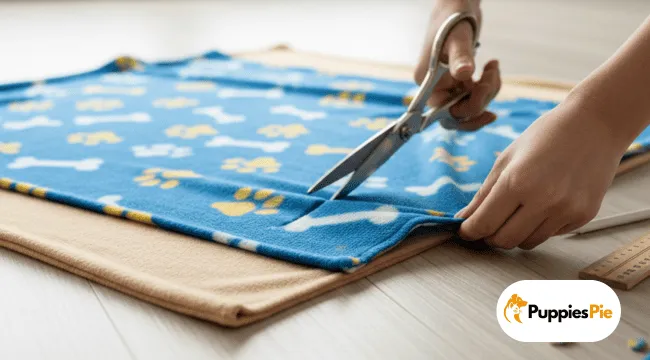
Now, you’ll create the opening for the pillow. On one of the shorter edges, mark a line about 10-12 inches from the corner on both sides. This will be your opening.
Step 4: Cut the Fringes
This is the most important part of the no-sew method. Cut 1-inch wide strips, about 4 inches deep, all along the perimeter of your fabric. This will create the fringe you’ll use to tie the pieces together.
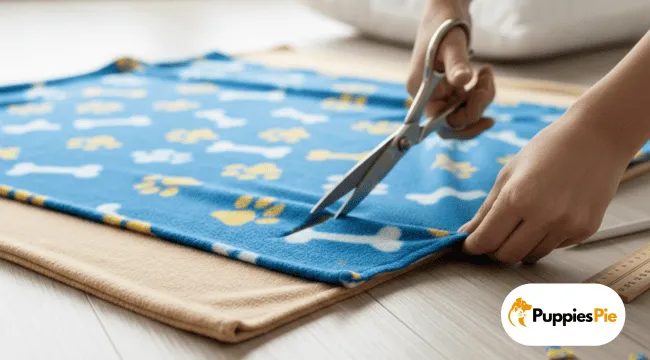
Pro Tip: To make this easier, you can cut a 4-inch by 4-inch square out of each of the four corners first. This gives you a clear starting point for cutting the fringe strips.
Step 5: Tie the Fringes
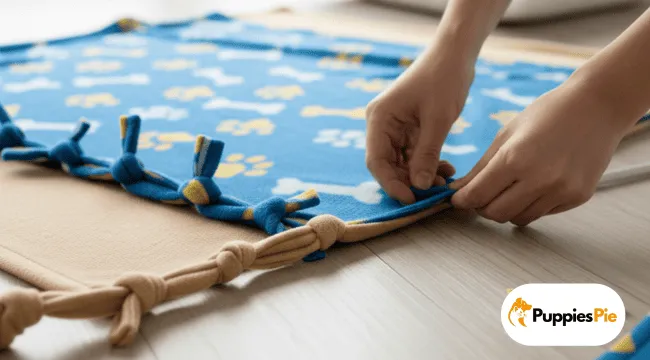
Take one fringe strip from the top layer and one from the bottom layer and tie them together in a secure double knot. Repeat this process, working your way around the entire perimeter of the fabric.
Step 6: Insert the Pillow

Once you’ve tied about three sides of the bed, leave the final side open. Gently slide your pillow into the fabric pocket. Take your time to make sure it is centered and flat.
Step 7: Finish Tying
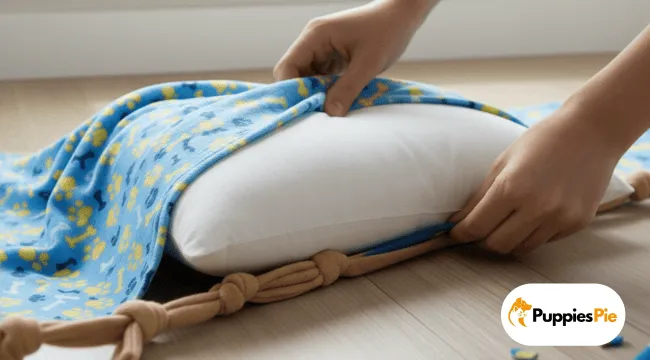
Once the pillow is inside, tie the remaining fringes on the last side closed. Make sure your knots are tight and secure. Your no-sew dog bed is now ready!
Dog Care Insights & The Bed
The Bed as a Part of a Healthy Lifestyle
A comfortable resting place is more than just a bed; it’s part of a holistic approach to healthy dog treats, toys, and overall wellness. Just as a good diet (like healthy dog treats) and regular exercise are vital, so is quality rest. A dog bed provides a safe space for your dog to recover and recharge, which is essential for their physical and mental health.
Vet-Approved Considerations
When choosing materials for your bed, always prioritize safety. Avoid fabrics with small pieces that could be chewed off and swallowed. Ensure the pillow filling is non-toxic. For dogs with allergies, opt for hypoallergenic materials. If your dog is a chewer, a sturdy, durable fleece is a better choice than a more delicate fabric.
Personalizing and Introducing the Bed
Making It Special
You can easily personalize your new bed. Try using different colored fleece fabrics, or even a patterned one for the top. You can also add some of their favorite homemade dog toys on top to make it even more inviting. This small touch can make the bed feel like a familiar, comforting space for your pet.
How to Introduce It to Your Dog
The introduction is key! Place the new bed in a quiet, comfortable spot where your dog already likes to rest. Don’t force them to use it. You can make it more appealing by placing a favorite toy or a blanket with your scent on it. You can also toss a few of their favorite healthy dog treats on the bed.
Watch for positive signs:

They sniff and explore the bed curiously.
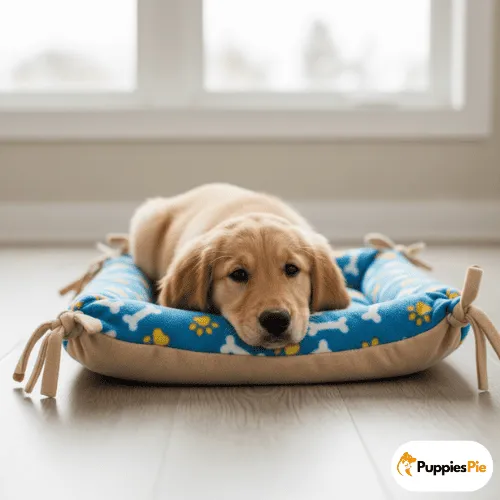
They voluntarily lay down on it.
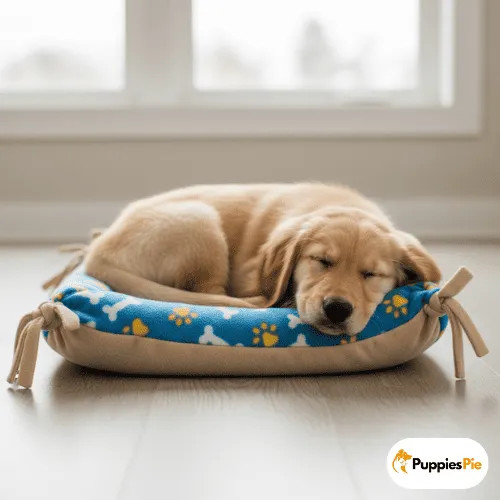
They curl up and settle in for a nap.
If your dog ignores it, try moving it to a different location or adding a familiar item. The goal is to make it their choice to use it.
Variations & Seasonal Twists
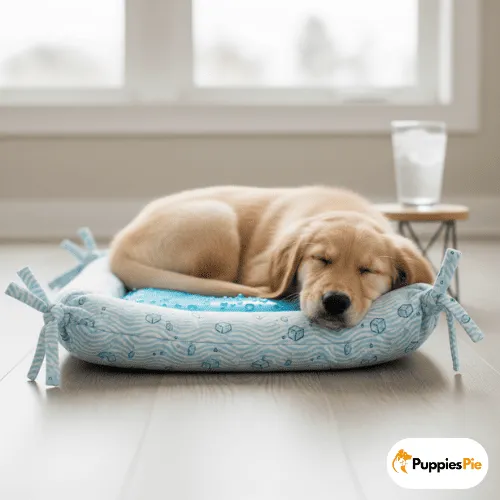
Cooling Bed: For hot summers, use a lighter, more breathable fabric like cotton. You can even insert a cooling gel pad inside for extra relief.

Winter Warmer: Use a thicker fleece or add an extra layer of flannel on top for a cozy winter retreat.
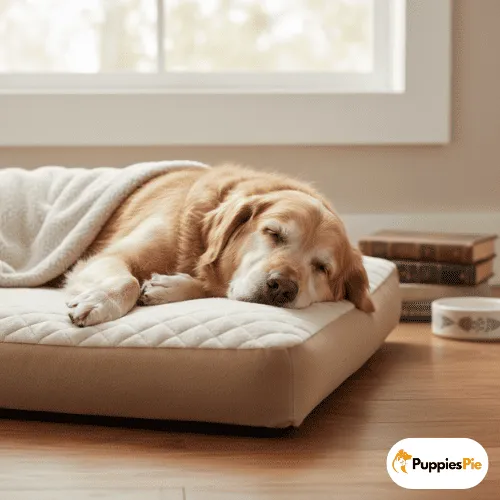
Orthopedic Bed: For older dogs, use a memory foam pillow or add an extra layer of foam for more support.
Troubleshooting & Safety
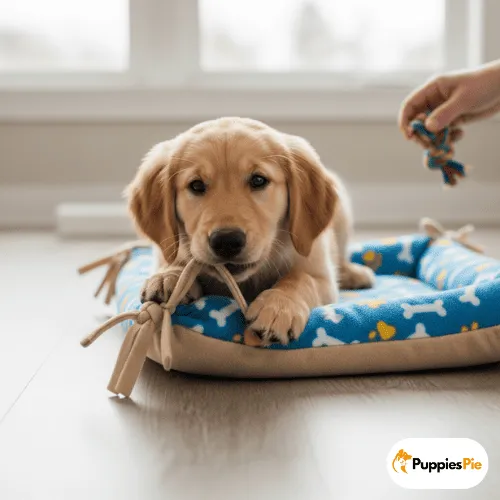
My dog is a chewer! If your dog likes to chew, be mindful of the fringe pieces. Make them shorter and tie them extra tight. Always supervise your dog when they’re using a new toy or bed.
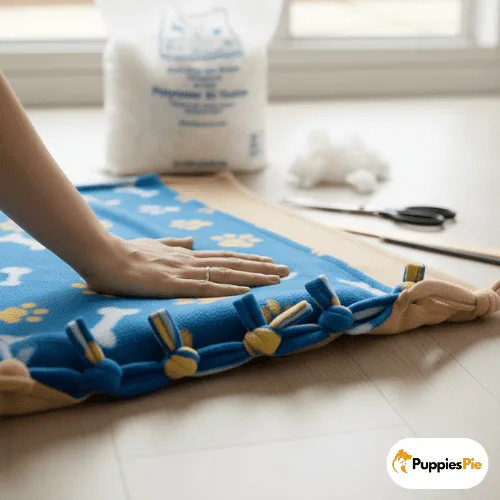
The pillow is lumpy. If your pillow is not firm enough, you can add some extra stuffing (make sure it’s safe for pets) to make it more supportive.

The bed is too small/big. You can easily adjust the size of the bed by cutting the fabric to fit a larger or smaller pillow.
Conclusion
Creating a no-sew dog bed from a pillow is a rewarding and practical project that shows your dog you care. It’s a simple, cost-effective, and fun DIY craft that provides a comfortable and secure space for your furry friend.
By making this bed, you’re not just providing a place for them to sleep; you’re contributing to their overall well-being, from providing a safe spot for rest to strengthening your bond. We hope this guide inspires you to get creative and make something truly special for your pet. What other DIY projects are you excited to try for your dog?