Is your dog an Olympic-level speed eater, or are they constantly getting into mischief around the house? If you answered yes, you are certainly not alone. Many dog owners struggle with managing their pet’s high energy levels and preventing destructive boredom. The good news is that the solution might be sitting in your recycling bin right now.
You can use simple materials to create a highly effective dog enrichment toy. This article will show you exactly how to build the ultimate DIY Cardboard Puzzle Feeder safely and easily. We will cover the mental health benefits, a step-by-step construction guide, and essential safety tips approved by experts.
Why Your Dog Needs a Puzzle Feeder
A dog’s life is much more complex than just eating and sleeping. They have a natural drive to hunt, forage, and work for their food. When a dog simply inhales its meal from a bowl, it misses out on crucial mental stimulation. This lack of engagement often manifests as undesirable behaviors in your home. Providing a challenge, like a DIY Cardboard Puzzle Feeder, is not just fun; it’s an essential part of responsible pet ownership.
The Mental Health Boost
Mental stimulation tires a dog out far more effectively than physical exercise alone. A short session with a homemade dog puzzle can be as exhausting as a long walk. When dogs must problem-solve to get their reward, it satisfies their natural instincts. This process releases feel-good hormones that reduce stress and anxiety. Regular use of an enrichment toy can greatly decrease common issues like barking and pacing.
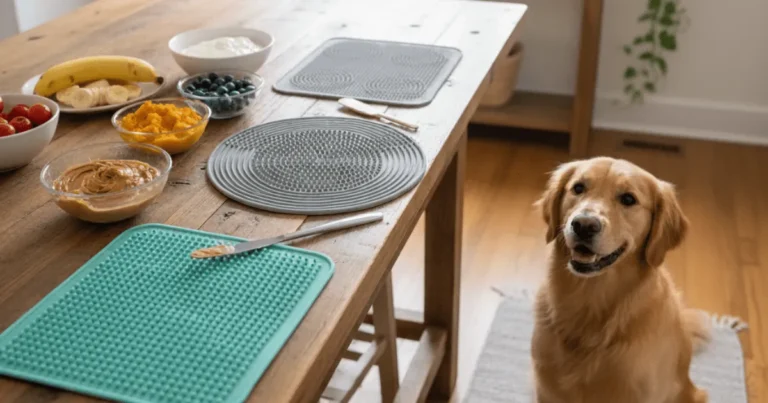
For extra nose-work enrichment, you can also try a DIY Scented Snuffle Mat, which encourages natural foraging and keeps your dog mentally engaged.
Physical Health Benefits
Rapid eating, or “scarfing,” is a major contributor to several health issues in dogs. When a dog eats too quickly, they swallow excessive air, which can lead to uncomfortable bloating. In severe cases, this can lead to bloat, a life-threatening condition requiring immediate vet care.
The DIY Cardboard Puzzle Feeder forces your dog to slow down and pick out individual pieces of kibble. This deliberate pace aids in digestion and helps prevent gulping and discomfort. It is a fantastic slow-feeder solution that costs next to nothing.
Strengthening Your Bond
Working on a puzzle feeder together builds trust and strengthens the relationship you have with your pet. When you introduce a new challenge, your dog looks to you for guidance and praise. Spending time supervising your dog while they engage with the puzzle reinforces positive behavior. This shared activity creates a wonderful, positive feedback loop for both of you.
Safety First: Vet-Approved Cardboard Tips
The primary concern when using cardboard for any dog toy is ingestion. While cardboard is generally non-toxic, swallowing large, sharp, or taped pieces is a significant hazard. Safety is paramount when creating your DIY Cardboard Puzzle Feeder. Always keep these critical vet-approved guidelines in mind.
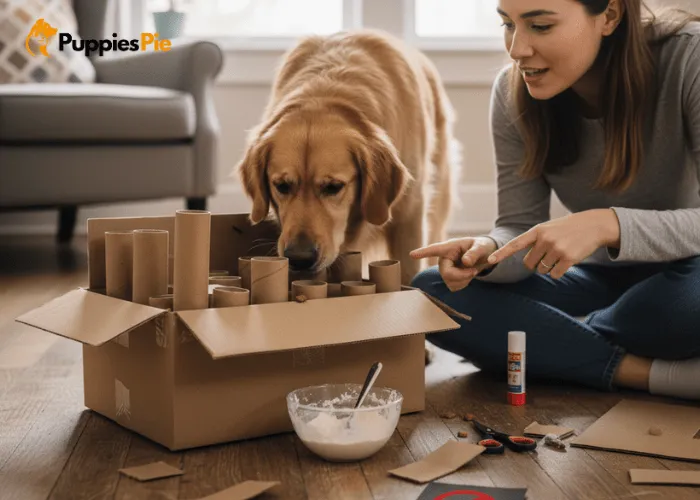
Supervision is Mandatory: Never leave your dog unattended with the cardboard puzzle feeder. This is an interactive toy designed for supervised play only. Once your dog retrieves the food, the toy should be put away immediately.
Only Use Clean Cardboard: Ensure the cardboard is clean, dry, and free from staples, heavy inks, or chemical residue. Avoid any boxes that contain cleaning products, medications, or processed foods with heavy oils.
Avoid Toxic Adhesives: Do not use heavy-duty glue, super glue, or excessive packing tape. Only use small amounts of non-toxic, animal-safe glue or simple flour-and-water paste. The best option is often to use interlocking pieces without any glue at all.
Know Your Dog’s Chewing Style: If your dog is a known shredder or tends to eat anything they chew, this may not be the right toy. For those dogs, stick to brief, highly supervised sessions or try a durable, commercially made feeder instead.
Check the Edges: Before every use, inspect the feeder for sharp corners or edges that could pose a risk if chewed. Replace the feeder instantly if it becomes damp, flimsy, or heavily damaged.
Simple Steps for Your DIY Cardboard Puzzle Feeder
Creating a basic, effective puzzle feeder is surprisingly fast. The goal is to build simple layers and compartments that require your dog to use their nose and paws. This is the classic, low-barrier-to-entry design that works for almost all dogs.
Gathering Your Safe Materials
You need only a few items for this basic project. Remember to source everything from a clean, safe environment.
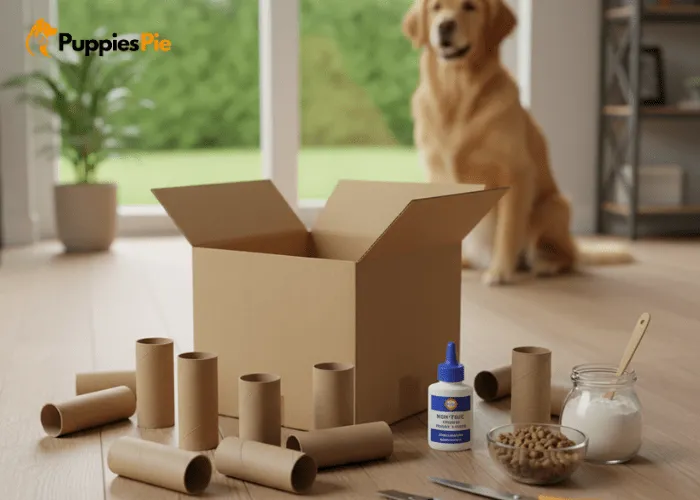
1. A sturdy, medium-sized cardboard box (e.g., a shipping box or a shoe box).
2. Several cardboard tubes (e.g., toilet paper or paper towel rolls).
3. A pair of sharp scissors or a utility knife (for adult use only).
4. Optional: Non-toxic glue or flour-water paste.
5. Your dog’s favorite dry kibble or small, healthy training treats.
Step-by-Step Construction Guide
Prepare the Base Box: Select your main, sturdy box. The box should be low enough that your dog can easily reach inside with their nose and paw. If the box is too tall, trim the sides down to about 4 to 6 inches, depending on the size of your dog.
Create the Tubes: Take your cardboard tubes and cut them into smaller sections. The goal is to create short cylinders that are roughly the same height as the sides of your base box. Cut a handful of these cylinders; you need enough to loosely fill the box.
Arrange the Obstacles: Place the cut cardboard tubes vertically inside the base box. Do not pack them too tightly. The tubes should stand up and create many small, randomly placed compartments and openings. This makes your main puzzle grid.
Secure (Optional): If you find the tubes fall over too easily, you can dab a tiny amount of non-toxic glue to the bottom of each tube. Glue is not necessary for the puzzle to work, but it can add stability for more enthusiastic dogs. Allow the glue to dry completely before use.
Test the Puzzle: Before adding food, gently shake the box to ensure the tubes stay mostly in place. The finished product should look like a honeycomb of open tubes and spaces. This forms your basic DIY Cardboard Puzzle Feeder.
Building a More Complex Design
If your dog is an advanced problem-solver, you can increase the challenge of your DIY Cardboard Puzzle Feeder. Consider adding one or two additional layers to the structure.
1. The Flap Challenge: Cut small flaps from scrap cardboard that are just large enough to cover the opening of some of the tubes. Do not glue them down. When you fill the puzzle, lay these flaps over a few of the treat spots. Your dog must nudge or paw the flap out of the way first.
2. The Maze Layer: Cut several long strips of cardboard that fit across the top of your base box. Cut small notches into these strips so they interlock like puzzle pieces, forming a grid or small “fence” across the top. This forces the dog to work the treats around the grid before they can drop into the tubes below.
3. The Hidden Pockets: Use a small, flat piece of cardboard to partition one corner of the box off. Cut a small, circular hole (just big enough for a paw or nose) into the top of this partitioned section. Place a few treats inside this pocket to create a special, harder-to-reach area.
Filling and Using the Enrichment Toy
The excitement of the DIY Cardboard Puzzle Feeder comes from the reward of the food itself. You should use this toy to dispense a portion of your dog’s daily meal, not just extra treats. This helps manage their weight and makes the puzzle a regular part of their feeding routine.
Best Filling Options
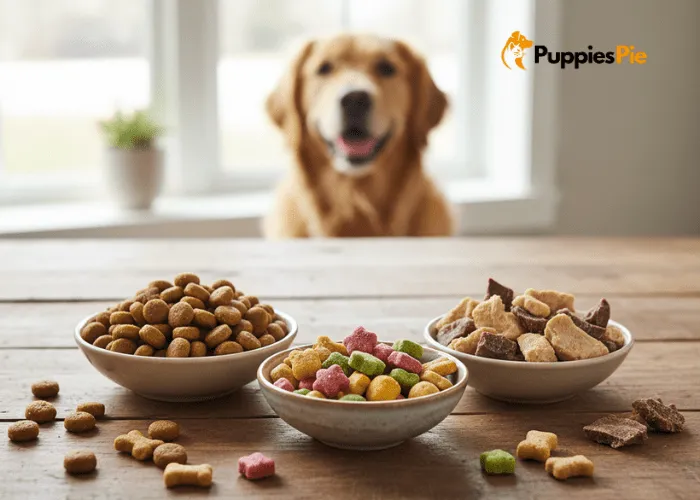
Dry Kibble: This is the ideal filling. It is easy to drop into the small holes and tubes, and it is low-mess. Use 1/4 to 1/3 of your dog’s regular meal portion.
Small, Hard Treats: Healthy, crunchy training treats can be used sparingly. They are highly motivating and fit perfectly into the compartments.
Freeze-Dried Meats: These are very high-value and provide a strong scent cue, which encourages your dog to use their nose. Their irregular shape often makes them a slightly harder challenge to extract.
To load the feeder, simply scatter the food over the top of the entire structure. The food should fall randomly into the tubes and spaces. Your dog must then figure out how to retrieve the pieces, whether by nudging the box, using a paw, or carefully using their tongue.
Adjusting Difficulty for Your Dog
It is vital to start easy and build the difficulty over time. If the puzzle is too hard immediately, your dog will become frustrated and give up, which defeats the purpose.
Beginner Level:
1. Use a very short box base with plenty of open space.
2. Leave some treats clearly visible on top of the tubes.
3. Ensure the treats are very high-value (strong scent).
4. Stand very close and offer light encouragement.
Intermediate Level:
1. Use a taller box base and more densely packed tubes.
2. Only drop the kibble into the tubes so your dog must nose or paw them out.
3. Introduce one or two small, simple flaps or covers over certain compartments.
4. Use their regular kibble instead of high-value treats.
Advanced Level:
1. Incorporate the maze layer or hidden pockets described above.
2. Cut small, irregular holes into the sides of the base box to introduce a different angle of access.
3. Use larger, awkwardly shaped treats that are difficult to shake out.
4. Combine the cardboard feeder with another element, like placing it on a slightly unstable surface (e.g., a low cushion) so they must stabilize it first.
Troubleshooting Common Puzzle Feeder Mistakes
Even the best-intentioned pet owners can make small errors when introducing a new enrichment activity. Knowing the pitfalls will help you ensure your DIY Cardboard Puzzle Feeder is a success.
Mistake: Starting Too Hard.
Fix: This is the number one reason dogs give up or get frustrated. Always make the first few sessions incredibly easy. If your dog successfully completes the puzzle in under a minute, you can increase the difficulty slightly next time.
Mistake: Not Offering Supervision.
Fix: Without supervision, this activity quickly turns from a mental exercise into a chewing disaster. If your dog starts to ingest pieces of the cardboard, you must interrupt, redirect them to retrieve the food, and then put the feeder away.
Mistake: Letting Them Destroy It.
Fix: The goal is for your dog to solve the puzzle, not to shred it to get the food. If your dog immediately resorts to demolition, the puzzle is too hard. Immediately remove the feeder and try a simpler version next time. You may also need to offer a more durable toy (like a food-stuffed Kong) first to teach proper interactive play.
For dogs who prefer more durable enrichment options, a Rope Ball Toy is a sturdy DIY choice that satisfies chewing and tugging needs.”
Mistake: Using Wet or Sticky Food.
Fix: Wet food, peanut butter, or sticky treats will ruin the cardboard instantly and introduce a hygiene risk. Stick to dry kibble and hard treats only. A wet spot means bacteria growth, and the feeder must be discarded.
Mistake: Using It as Punishment.
Fix: Enrichment should be a positive experience. Never offer the DIY Cardboard Puzzle Feeder when your dog is already agitated or as a distraction from a negative situation. It should be associated with calm, rewarding mealtimes.
When to Replace and Other Easy Alternatives
The cardboard feeder is temporary by nature. Since it will get drool-soaked and occasionally chewed, it is not a long-term investment.
Maintenance and Hygiene Tips
Daily Inspection: Check for heavily wet, frayed, or chewed sections before every use.
Immediate Disposal: If the cardboard is soaked with water, drool, or if your dog has ripped off a large piece, throw it away immediately.
Dry Storage: Store the puzzle feeder in a clean, dry place between uses. If the cardboard gets damp, it becomes a breeding ground for bacteria and is less structurally sound.
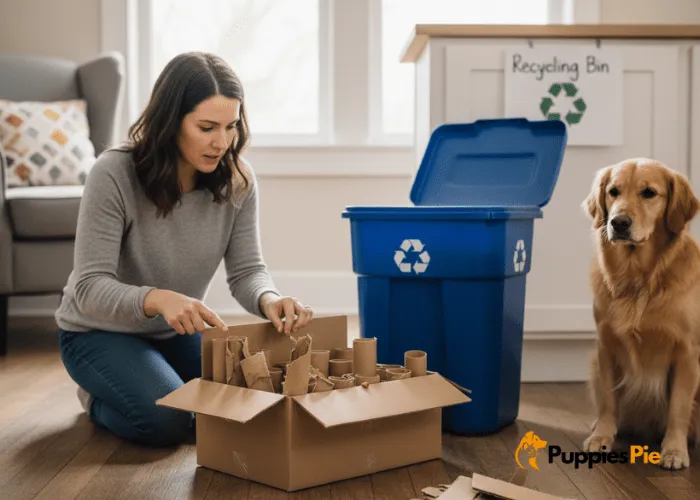
Recycling: Since it’s made of cardboard, you can usually place the well-used, clean feeder into your regular paper recycling bin when it’s time to replace it.
Beyond the Cardboard: Quick DIY Alternatives
If you need a break from cardboard or want to experiment with different enrichment styles, these two alternatives are just as easy to make. They provide similar benefits to the DIY Cardboard Puzzle Feeder.
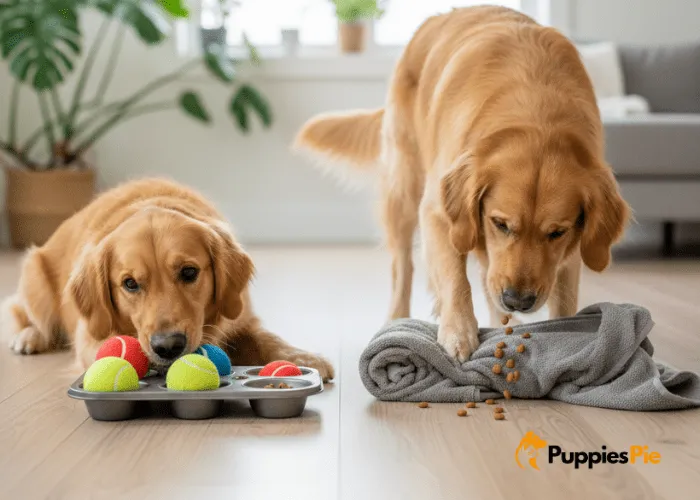
1. The Muffin Tin Game: Take a standard muffin baking tin. Place a small amount of kibble in each cup. Cover each cup with a tennis ball, block, or large, sturdy toy. Your dog must nudge and paw the toys out of the way to reach the food.
This is a very durable and washable option.If you want another simple cardboard-based activity, an Interactive Toilet Roll Puzzle is a fun option that reuses empty tubes for quick enrichment.
2. The Towel Roll-Up: Lay a towel flat on the floor. Scatter a handful of kibble across the towel. Roll the towel up tightly like a sleeping bag. Your dog must unroll, nose, or shake the towel to release the food. This is excellent for dogs who love sniffing and light paw work.