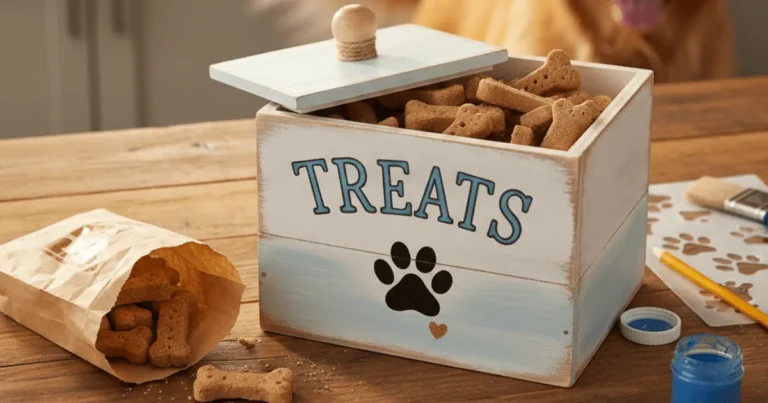
Dog owners love small rituals, like cracking open the treat box and watching tails start wagging. A custom painted dog treat box turns that everyday moment into something personal and warm. It also solves a basic problem: treat bags look messy, tear easily, and never seal well. A sturdy, custom-designed box keeps everything organized while adding character to your kitchen or pet corner.
This guide shows you how to design and paint your own custom dog treat box from scratch. You’ll learn which materials work best, how to prep the surface, how to choose pet-safe paints, and how to create a design that fits your home. By the end, you’ll have a practical storage piece that feels like it was made just for your dog, and by you.
Why Make a Custom Painted Dog Treat Box?
A custom treat box does more than hold snacks. It’s a small, functional piece of décor that reflects your dog’s personality. It also keeps treats fresh and hidden from sneaky paws.
A DIY box lets you control everything, materials, size, colors, and details. You’re not stuck with generic prints or flimsy store versions. You create something durable, personal, and fun to use.
Benefits at a glance:
- Keeps treats organized and sealed
- Adds a decorative pop to your home
- Makes treat time feel more special
- Reduces clutter from bags and wrappers
- Easy to clean and maintain
Materials You Need to Make a Dog Treat Box
You don’t need fancy tools. A few simple supplies are enough to build and paint a sturdy treat box.
The Box Itself
Choose a container that’s durable, easy to clean, and sealable.
Options include:
- Wooden storage box with lid
- Metal tin (smooth, food-safe interior)
- Thick acrylic box
- Bamboo container
- MDF craft box from hobby stores
Wood works best for painting, but metal and acrylic are fine if you use the right primer.
Paints and Tools
Stick to non-toxic materials, especially since this box is for edible treats.
You’ll need:
- Sandpaper (medium and fine grit)
- Non-toxic acrylic paint
- Non-toxic acrylic sealer or lacquer
- Primer (wood, metal, or plastic depending on your box)
- Paintbrushes of different sizes
- Painter’s tape
- Stencils (optional)
- Pencil and eraser
Extra Decorative Options
If you want to go bold, try:
- Vinyl name stickers
- Paw-print stamps
- Custom stencils
- Rope handles
- Wooden letters for your dog’s name
- Metallic accents (pet-safe)
How to Design Your Custom Dog Treat Box
Before painting, you need a plan. Think about where the box will live and what vibe you want. Clean and simple? Bright and playful? Rustic farmhouse?
Pick a Style
Here are a few ideas:
- Minimalist: Cream or black box with clean lettering.
- Colorful: Bright blues, greens, or pinks with bold shapes.
- Rustic: Stained wood, simple paint accents, rope handles.
- Personalized: Your dog’s name, silhouette, or paw prints.
Sketch Your Layout
Use a pencil to lightly outline your design on the box. Decide where text goes, where patterns sit, and how colors flow. Planning avoids messy corrections later.
Choose Your Colors Carefully
Match the box to your home’s palette. Muted neutrals look timeless. Bright colors feel fun and energetic. Metallic touches add contrast but use them lightly so the design stays clean.
Step-by-Step Guide to Painting Your Dog Treat Box
This is where the fun starts. Follow these steps to get a smooth, durable finish.
Step 1: Prepare the Surface
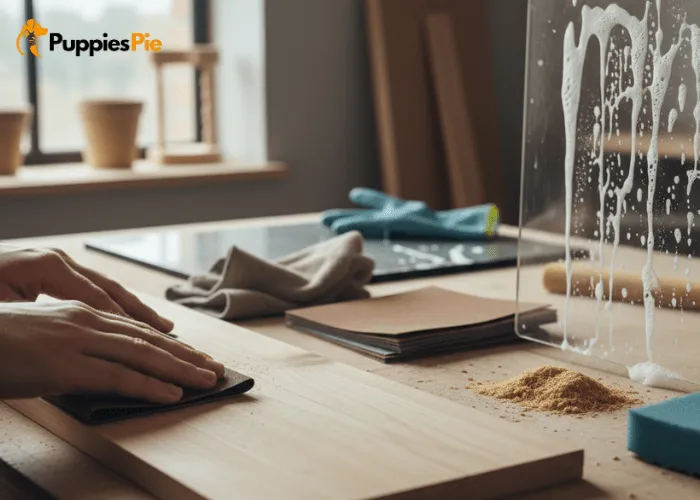
If you’re using wood, sand it gently with medium grit paper until the surface feels smooth. Then switch to fine grit for a soft finish. Wipe away dust with a dry cloth.
If you’re using metal or acrylic, skip sanding and go straight to cleaning with warm soapy water. Let it dry completely.
Step 2: Apply Primer
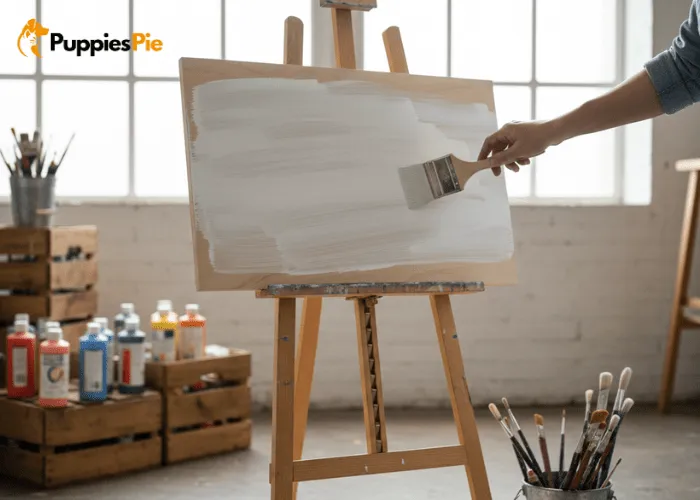
Primer helps paint grip the surface. Paint a thin, even coat and let it dry fully. This gives you a blank canvas and prevents chipping later.
Step 3: Paint the Base Color
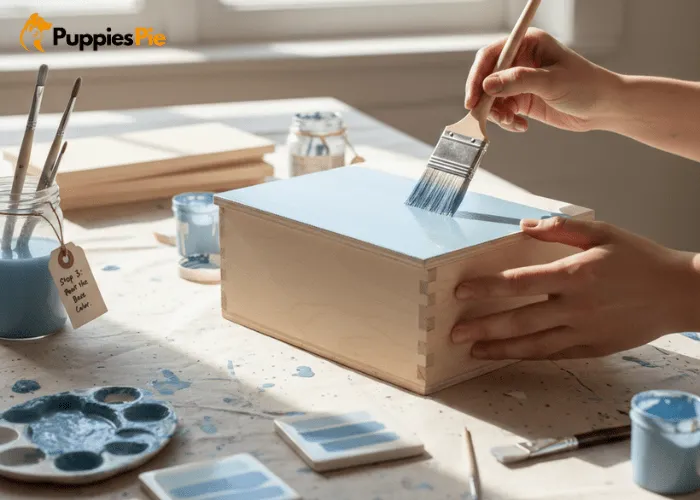
Choose a main color and cover the entire box. Apply 2–3 thin layers rather than one thick layer. Let each coat dry before adding the next for a smooth finish.
Step 4: Add Your Design
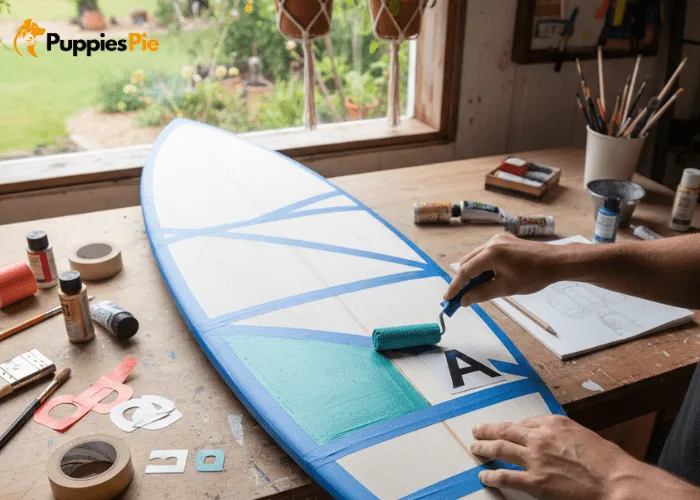
Once the base dries, go back to your pencil sketch.
Use painter’s tape to block off sections for stripes or clean edges.
Apply accent colors, patterns, or stenciled shapes.
For letters, stencils or vinyl stickers give crisp results.
Step 5: Add Details and Highlights
Small touches make the box feel custom.
Examples:
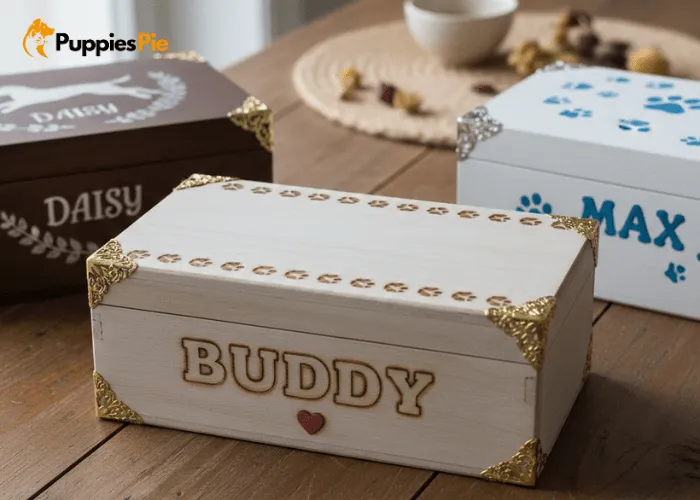
- A tiny heart under your dog’s name
- Paw prints along the lid edge
- Shaded outline around lettering
- Gold or silver corner details
Keep details simple, too many elements can clutter the design.
Step 6: Seal the Box
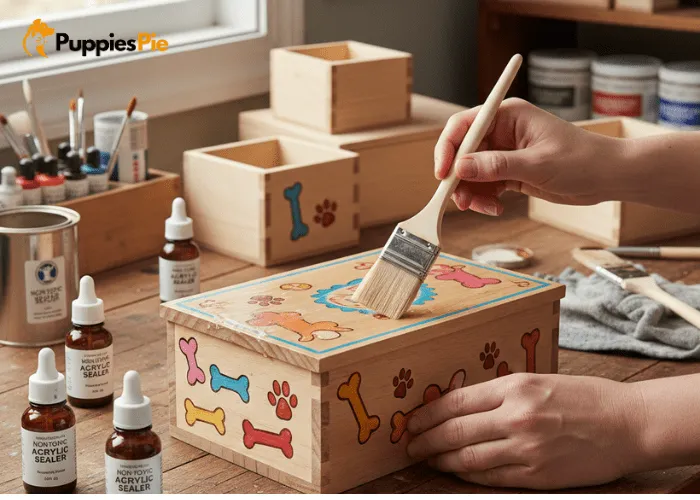
A non-toxic acrylic sealer protects your paint from scratches, moisture, and everyday use. Apply 1–2 coats. Let it cure completely before storing treats.
Safety Tips for Making a Dog Treat Box
Pet safety matters more than aesthetics. Keep these points in mind:
- Use non-toxic paints and sealers. Anything marketed for kids’ crafts is usually safe.
- Don’t paint the interior of the box if treats sit directly inside. Use a food-safe liner instead.
- Make sure all paint is fully cured before filling the box.
- Avoid adding loose decorations that your dog could chew off.
- If your dog is a cabinet raider, choose a box with a secure latch.
Ideas for Decorating Your Dog Treat Box
Here are fun ways to personalize your design without overdoing it.
Name and Breed Silhouette
Print or stencil your dog’s silhouette for a custom touch. Add their name below in a bold, readable font.
Theme Designs
Match your dog’s personality.
Examples:
- Bright colors for energetic dogs
- Soft pastels for gentle pups
- Nature themes for hiking lovers
Pattern Ideas
- Polka dots
- Stripes
- Checkered patterns
- Tiny bones or paw prints
Hand-Painted Illustrations
If you love drawing, paint a small portrait, bone, or heart on the front panel. A few well-placed shapes go a long way.
Keeping Treats Fresh Inside the Box
A pretty box is great, but freshness matters.
Keys to better storage:
- Use sealed treat bags inside the box.
- Add a food-safe plastic liner if storing treats directly.
- Keep the box away from heat or sunlight.
- Wipe the inside clean every few weeks.
- Avoid storing wet or moist treats, they cause mold quickly.
A simple routine keeps treats tasty and safe.
Where to Put Your Custom Treat Box
Placement changes how often you use it and how long it lasts.
A few good locations:
- Kitchen counter
- Pantry shelf
- Mudroom storage area
- Pet feeding station
- Living room shelf
Keep it away from areas your dog can break into, especially if you live with a clever snacker.
Creative Variations for Your Treat Box Design
Once you make one, you may want to make more.
Here are variations that dog owners often enjoy:
Seasonal Boxes
Paint designs for holidays or seasons, winter snowflakes, spring flowers, fall leaves.
Travel Treat Box
Use a smaller box for car trips or walks. Same design steps, just scaled down.
Multi-Dog Box
If you have more than one pet, divide the interior with removable wooden slats. Personalize each section with names and colors.
How to Clean and Maintain Your Dog Treat Box
A bit of care keeps your design looking new.
- Wipe outside surfaces with a damp cloth.
- Avoid strong cleaners, they strip paint.
- Recoat with sealer once a year if needed.
- If scratches appear, lightly sand the spot, repaint, and seal.
Maintenance is simple and keeps your DIY project looking fresh.
Conclusion:
A custom painted dog treat box is a simple project that adds charm to your home and brings a little joy to treat time. It’s practical, personal, and easy to make with inexpensive materials. Once you finish your first one, you’ll start imagining new designs and color themes.
If you enjoyed this guide, explore more DIY dog projects and turn your pet corner into something special.