A dog ID tag doesn’t need to be flashy to be effective. Many owners prefer something clean and modern, simple shapes, clear text, nothing dangling like noisy jewelry. A minimalist dog ID tag gives you all the safety benefits without the clutter. And when you make it yourself, you get full control over the design and materials.
If you’re searching for a project that blends practicality with style, this guide gives you everything you need. You’ll learn which materials work best, how to choose a durable shape, and how to engrave or stamp details that stay readable for years. The process is beginner-friendly but gives polished results. By the end, you’ll have a quiet, sleek ID tag that looks intentional instead of generic.
Why Make a Minimalist Dog ID Tag?
A minimalist tag cuts down visual noise and focuses on what matters: durability and readability. You don’t need paw prints, bright colors, or crowded text. You only need essential details presented cleanly.
Minimalist tags are also lightweight and quieter during movement. Dogs that dislike jangling tags or heavy metal pieces tend to prefer them. The smooth look also blends better with simple collars and harnesses.
At its core, this DIY gives you three big advantages:
- A clean modern aesthetic
- A durable tag that ages well
- A safe, readable ID your dog can wear daily
Materials for a Minimalist Dog ID Tag
Minimalist designs rely on quality materials. Clean lines stand out best when you start with something sturdy and smooth.
Metal Options
Metal gives the most durable finish. Popular choices include:
- Stainless steel: Strong, rust-resistant, clean look
- Aluminum: Lightweight and easy to stamp
- Brass: Warms into a vintage patina over time
- Titanium: Ultra-light, highly durable
Stainless steel and aluminum are the easiest for beginner DIY projects.
Non-Metal Options
Non-metal tags work well if you want something soft or silent.
- Leather: Flexible, natural, and lightweight
- Acrylic: Clean modern look with bold edges
- Silicone: Soft, chew-resistant, silent
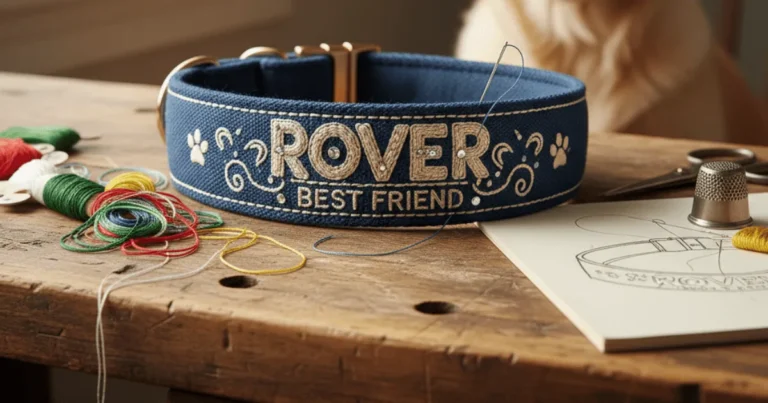
Leather and silicone give you the quietest tags. Leather, acrylic, and silicone can be a good choice if you want to create a DIY Name Tag (Resin/Wood) or add a custom Embroidered Dog Collar.
Tools You’ll Need
The exact tools depend on the material you choose, but here’s a general list:
- Metal letter stamping set (for metal tags)
- Hammer or mallet
- Leather punch (for leather tags)
- Permanent marker or engraving pen
- Sandpaper (fine grit for smoothing edges)
- Small cutting board or metal block
- Hole punch, if your tag doesn’t come pre-drilled
- Split ring or minimalist connector for attaching to the collar
Most hobby stores carry these tools.
Choosing a Minimalist Shape and Style
Minimalism is about intentional simplicity. The shape you choose sets the tone for the whole tag.
Simple Geometric Shapes
The cleanest designs usually use basic shapes:
- Circle
- Oval
- Rectangle
- Narrow bar-style tag
- Rounded square
Avoid complex silhouettes. The more simple the shape, the more elegant the final result.
Matte or Polished Finish
Matte surfaces give a modern look and hide scratches better. Polished finishes reflect light and appear sleek but require more upkeep. Decide based on your dog’s activity level.
Font Choices for Minimalist Tags
Use clear, bold lettering. Sans-serif fonts always fit minimalist style better than decorative or cursive fonts. If you’re hand-stamping metal, letter stamps already mimic simple, readable typography.
What Information Should Go on a Minimalist Dog Tag?
Minimalism is about cutting the excess. That applies to the information, too. You don’t need everything, just the essentials.
The most important details:
- Dog’s name
- One reliable phone number
- Optional: Microchip ID note (“Microchipped” or “Scan Me”)
- Optional: City or state abbreviation
A minimalist tag avoids clutter. One or two lines of key information are plenty.
If you want to skip the name for safety reasons, you can use only a phone number. Many owners prefer this cleaner look.
Step-by-Step Guide: Minimalist Metal Dog ID Tag DIY
This method works for stainless steel, aluminum, brass, or titanium. Metal is durable, long-lasting, and perfect for clean designs.
Step 1: Prepare the Tag
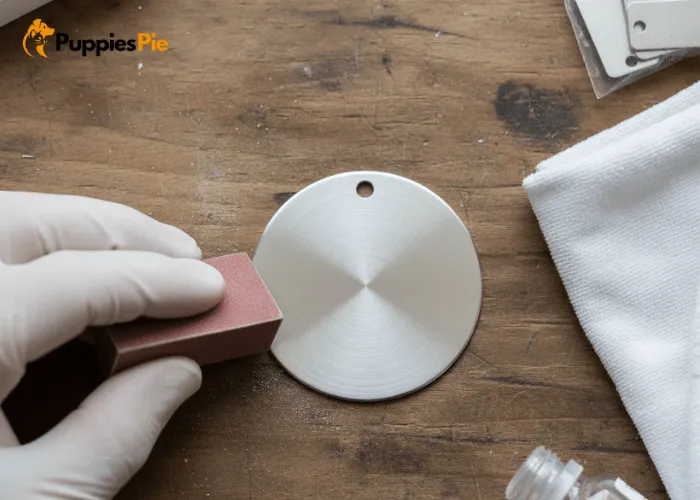
Start with a blank metal tag. Many craft stores sell discs, rectangles, or bars pre-cut and pre-drilled.Wipe the surface clean and sand any rough edges with fine grit paper.
Step 2: Mark Your Layout

Use a pencil or marker to make faint guidelines. This keeps your text straight.
Leave generous spacing, minimalism loves breathing room.
Step 3: Stamp the Letters

Place the tag on a metal block. Hold your letter stamp upright on the guideline.
Strike once firmly with a hammer. One clean hit gives sharper lines than multiple taps.
Continue stamping each character, staying centered and evenly spaced.
Step 4: Darken the Lettering

Rub permanent marker over the stamped letters, then wipe the excess. The ink stays inside the stamped grooves, creating contrast.
If you want a soft minimalist look, skip this step for subtle indented lettering.
Step 5: Polish and Seal (Optional)
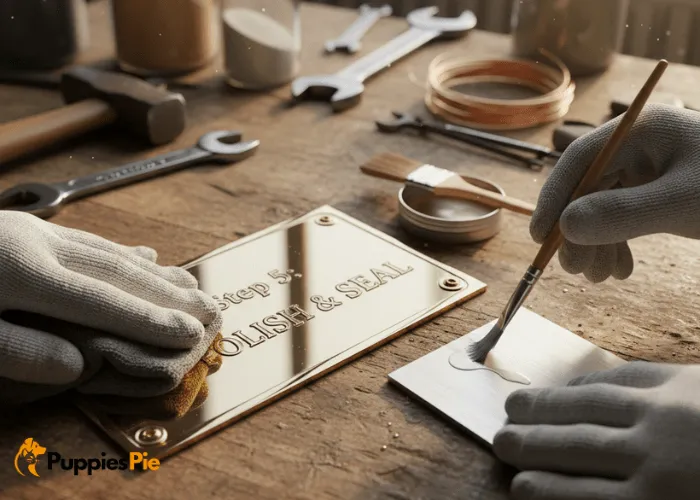
Lightly polish the surface for shine.
If using brass or aluminum, you can apply a thin sealant to reduce tarnish.
Step 6: Attach to Collar
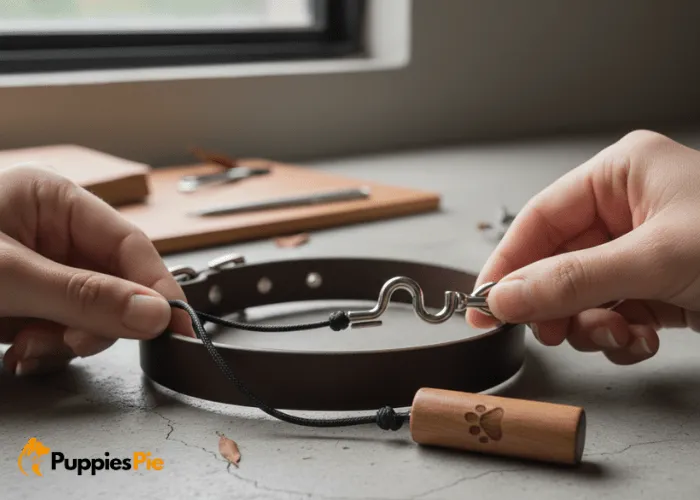
Use a simple split ring, S-hook, or minimalist connector. Avoid bulky rings, they break the clean aesthetic. You can also pair it with Dog Collar Embroidery to add a personalized touch to your dog’s collar.
Step-by-Step Guide: Minimalist Leather Dog ID Tag
Leather gives a warm, natural look and stays quiet when your dog moves.
Step 1: Cut or Select Your Leather Shape
Choose vegetable-tanned leather, it stamps and burns cleanly.
Cut your shape or use a pre-cut disc. Round edges are easier to maintain.
Step 2: Punch the Hole
Use a leather punch to create a clean hole at the top.
Make sure the hole is centered, or the tag will hang unevenly.
Step 3: Add the Text
You can stamp letters into leather or burn them using a wood-burning tool.
Stamping creates crisp impressions. Burning leaves a deep, dark line that won’t fade.
Step 4: Seal the Leather
Apply a leather-safe sealant to protect against drool, rain, and playtime.
Avoid harsh chemicals, choose something pet-safe.
Step 5: Attach to Collar
Use a small, neutral ring. Leather tags look best with simple hardware.
Step-by-Step Guide: Minimalist Silicone or Acrylic Tag
Silicone and acrylic offer a soft, modern look with almost zero noise.
Step 1: Choose a Shape
Bar, circle, or slim rectangle work best for clean designs.
Acrylic stays crisp; silicone feels soft and flexible.
Step 2: Engrave the Text
Use an engraving pen on acrylic.
For silicone, use custom letter stamps or heat-transfer vinyl.
Keep the text brief and centered.
Step 3: Clean the Surface
Wipe away dust and residue. Acrylic especially shows smudges.
Step 4: Attach with a Minimal Connector
Use a low-profile ring or silicone loop. Avoid bulky metal parts.
Design Ideas for Minimalist Dog ID Tags
Minimalist designs don’t mean boring. Subtle details matter.
Simple Line Art
A tiny outline of a bone, paw, or heart can add personality without clutter.
Keep it small, no more than a centimeter across.
Two-Color Contrast
Metal tag with black lettering.
Leather tag with lightly burned edges.
Acrylic tag with frosted surface and dark engraved text.
No-Name Minimalism
Some owners prefer just the phone number. It looks cleaner and protects privacy.
Slim Bar Style Tag
A narrow vertical bar with one line of text is extremely sleek.
Works well for small-breed dogs or owners who love modern design.
Tips for Achieving a Clean Minimalist Look
Minimalism succeeds when every choice is intentional.
- Use simple shapes and neutral colors.
- Keep text short and direct.
- Avoid busy edges or decorative frames.
- Space letters evenly, good spacing feels cleaner than fancy fonts.
- Choose one design element only, not multiple.
- If adding art, keep it tiny.
- Leave empty space; it’s part of the aesthetic.
Your goal is clarity and balance, not decoration.
How to Ensure Your Dog’s ID Tag Is Safe and Durable
Minimalist style doesn’t matter if the tag doesn’t hold up. Here’s how to keep it functional.
Use Weather-Resistant Materials
Stainless steel and silicone handle rain, mud, and swimming best.
Leather lasts long but needs occasional conditioning.
Double-Check Your Text
Make sure the phone number is correct before stamping or engraving.
Errors are hard to fix once engraved.
Pick the Right Connector
Cheap rings break easily. Use a sturdy split ring or a silicone loop designed for tags.
Test Sharp Edges
Run your finger along the sides. If anything feels rough, sand it down.
Your dog shouldn’t feel scratchy edges while wearing it.
Where Minimalist Tags Work Best
Minimalist ID tags blend into many lifestyles.
- Great for active dogs who play rough
- Perfect for quiet household dogs sensitive to clinking noises
- Ideal for modern home décor lovers
- A clean match for solid-colored or neutral collars
- Good for travel because the information is readable at a glance
Minimalism always stays in style, so your tag won’t feel outdated.
Cleaning and Maintaining Your Dog’s ID Tag
Every tag needs occasional upkeep.
- Wipe metal tags with a damp cloth weekly
- Polish brass if you prefer a bright shine
- Condition leather lightly every few months
- Replace worn-out connectors quickly
- Check engraving visibility over time
- Keep it in a organiser to maintain it’s look
A few minutes of care keeps your DIY project looking sharp.
Conclusion:
A minimalist dog ID tag is a perfect blend of practicality and style. You get a clean look, durable construction, and a simple design that suits any dog. Whether you choose metal, leather, silicone, or acrylic, the process is beginner-friendly and relaxing to make. The result is a tag that feels intentional, modern, and long-lasting.
If you’re in the mood for more pet DIY projects, try pairing your new tag with a handmade collar, Dog Bandanas, or treat box to complete the look.