If your pet’s leashes, treats, and toys are scattered everywhere, you’re not alone. Most pet owners have a “dog drawer” or a pile of stuff shoved into a corner, and it’s chaos when you actually need something. A pet closet organizer fixes that problem instantly. It’s an easy DIY project that brings order, style, and sanity to your home.
The goal isn’t just storage, it’s function and personality. From hanging hooks for collars to shelves for grooming tools and bins for toys, a pet closet organizer can turn clutter into a clean, accessible setup that looks good in any room. Let’s go step-by-step on how to design one that fits your space, budget, and pet’s lifestyle.
Why You Need a Pet Closet Organizer
Here’s the thing, pets come with gear. Collars, harnesses, toys, grooming supplies, treats, travel bags… it adds up fast. Keeping it all organized saves you time and keeps your space clean.
A good pet closet organizer helps you:
- Find everything quickly before walks or vet visits. If you want to take walk-time efficiency even further, you can set up a Dog Walking Station right beside your pet closet for grab-and-go convenience.
- Keep treats and meds safely stored out of reach.
- Separate clean items (like towels or sweaters) from dirty ones.
- Store bulky supplies like food bags neatly.
- Add a stylish, intentional touch to your home.
It’s not about being overly tidy, it’s about making daily pet care smoother and stress-free.
Choosing the Right Space for Your Pet Closet
You don’t need a spare room to build an organizer. Even a small corner, entryway, or underused cabinet can transform into a sleek pet zone.
Here are a few ideal spots:
- Hall closet: Perfect for hanging leashes and outdoor gear.
- Laundry room: Great for storing cleaning and grooming supplies.
- Mudroom or entryway: Easy access before walks.
- Bedroom nook: Works for small pets and stylish setups.
Take a quick inventory of your home. Look for vertical space or unused shelves, you’d be surprised how little you actually need to get started.
Materials and Tools You’ll Need
You can build a pet closet organizer from scratch or repurpose what you already have. Here’s what typically goes into one:
Materials:
- Shelving unit or wooden planks
- Hanging rod or hooks
- Storage baskets or bins
- Labels or chalkboard tags
- Drawer organizers (optional)
- Paint or contact paper for finishing touches
Tools:
- Drill or screwdriver
- Measuring tape
- Level
- Sandpaper
- Paintbrush or roller
Optional upgrades: LED strip lights, pegboards for hanging tools, or small hooks for collars and keys.
Step-by-Step: How to Build a Pet Closet Organizer
Step 1, Measure and Plan Your Layout
Start by measuring your available space, width, height, and depth. Sketch out how you want to divide it. Think in layers:
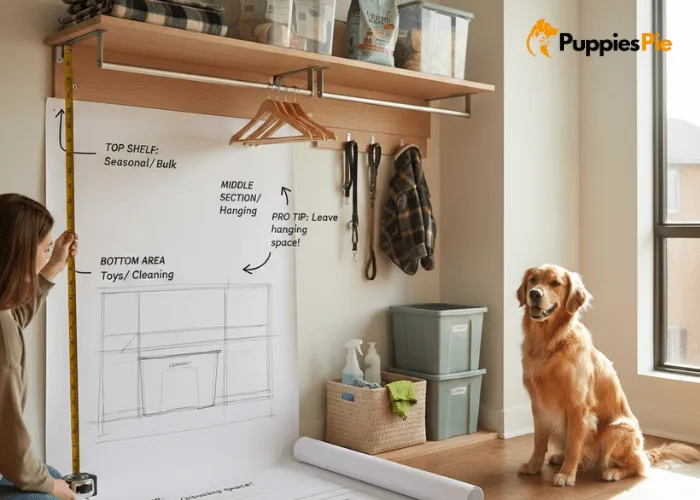
- Top shelf: Seasonal items or bulk storage (extra food, blankets).
- Middle section: Everyday use, leashes, harnesses, jackets.
- Bottom area: Toys, cleaning supplies, or bins for laundry.
Pro tip: Always leave enough height in the middle section for hanging items.
Step 2, Set Up Shelves or Compartments
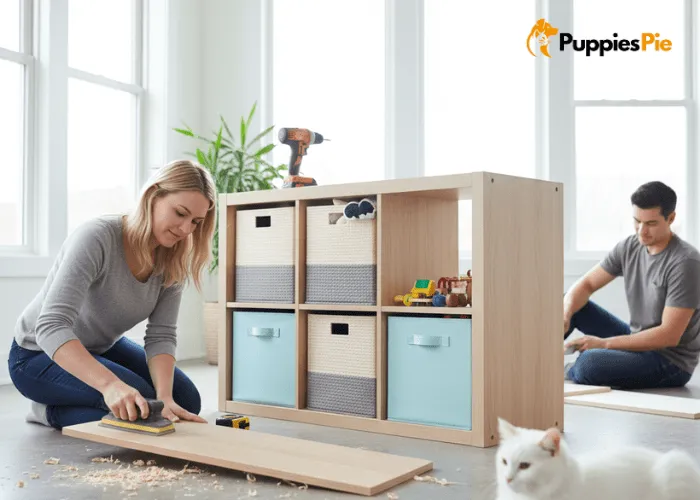
Install adjustable shelves or use pre-made cube storage. Cube organizers are ideal for baskets and bins, plus, they’re easy to rearrange later.
If you’re using wooden boards, sand the edges and paint them to match your home’s style. Neutral colors or light stains work best for a clean, modern look.
Step 3, Add Hanging Rods and Hooks
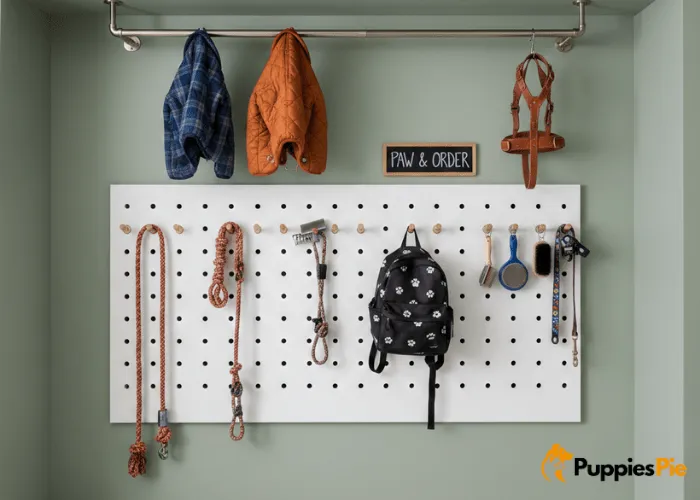
Mount a short tension rod or curtain rod for hanging jackets, collars, or harnesses. Hooks can hold leashes, brushes, or even your dog’s backpack. For an even cleaner setup, you can add a dedicated Dog Leash Holder to keep leashes organized and easy to reach.
If you want to get creative, use a pegboard system, it’s customizable and keeps small tools accessible.
Step 4, Use Bins for Toys and Treats
Separate play items from essentials. Label each bin so you can find things at a glance. If you want to make your storage even cuter, check out Treat Jar Label Ideas for organizing treats in a creative and stylish way.Example setup:
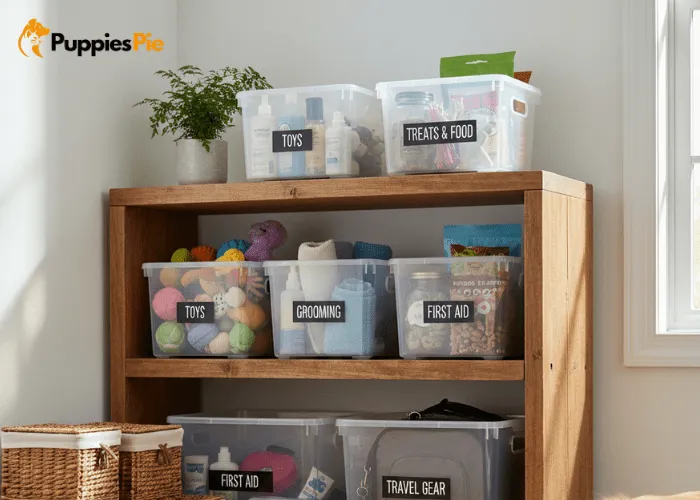
- “Toys”
- “Grooming”
- “Treats & Food”
- “First Aid”
- “Travel Gear”
Clear bins help you see what’s inside, but fabric or wicker baskets give a more homely look if your organizer’s visible.
Step 5, Add Personal Touches
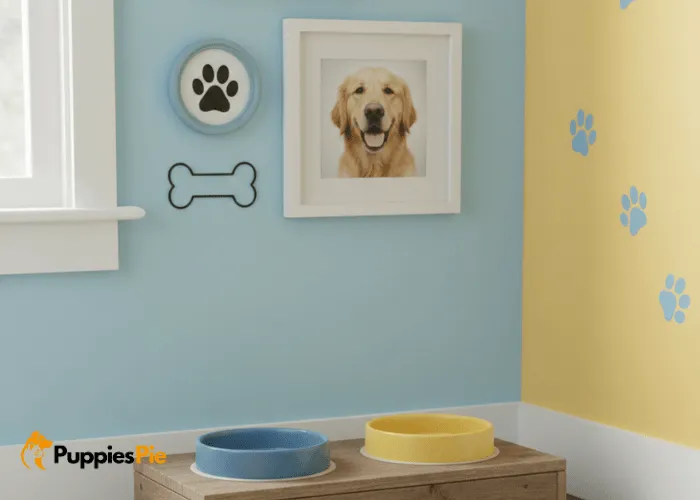
This is where it gets fun. Add your pet’s name on a label or small wooden plaque. Stick some cute paw-print decals or a framed photo above the setup.
You can even paint one section in your pet’s favorite color (yes, dogs have color preferences, blue and yellow are easiest for them to see).
Storage Ideas for Different Pets
For Dogs:
- Hooks for leashes and collars.
- Baskets for tennis balls and chew toys.
- Shelves for grooming tools and dog shampoo.
- Drawer for vet papers and vaccination records.
For Cats:
- Cubes for toys and grooming brushes.
- Container for catnip, litter bags, and treats.
- Shelf for folded blankets and scratching pads.
- Discreet corner bin for litter-related items.
For Multiple Pets:
Assign color-coded bins or labels for each pet. It avoids mix-ups and gives everyone their own little section of the “pet closet.”
Smart Additions for Functionality
Want to go beyond basic storage? Here are a few clever upgrades:
- Built-in charging station: Perfect for automatic feeders or grooming tools.
- Mini laundry basket: For pet towels or dirty clothes after walks.
- Wall-mounted dispenser: Store poop bags or wipes in a sleek pull-out container.
- Foldable grooming mat: Keep it tucked in when not in use.
- Clip-on lights: If your organizer’s in a dark corner, motion-sensor LEDs are a lifesaver.
Each small detail makes daily pet care smoother and more enjoyable.
Budget-Friendly Alternatives
You don’t need to spend a fortune. Here’s how to make it affordable:
- Repurpose an old bookshelf or TV stand into a mini pet closet.
- Use shoe organizers for treats, grooming tools, or toys.
- Pick up clear plastic drawers from a dollar store for quick categorization.
- Decorate with contact paper instead of paint for a fast facelift.
The trick is to make use of vertical space, shelves, wall hooks, and stacked baskets maximize even the tiniest area.
Keep It Clean and Organized
An organizer only works if you maintain it. Set a quick routine:
- Do a 5-minute tidy-up once a week.
- Wipe down shelves and hooks monthly.
- Replace or wash bins as needed.
- Rotate toys, keep a few out and store the rest to avoid clutter.
Also, check expiration dates on treats and grooming products regularly. It’s easy to forget about old bottles buried in the back.
Design Tips to Match Your Home Decor
Your pet’s closet doesn’t need to look like a utility area. With a little design sense, it can blend beautifully into your home.
Try these ideas:
- Scandinavian style: Light wood, clean lines, woven baskets.
- Modern: Black shelves, chrome hooks, and labeled acrylic bins.
- Boho: Rattan baskets, soft fabrics, and pastel touches.
- Rustic farmhouse: Distressed wood, mason jar storage, and chalk labels.
Add a small rug or mat underneath to tie everything together, it also catches any pet hair or crumbs.
Safety and Hygiene Considerations
Before finalizing your setup, make sure it’s pet-safe.
- Keep cleaning products and meds on high shelves.
- Avoid glass jars, pets can knock them over.
- Secure shelving to the wall if your dog’s big or curious.
- Store food and treats in airtight containers to keep pests out.
This makes your organizer both practical and pet-proof.
Example Layouts for Inspiration
1. Compact Entryway Setup:
- One hanging rod for jackets and leashes.
- Two baskets for treats and toys.
- Hook rack above for collars and hats.
2. Full Closet Organizer:
- Top shelf: Bulk food and extra blankets.
- Middle: Hanging section for harnesses.
- Bottom: Pull-out bins for toys and first aid kit.
3. Open Wall Display:
- Pegboard with hooks for accessories.
- Small floating shelf for treats.
- Mounted dispenser for waste bags.
These setups work whether you’re living in an apartment or a full house.
Why DIYing a Pet Closet Organizer Is Worth It
You’re not just creating storage, you’re building a system that fits your routine. Commercial pet organizers rarely fit perfectly, but a DIY version can adapt to your space, your pet’s size, and your habits.
It’s more affordable, customizable, and oddly satisfying. Plus, once it’s done, every walk, bath, or vet trip feels easier, no more frantic searching for missing gear.
Conclusion:
Making your own DIY dog poop bag holder is one of those rare crafts that’s practical, quick, and genuinely satisfying. It turns something routine into something personal.
So grab a few scraps, an old clip, and maybe your favorite color paint, your leash setup’s about to get an upgrade. Once you’ve made one, you’ll never go back to those clunky store-bought dispensers again.