A dog’s name tag isn’t just an accessory, it’s their identity, their little piece of home. But store-bought tags? They’re often boring, flimsy, or fade after a few months. Making your own DIY dog name tag from resin or wood lets you blend personality, craft, and durability into something truly special. For a simpler, sleek alternative, you can also create a Minimalist Dog ID Tag to match a modern collar.
In this complete guide, you’ll learn how to create beautiful, long-lasting name tags using resin or wood, even if you’ve never tried crafting before. From choosing materials to sealing, lettering, and safety, every step is here. You’ll also get ideas for customization, design inspiration, and practical tips to make sure your tag is as tough as it is stylish.
Why Make a DIY Dog Name Tag Instead of Buying One
A custom name tag is more than decoration, it’s peace of mind. But DIYing it adds something store-bought tags never can: meaning.
Here’s why making your own is worth it:
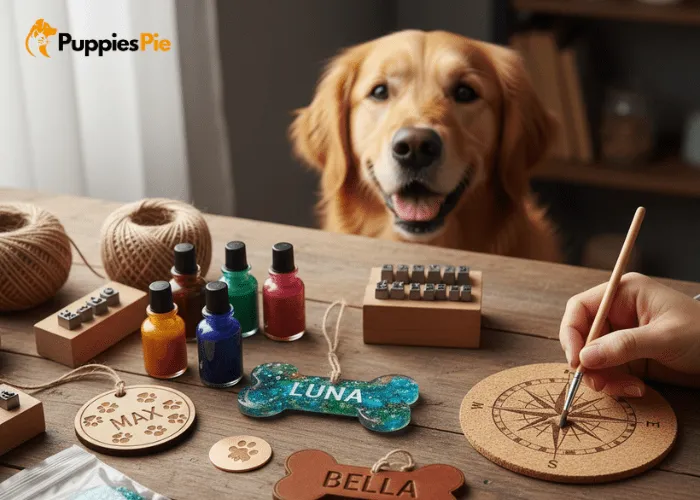
- Durability: Resin and wood, when sealed properly, can last for years.
- Style freedom: Choose colors, shapes, and designs that reflect your dog’s personality.
- Eco-friendly: Use natural materials or upcycle scraps instead of buying new.
- Budget-friendly: Costs far less than boutique tags.
- Sentimental value: You made it with your hands for your best friend.
It’s a small act of care that makes your dog’s everyday wear unique and personal.
Choosing Between Resin and Wood for the Tag
Both materials make stunning tags, but they offer different looks and handling.
Resin Tags:
- Glossy, colorful, waterproof finish.
- Perfect for embedding glitter, dried flowers, or charms.
- Slightly more prep required (mixing resin safely).
Wood Tags:
- Natural, warm aesthetic that suits rustic collars.
- Lightweight and easy to engrave or burn designs onto.
- Needs sealing to protect from moisture.
If you want shine and color, go resin. If you prefer natural charm and texture, wood is your match.
Materials You’ll Need for a Resin Dog Name Tag
You can find all of these in a craft store or online, and most are reusable for future projects.
Resin Tag Essentials:

- Epoxy resin and hardener (2-part mix)
- Silicone mold (circle, bone, or heart shape)
- Mixing cups and sticks
- Protective gloves and mask
- Small drill or screw punch (for the hole)
- Key ring or split ring for attaching to the collar
- Fine glitter, mica powder, or dried flowers (optional)
- Alphabet stickers, vinyl cutouts, or permanent marker for the name
- Sandpaper (fine grit, 400–800)
Safety note: Work in a ventilated area, resin releases fumes while curing.
Materials You’ll Need for a Wooden Dog Name Tag
Wood is simpler to work with and brings that earthy, artisan feel to your dog’s collar.
Wood Tag Essentials:
- Small wood slice or blank disc (1.5–2 inches)
- Drill or hand punch for the hole
- Fine-grit sandpaper
- Wood-burning tool or engraving pen
- Non-toxic paint or stain (optional)
- Clear sealant (polyurethane, resin coat, or beeswax)
- Twine, key ring, or split ring for attachment
Choose lightweight hardwoods like birch or maple, they’re sturdy but not too heavy for your dog’s neck. You can also complement your handmade tag with Dog Collar Embroidery for a coordinated, personalized look.
Step-by-Step: How to Make a Resin Dog Name Tag
This process looks fancy but is actually simple once you break it down.
Step 1: Prep Your Workspace
Cover your surface with parchment paper or a silicone mat. Put on gloves and a mask. Lay out all materials so you don’t rush mid-pour.
Step 2: Mix the Resin
Follow the instructions on your resin kit, usually a 1:1 ratio of resin to hardener. Stir slowly for about 2–3 minutes to avoid air bubbles.
Step 3: Add Color and Effects
Once the resin is clear and mixed, add your creative touch:
- A pinch of glitter for sparkle.
- A few drops of mica pigment for a marbled effect.
- Tiny dried flowers or paw print charms for personality.
Step 4: Pour into the Mold
Slowly pour resin halfway into your mold. If you’re adding embedded details like flowers or vinyl letters, place them now using tweezers. Then fill the rest of the mold.
Step 5: Remove Bubbles
Use a heat gun or lighter to gently pass over the surface, bubbles will rise and pop. Don’t overheat.
Step 6: Let It Cure
Leave the mold undisturbed for 24–48 hours, depending on temperature. Once fully hardened, gently pop it out.
Step 7: Add the Name
If you didn’t embed letters during pouring, apply vinyl letters now or write directly with a paint pen.
Step 8: Drill the Hole and Finish Edges
Drill a small hole near the top for the key ring. Sand edges smooth with fine-grit sandpaper. Wipe clean.
Step 9: Optional Top Coat
For a glossy, glass-like finish, brush or pour a thin resin layer over the tag. Let cure again for 12–24 hours.
And there you have it, a stunning, handmade resin tag ready for your dog’s collar.
Step-by-Step: How to Make a Wooden Dog Name Tag
Wood projects are meditative, simple, tactile, and full of charm.
Step 1: Prep the Wood Surface
Sand both sides of your wooden slice until smooth. Wipe away dust with a clean cloth.
Step 2: Create the Hole
Drill a small hole near the top edge for the key ring or twine. You can mark the spot with a pencil first for precision.
Step 3: Add the Name
You’ve got a few creative routes here:
- Engraving: Use a wood-burning pen to etch your dog’s name.
- Painting: Use acrylic paint and a fine brush for a colorful style.
- Stenciling: Trace with pencil and fill in.
Keep it short and bold for readability.
Step 4: Decorate the Surface
Add paw prints, small hearts, or geometric borders if you’d like. You can even paint one side and leave the other natural.
Step 5: Seal It for Durability
Apply a thin coat of clear, non-toxic polyurethane or beeswax sealant. Let it dry completely before attaching hardware.
Step 6: Add the Hardware
Attach the split ring or twine through the hole. If you’re going rustic, twine or leather cord looks lovely. For everyday use, use a sturdy metal key ring.
Your handmade wood tag will develop character over time, a lived-in, classic look that suits any adventurous pup.
Design Ideas for Your Dog’s Tag
The design possibilities are endless, especially with resin’s versatility and wood’s natural grain.
For Resin Tags:
- Ocean swirl: Blue resin with white streaks that look like waves.
- Galaxy: Dark purple and silver glitter layers.
- Floral charm: Dried lavender or tiny petals embedded inside.
- Minimal clear look: Transparent resin with just your dog’s name in gold letters.
For Wooden Tags:
- Natural grain: Keep it raw with just burned-in text.
- Painted edge: Add a colored rim for a pop of personality.
- Layered stain: Use two shades for contrast.
- Engraved icons: Tiny paw print or bone next to the name.
Whether your dog is a rugged explorer or a fluffy couch philosopher, you can match their vibe perfectly.
Personalization Tips That Add Meaning
Small details make a big difference.
Ideas for personal touches:
- Add your phone number or address on the back.
- Include a symbol that represents your dog (mountain, wave, heart, etc.).
- Use color psychology, green for calm, blue for loyalty, red for energy.
- Match the tag’s tones with your dog’s collar.
For multi-dog homes, design complementary tags, like matching shapes with different colors.
Making Your Tag Weatherproof and Safe
Your dog’s tag goes everywhere, rain, mud, lakes, adventures. Durability is crucial.
For resin tags:
- Use a UV-resistant resin to prevent yellowing.
- Seal edges well to avoid water intrusion.
- Don’t store it in direct sunlight when not in use.
For wood tags:
- Reapply sealant every few months if it starts to dull.
- Avoid soaking it, wipe it dry after wet walks.
- Use a waterproof varnish for maximum protection.
Always check hardware regularly. Replace rings if they loosen or rust.
Safety Considerations for Dog Tags
Even the prettiest tag should never compromise safety.

- Keep the tag size proportional to your dog. Heavy tags can strain small dogs’ necks.
- Ensure no sharp edges or rough spots after sanding.
- Avoid toxic paints, glues, or finishes.
- Don’t overload the collar with too many charms.
Remember, your tag should identify, not encumber, your dog.
Troubleshooting Common Resin and Wood Tag Issues

Problem: Resin is cloudy or soft after curing.
Fix: You may have under-mixed the resin or added too much pigment. Let it cure longer or use a heat gun to help set it.
Problem: Bubbles appear in resin.
Fix: Stir slowly next time. Use a torch or heat gun to release air before curing.
Problem: Wood tag looks blotchy after sealing.
Fix: Apply thin coats of sealant and sand lightly between layers.
Problem: Name lettering smudges.
Fix: Let paint or marker dry fully before sealing. For resin, use vinyl stickers for clean results.
Crafting is trial and error. Each piece teaches you something new.
Cost Breakdown – Resin vs. Wood Tag
Material
Resin (kit + molds)
Wood (blanks + sealant)
Store-bought metal tag
Approx. Cost (USD)
$15–$25 (makes multiple)
$5–$10
$10–$20
Approx. Cost (USD)
$15–$25 (makes multiple)
$5–$10
$10–$20
Style
Glossy, artistic
Natural, rustic
Basic, impersonal
DIY wins in both cost and creative satisfaction.
Sustainable Crafting – Eco-Friendly Dog Tags
If you want to keep it green, there are plenty of ways:

- Use scrap wood or reclaimed timber from old furniture.
- Choose plant-based resin (eco-resin made from bio-based materials).
- Skip glitter, try natural inclusions like pressed leaves or cork bits.
- Use biodegradable cord instead of synthetic rings.
It’s a craft project that’s kind to the planet too.
Advanced Option – Layered Resin Tag with Embedded Name
For a professional-grade tag, you can create a layered design where the name is inside the resin.
Quick outline:
1. Pour a thin base layer of resin and let it partially cure.
2. Place vinyl letters or stickers spelling your dog’s name.
3. Pour a second layer on top to encase the name.
4. Add glitter or pigment for depth.
5. Let cure fully, then drill and sand as usual.
The result is a crystal-clear tag with the name suspended inside, beautiful and durable.
Creative Display and Storage Ideas
If you make multiple tags for different collars or seasons, display them proudly.
Ideas:
- Hang on a mini pegboard labeled by design.
- Use a small shadow box as a memory display.
- Keep extras in a Mason jar with label tags.
Each tag can tell a story, first walk, new adventure, special event.
What to Engrave Beyond the Name
Name tags can carry more than just identification.
Consider adding:
- Your phone number (essential).
- “Microchipped” note.
- Medical alerts (if your dog has allergies).
- A short quote (“Adventure Buddy” or “Good Boy Since 2021”).
Keep it legible, clarity beats decoration when it comes to contact info.
The Emotional Side – Why Handcrafted Tags Matter
When you make something for your dog, it’s more than an art project. It’s a token of connection. Dogs can’t read their name, but they know when something smells familiar, when it belongs to them.
That handmade tag you clip on their collar becomes part of their story, carried on every walk, in every photo, every muddy adventure. It’s personal in a way store-bought trinkets never are.
Crafting these tags also slows you down. It’s a small creative ritual that celebrates your dog’s presence in your life.
Conclusion
Creating a DIY name tag for your dog from resin or wood is the perfect blend of practicality, craftsmanship, and love. It’s functional art, something you can make in an afternoon that will last for years.
Whether you go for the glossy resin look or the earthy wooden charm, the result is the same: a tag as unique as your dog. To celebrate your bond further, you can also craft Matching Dog & Owner Bracelets for a fun, wearable connection.
So gather your tools, pour the resin or sand the wood, and craft a piece that says more than just a name, it says, this dog is loved.