Dog owners search for homemade agility jump plans for one of three reasons: they want inexpensive training equipment, they want something size-adjustable, or they want to give their dog a fun way to burn energy. Store-bought jumps can get pricey, and most aren’t customized to your dog’s height or backyard space. A DIY version solves all of that, and you don’t need power tools or advanced crafting skills to get it done.
This guide gives you everything required to build a safe, durable, budget-friendly dog agility jump. You’ll learn what materials work best, how to assemble the frame, how to make the bar height adjustable, and how to introduce your dog to the jump safely. By the end, you’ll have a reliable piece of training equipment that encourages exercise, confidence, and better focus.
Why Build a Dog Agility Jump Yourself
Homemade agility equipment gives you more control over cost, durability, and size. You can tailor every measurement to your dog’s needs, whether you’re working with a lanky Border Collie or a small, cautious Pug. PVC is light, weather-resistant, and easy to cut, which makes it perfect for beginners and long-term backyard use.
DIY jumps also allow you to make adjustments as your dog gains confidence. You can change bar height, widen the frame for safety, or add ground markers without buying extra attachments. The process becomes a hands-on way to improve your dog’s training environment without the retail markups.
Tools and Materials You Need
This project leans on simple, inexpensive materials. Most hardware stores carry everything listed here.
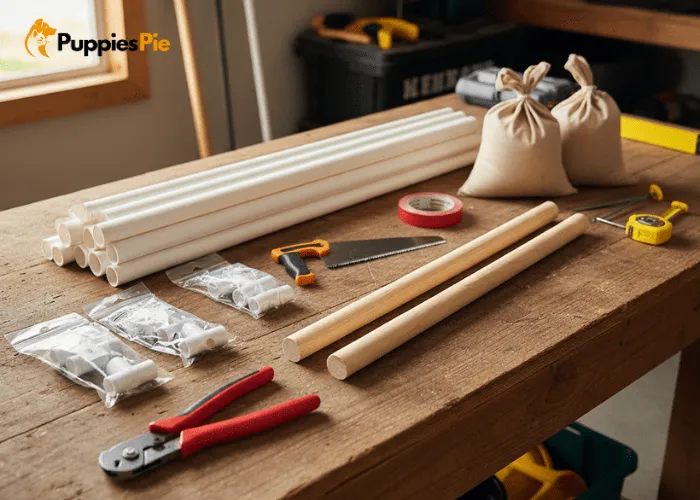
• ¾-inch PVC pipe (10–12 feet total)
• ¾-inch PVC T-connectors (4 pieces)
• ¾-inch PVC elbow connectors (4 pieces)
• PVC pipe cutter or small saw
• Two 1-inch wooden dowels or a lightweight PVC rod for the jump bar
• PVC markings tape or colored electrical tape
• Measuring tape
• Optional: Sandbags or tent stakes for outdoor stability
PVC remains the top choice because it’s smooth, safe, and won’t splinter. The lightweight nature also means the bar will fall easily if your dog missteps, reducing injury risk.
Planning the Jump Height
Every dog needs a different jump height based on their size and comfort level. Training should always start low and increase slowly.
Here’s a simple guide:
• Small dogs (under 20 pounds): 4–8 inches
• Medium dogs: 8–14 inches
• Large dogs: 14–20 inches
• Extra-large dogs or beginners: start between 4–10 inches regardless of size
The main goal is confidence. A dog that approaches the jump with enthusiasm learns much faster than one that hesitates. Adjustable bar settings allow you to raise the height as your dog progresses.
Cutting the PVC Pipes
Clean cutting keeps the frame sturdy. Use a PVC pipe cutter when possible, because it leaves smooth edges with no shards.
You’ll need the following PVC lengths:
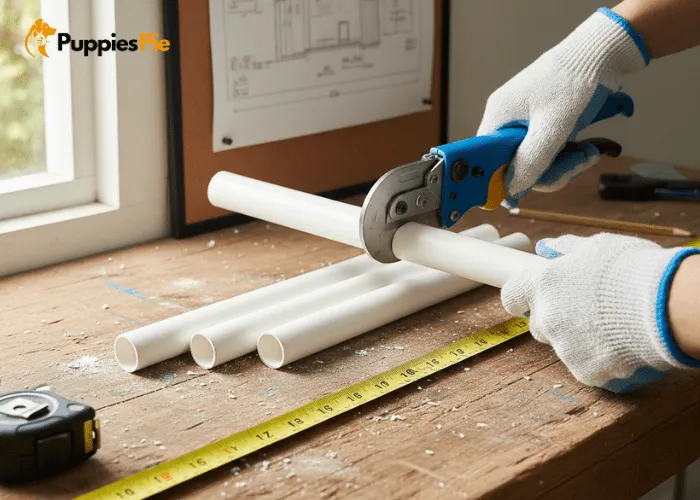
• Four pieces at 12 inches (base feet)
• Two pieces at 20 inches (upright supports)
• Two pieces at 30–32 inches (top and bottom horizontal bars)
• Two pieces at 6 inches (side stabilizers)
These measurements can be scaled up or down depending on your backyard space, but sticking close to these lengths creates a balanced structure that won’t tip easily.
Assembling the Base
The base supports the whole setup, so it needs to be stable without being bulky.
Step-by-Step Base Assembly
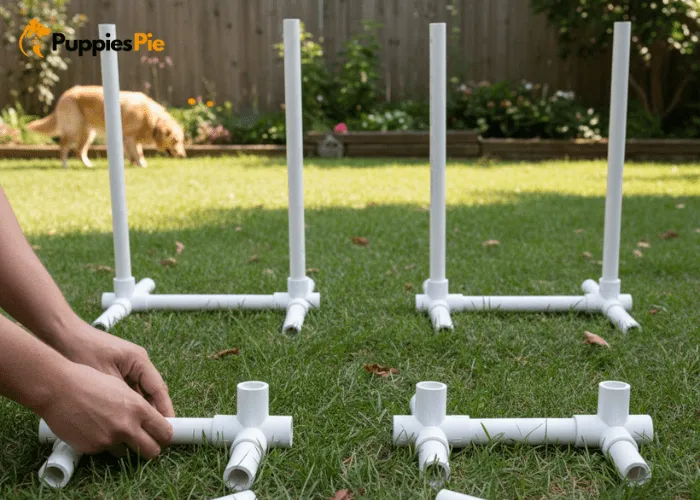
1. Attach a T-connector to the end of each 12-inch PVC foot.
2. Insert a 6-inch stabilizer piece into the side opening of each T-connector.
3. Connect an elbow connector to the end of each stabilizer piece.
4. Insert the upright support pieces into the vertical openings.
You should now have two identical base sections. These keep the jump from wobbling while giving your dog a wide enough path to approach safely.
Building the Upright Frame
Once the base sections stand upright, attach the crossbar supports.
Adding the Top and Bottom Bars
Slide a long PVC piece across the top using elbow connectors. Repeat for the bottom bar using the open ends of the lower T-connectors. The bottom bar shouldn’t touch the ground—leave at least a few inches of clearance to avoid tripping hazards.
Finished Frame
You now have a rectangular PVC frame that holds its shape well and can handle daily training sessions without shifting.
Creating the Adjustable Jump Bar
This part separates a good DIY jump from a frustrating one. An adjustable bar lets you progress training without rebuilding the structure.
Making Height Markers
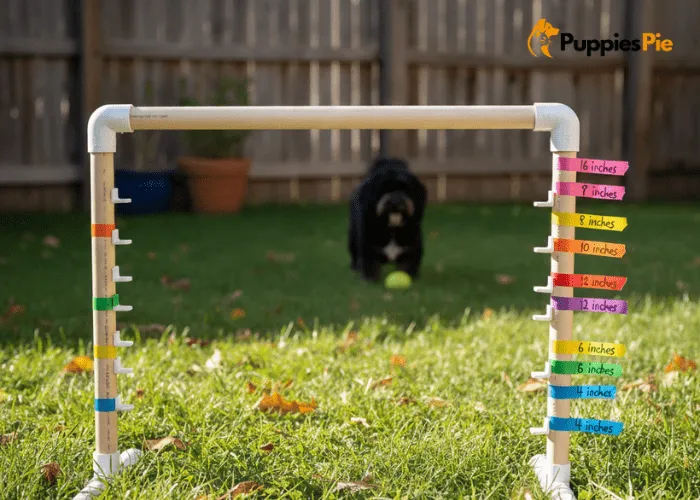
Use colored electrical tape to mark height intervals. Place tape strips at:
• 4 inches
• 6 inches
• 8 inches
• 10 inches
• 12 inches
• 14 inches
• 16 inches
• 18 inches
The goal isn’t precision like competition equipment. These markers give you flexible, easy-to-see reference points when raising or lowering the bar.
Adding the Jump Bar
A lightweight dowel or narrow PVC rod works best. It should rest loosely on the frame never permanently attached. If your dog bumps it, it must fall cleanly.
You can create tiny notches or use Velcro straps at the chosen heights to hold the bar securely but still allow it to drop safely.
Decorating the Agility Jump
A little color helps enhance visibility for your dog. Bright tape works well on PVC because it sticks smoothly, doesn’t peel easily, and creates clean lines.
Ideas for decoration:
• Add stripes around the bar to help dogs judge distance.
• Color-code height markers for easy training sessions.
• Wrap the top bar with reflective tape for evening practice.
• Use your dog’s name on the side with vinyl lettering.
Nothing scented should be added, as strong smells distract dogs during agility practice.
Safety Tips Before Training
Building the jump is the fun part, but training safely matters even more.
Making Height Markers
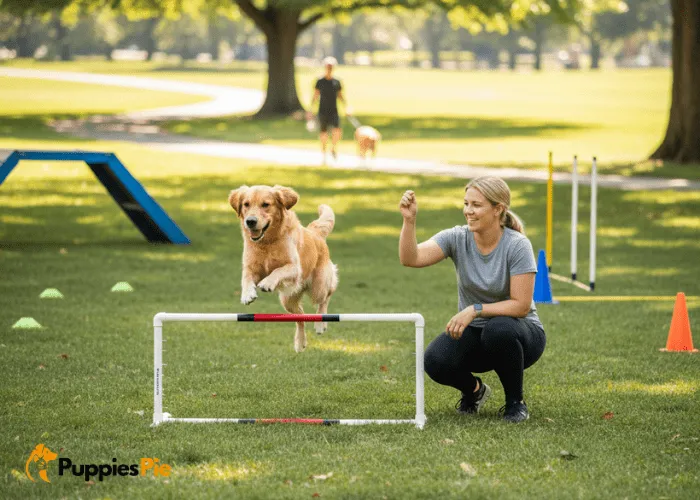
Key safety reminders:
• Always warm up your dog with a brisk walk.
• Check the ground for holes or slippery surfaces.
• Keep the bar low until your dog understands the motion.
• Never force a jump—use encouragement, treats, or toys.
• Avoid training hard surfaces like concrete.
• Inspect PVC joints regularly to ensure nothing loosens.
A safe jump session keeps training enjoyable and prevents joint strain or accidents.
Introducing Your Dog to the Jump
Some dogs leap confidently the first time they see a jump. Most don’t. A slow, positive introduction helps them trust the process.
Start by placing the bar on the lowest notch or even on the ground. Walk your dog over the bar using a treat lure. Praise generously after each pass. This teaches your dog that walking through the jump frame is safe.
Once your dog walks confidently, raise the bar one or two inches. Use a favorite toy to encourage forward motion. Keep sessions short—5 to 8 minutes is enough in the beginning.
Training Progressions That Build Confidence
Dogs learn best through repetition and small wins. Raise the bar only when your dog clears the current height easily several times.
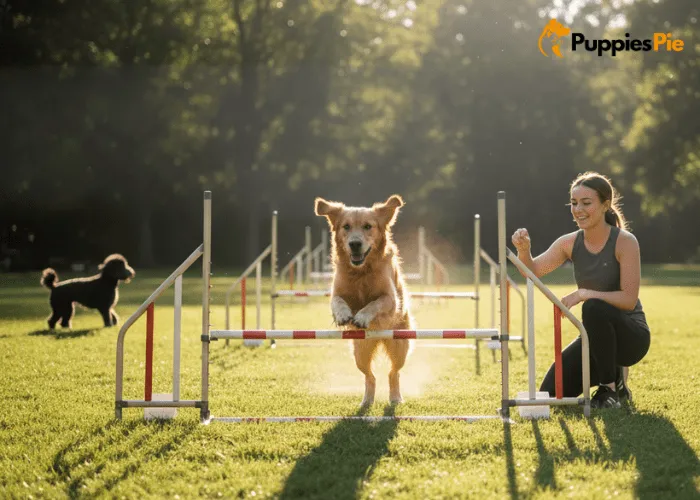
Simple progressions include:
• Straight-line jumps
• Short-distance recalls over the jump
• Treat tosses past the bar
• Low-speed approaches
• Right or left angle entries
• Small combinations with two jumps in a row
Progressions work well because they turn the jump into something familiar rather than intimidating.
Common Mistakes to Avoid
New trainers often repeat the same errors, but most are easy to correct.
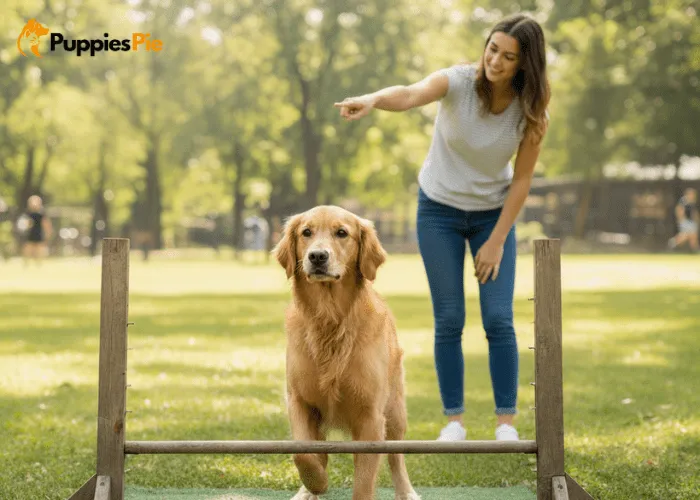
• Raising the bar too fast
• Training when your dog is tired or overstimulated
• Using slippery surfaces
• Rewarding too late after the jump
• Getting frustrated when the dog hesitates
• Overusing treats instead of mixing in toys or praise
Good training relies on patience. Dogs mirror your energy, so relaxed encouragement always beats pressure.
When to Add More Agility Equipment
Once your dog sees the jump as fun rather than confusing, it becomes easier to expand training.
Next steps might include:
• A tunnel
• Weave poles
• A pause box
• A low platform
• A second or third jump
Adding equipment gradually creates a backyard agility course that challenges your dog’s mind and body. Variety keeps sessions fresh and prevents boredom.
Maintaining Your DIY Agility Jump
PVC lasts a long time, but regular maintenance keeps everything safe.
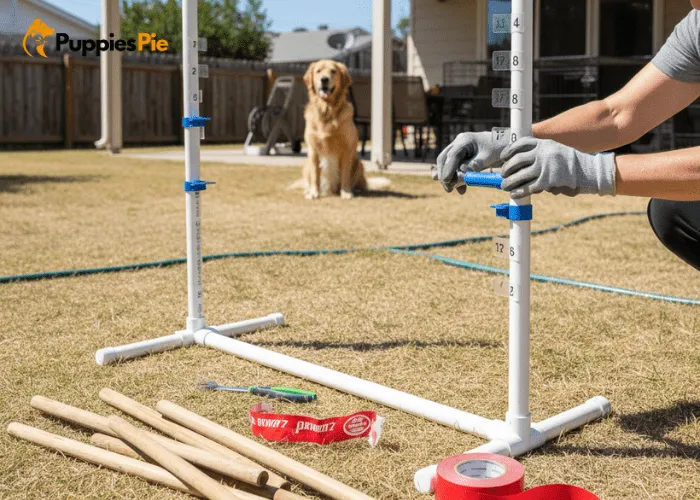
You should:
• Tighten connectors monthly
• Replace bent dowels or worn tape
• Check height markers for peeling
• Rinse the frame after outdoor sessions
• Store indoors during storms or extremely hot days
Well-maintained equipment gives your dog consistent, predictable training.
Cost Breakdown and Budget Tips
A homemade agility jump usually costs far less than store-bought versions.
Average cost:
• PVC: $10–15
• Connectors: $6–8
• Tape: $3–5
• Dowel or bar: $2–4
Total: roughly $20–30
Store-bought jumps often run between $45 and $90, and many aren’t adjustable. Building your own saves money while giving you control over every detail.
Benefits Beyond Exercise
Agility training isn’t only about physical activity. A simple jump provides benefits many dog owners overlook.
• Confidence building
• Improved coordination
• Better impulse control
• Stronger bond during training
• Mental stimulation
• Enhanced obedience through structured sessions
These gains make agility a valuable tool for dogs of all ages and energy levels.
Fun Variations You Can Try
Once you’ve built the base jump, you can play around with simple modifications.
Ideas include:
• Making a double bar jump using two dowels
• Creating a low “spread jump” with wider spacing
• Adding EVA foam padding to certain sections
• Painting the frame with dog-safe, non-toxic acrylics
• Using weighted bases for outdoor wind resistance
Each variation keeps training interesting and adaptable to your dog’s skill level.
Quick Troubleshooting Guide
If something feels off during training, small adjustments usually fix it.
• Jump wobbles: add sandbags or widen the base.
• Dog goes around the jump: lower the bar and reward forward movement.
• Dog knocks the bar: reduce height or improve stride length with short approaches.
• Connectors slip: use PVC glue only on non-adjustable joints.
• Dog hesitates: go back to treat luring and slow pacing.
Troubleshooting empowers you to adjust the equipment without rebuilding from scratch.
Conclusion
A DIY dog agility jump is one of the most rewarding projects you can make for your dog. It’s budget-friendly, safe, portable, and completely customizable to your dog’s training level. With a little PVC and a short afternoon of work, you build something that strengthens your dog’s body, mind, and confidence.
Try building your first jump this week and introduce it with low pressure and lots of enthusiasm. Before long, you’ll see just how much joy a simple homemade piece of equipment can bring to your dog’s routine.