A homemade dog harness solves a handful of everyday frustrations. Store-bought ones never seem to fit quite right, especially for dogs shaped like cartoons, long, round, square, or anything in between. Some rub under the arms, some loosen over time, and others cost more than a decent pair of shoes. Making your own dog harness gives you full control over fit, comfort, durability, and style. It’s practical, affordable, and surprisingly fun once you understand the structure behind a well-designed harness.
This guide walks you through materials, measurements, sewing options, no-sew alternatives, safety standards you should never skip, and step-by-step building instructions that feel doable even for beginners. By the end, you’ll know how to create a secure, comfortable, minimalist harness that your dog can wear every day.
Why Make Your Own Dog Harness
A DIY harness doesn’t just save money. It solves real fit problems. Many dogs have unusual proportions, deep chests, short necks, tiny waists, or thick shoulders, which turn standard harnesses into friction devices. When you make your own, every strap placement and every buckle works for your dog’s shape, not the average dog on a packaging photo.
You can also choose softer materials, create a lighter fit for heat-sensitive dogs, or build something rugged for trail lovers. You design the experience. That’s the appeal.
Materials You Need
A well-behaved harness starts with thoughtful materials. Strong, flexible, and comfortable.
Essential Materials
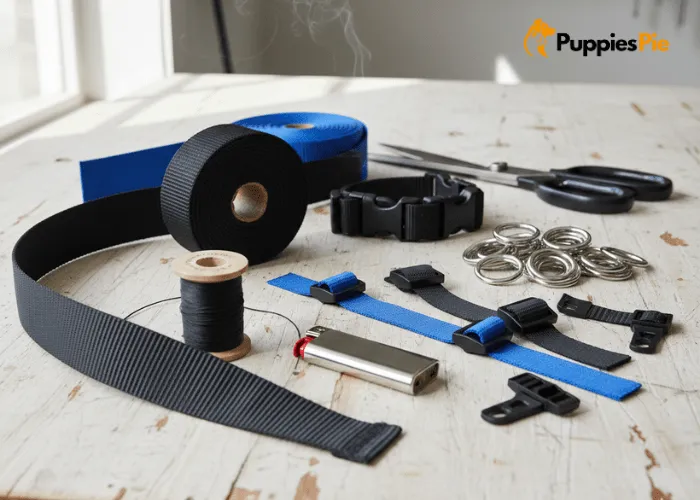
• Nylon or polypropylene webbing (¾ inch or 1 inch)
• Welded D-rings (not split rings)
• Plastic side-release buckles
• Tri-glide sliders (for adjustability)
• Heavy-duty thread
• Scissors
• Lighter (for sealing webbing ends)
To be remembered
If you prefer a softer harness, cotton canvas or padded fleece sleeves can wrap the webbing. But the foundation, the part that keeps your dog safe, should still be proper webbing rated for dog use.
Choosing the Right Webbing
Think of webbing as the skeleton of your harness. Nylon webbing is the gold standard, strong, abrasion-resistant, and smooth against the skin. Polypropylene is lighter and easier to sew but absorbs moisture faster. For hiking or pulling, nylon wins every time.
Avoid decorative ribbons sold for crafting unless they’re reinforced. They’re pretty but not strong enough to hold a lunging dog.
Measuring Your Dog
These measurements determine everything. Take your time. A loose harness is dangerous. A tight harness rubs and pinches.
Key Measurements
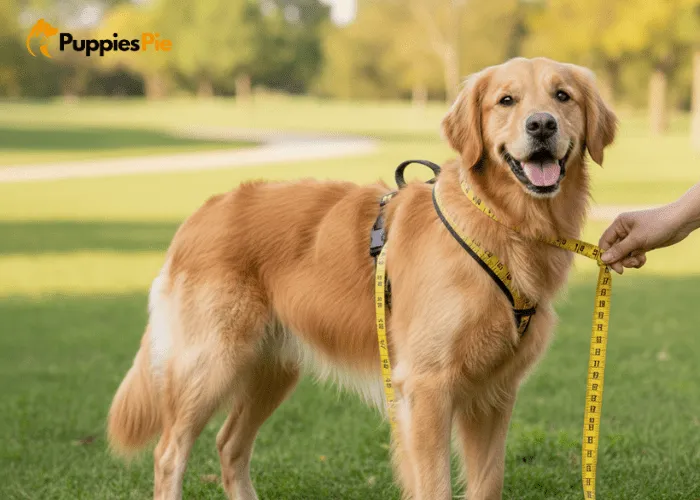
• Chest Girth: Around the widest part of the chest behind the front legs.
• Neck to Chest: From the base of the neck down to the point where the chest strap sits.
• Around Shoulders: Over the shoulders, connecting to the chest band.
Things to remember:
Measure while your dog stands naturally. Slip two fingers under the tape before reading the number. That built-in ease prevents rubbing later.
Harness Design Options
You’re not locked into one shape. Each design has a personality.
Step-In Harness
Two loops. One buckle. Great for calm dogs who don’t mind stepping in. It spreads pressure evenly.
H-Style Harness
Classic and secure. One neck strap, one chest strap, and a girth band connecting them. Works on almost every body type.
Y-Front Harness
The most ergonomic. Shifts pressure to the chest instead of the throat. Ideal for dogs that pull or hike.
This guide focuses on a simple Y-front design because it offers the best mix of comfort and safety.
Cutting the Webbing
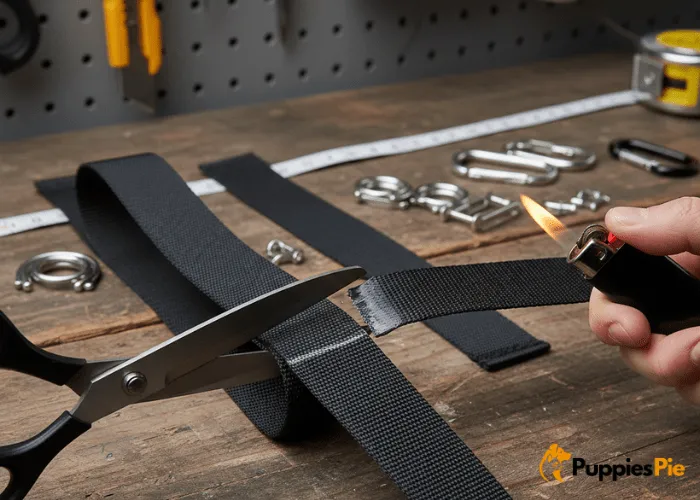
Cut each strap according to your measurements plus 6–10 extra inches for folding, adjusting, and attaching hardware. Seal each cut edge with a lighter, just enough heat to melt the fibers without burning.
Assembling the Chest Strap
Slide a tri-glide onto one end. Loop the webbing through the female side of the buckle and back through the tri-glide. This creates your adjustable section.
The free end attaches to one side of your Y-strap, forming the supportive chest band.
Building the Y-Front Piece
This is the part pressing against the chest. Two straps join at the D-ring on the front.
Cut two equal webbing pieces. Thread each through the D-ring, overlap them by about an inch, and sew a reinforced X-box stitch. That’s your anchor.
The two straps run up toward the shoulders and back toward the chest strap. Make sure the D-ring faces outward. If it twists inward, you’ll feel it during your first walk.
Adding the Shoulder Straps
Thread the shoulder straps through tri-glides for adjustability. They should sit comfortably beside the neck, not on top of the throat. Attach them to the chest strap with another set of X-box stitches.
Test lengths on your dog before sewing permanently. The harness should form a clean Y, not a V and not a loose spaghetti line.
Attaching the Girth Strap
The girth strap circles behind the legs. Attach one end permanently to the shoulder strap. The other end connects to the buckle side. Add a tri-glide if you want adjustability (always recommended for growing or seasonal-weight dogs).
Strengthening Your Seams
A DIY harness fails at the seams, not the webbing. Use an X-box pattern, four straight lines forming a square with an X through it. It distributes tension and survives sudden lunges. Double-stitch if your sewing machine allows.
If sewing scares you, fabric glue or simple hand stitching won’t cut it. A harness needs structural integrity. You can use Chicago screws, metal posts that clamp through layers of webbing. They’re easy, strong, and require no sewing.
A No-Sew Harness Option
Some people prefer knots, buckles, and clever hardware instead of thread. You can build the same Y-front model using:
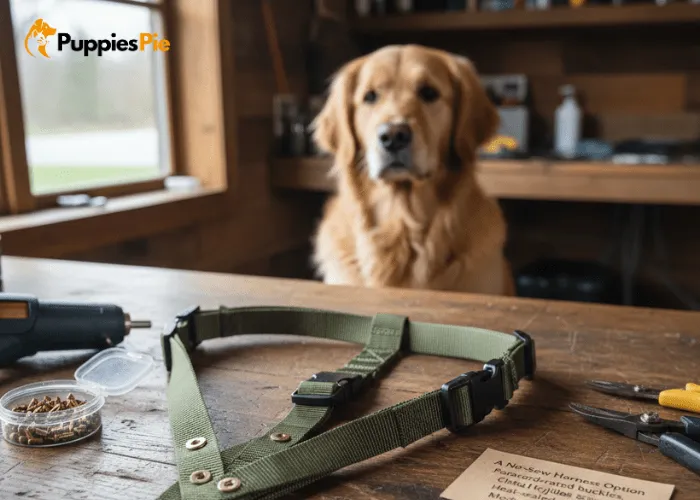
• Paracord-rated buckles
• Metal tri-glides
• Chicago screws
• Heat-sealed webbing layers
This version works best for medium and large dogs. Small dogs need lighter hardware that’s usually meant for sewn harnesses.
Fitting the Harness on Your Dog
The moment of truth happens during the first fitting. Place the harness on loosely. Clip the girth strap. Check the Y shape on the chest. Tighten each slider until the harness sits close but not restrictive.
Guideline: You should fit two fingers between the strap and the dog’s body. Less is uncomfortable. More risks of your dog slipping out backward if startled.
Testing Safety Indoors
Before the first outdoor adventure, test the harness under low-stakes conditions.
Try these checks:
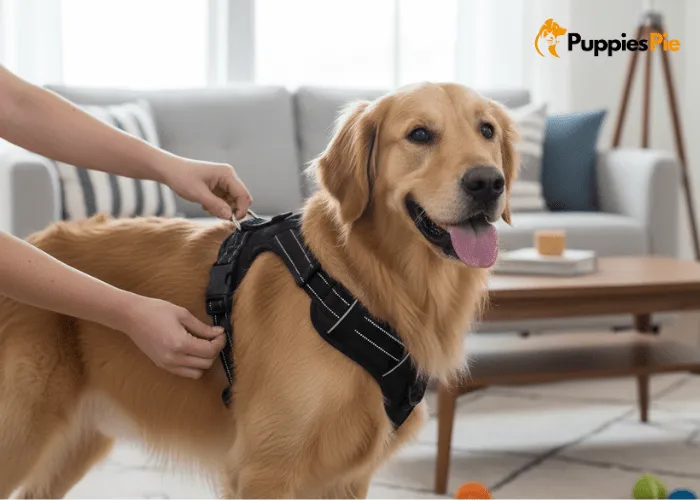
• Pull gently on the D-ring. Does anything shift or loosen?
• Walk around your living room. Are there any rub points?
• Does your dog freeze, lick their lips, or back away? That signals discomfort.
• Slide your fingers under each strap to ensure even tension distribution.
A harness should move with the dog, not against them.
Optional Padding
Some dogs appreciate a bit of cushion, especially along the chest and underarms. You can add fleece sleeves or neoprene tubing along high-pressure zones. Don’t overdo it. Too much padding traps heat and moisture, especially in summer.
Adding Personality and Style
Minimalist doesn’t have to mean boring. You can add:
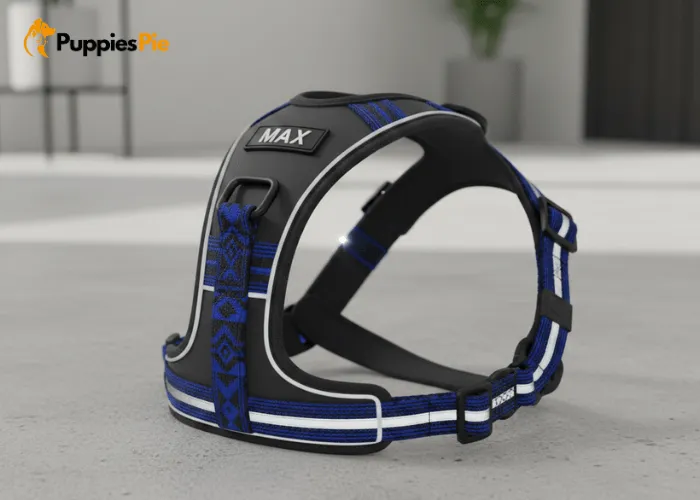
• Custom stitching in contrasting colors
• A small embroidered name tab
• Reflective strips
• A decorative wrap around the D-ring base
These touches personalize your harness without compromising strength.
When to Replace Your DIY Harness
Even the best harness doesn’t last forever. Replace it if you notice:
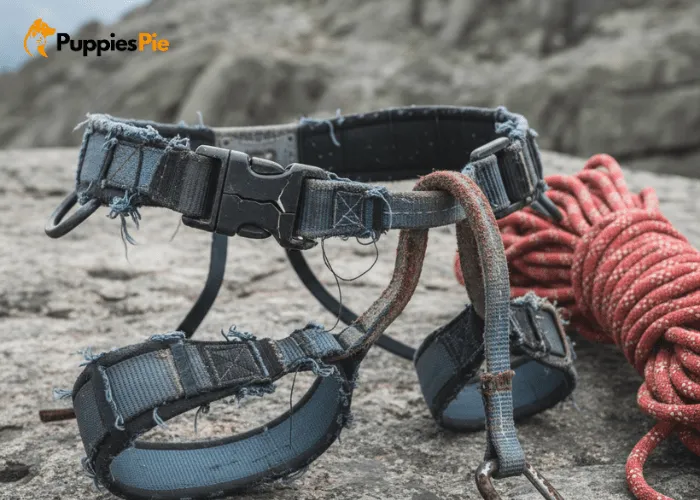
• Frayed or weakened webbing
• Cracked plastic buckles
• Loose stitches
• Rusted metal hardware
• Slipping adjustments that no longer hold steady
A harness is safety equipment. Treat it with the same respect you’d give a climbing rope.
Troubleshooting Fit Issues
Every dog has quirks. A harness that looks perfect on paper might behave strangely in motion.
The Harness Shifts to One Side
This happens with muscular or barrel-chested dogs. Tighten the opposite shoulder strap slightly or add a wider chest piece.
The Girth Strap Slides Forward
If the belly strap creeps toward the armpits, shorten the shoulder straps or widen the Y-front section.
Chafing Under the Legs
Add padding or loosen the girth strap by half an inch. Chafing usually comes from tension, not material.
Dog Slips Out Backward
The chest strap is too loose, or the harness sits too high. Lower the Y-point and tighten the girth strap.
Cleaning and Care
A harness picks up sweat, skin oil, dirt, and whatever mystery substances your dog finds outside. Wash it monthly, or weekly if your dog is an adventurer.
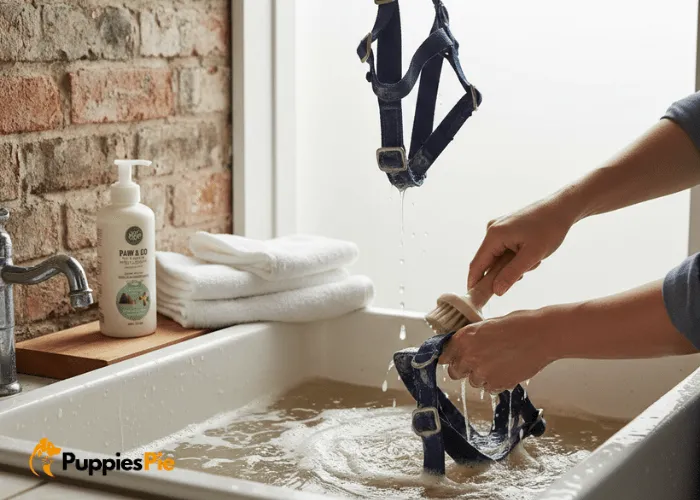
• Hand wash in warm water with mild soap.
• Rinse thoroughly.
• Air dry completely before use.
Avoid machine drying. Heat damages buckles over time.
Making a Harness for Puppies
Puppies grow at strange angles. Build in as much adjustability as possible. Leave extra strap length tucked into tri-glides. Expect to adjust weekly.
Never rely on a too-big harness “he’ll grow into.” Your job is safety, not foreshadowing.
Benefits of a Handmade Harness
A DIY harness blends comfort, function, and care. You control every detail, how soft it feels, how secure it is, how it looks, how it fits. You can swap buckles, upgrade webbing, reinforce weak spots, and tailor the shape to your dog’s movements.
It becomes less of a project and more of a relationship between you, your dog, and the tools that keep them safe.
Conclusion:
A homemade dog harness is one of those projects that pays off immediately. You understand the structure, you choose materials with intention, and you build something that fits your dog’s actual body instead of an imagined average. Once you finish your first harness, you’ll feel tempted to make a spare or design a lightweight version for summer.
It’s practical, empowering, and surprisingly calming to craft something so essential by hand. The next walk feels different when your dog wears gear you built yourself.