If your dog or cat eats too fast or gets bored easily, this little DIY project might change everything. You don’t need fancy toys or pricey puzzles, just a few empty toilet rolls and a few minutes of creativity. This homemade interactive treat puzzle keeps pets entertained, slows down eating, and adds a healthy mental challenge to their day.
In this guide, you’ll learn how to make a treat puzzle using toilet rolls, step by step. We’ll also cover why it works, how it benefits your pet’s brain and behavior, and how to make it safe for daily use. Whether you’re a first-time pet parent or just looking to cut down on waste, this is an easy win for both your furry friend and the planet.
Why Interactive Treat Puzzles Matter for Pets
Interactive puzzles do more than just keep your pet busy, they mimic the natural hunt for food. In the wild, animals work for every bite. At home, food often comes in a bowl, which can make life a little too easy.
Here’s why puzzles like this one help:
- Mental Stimulation: Keeps your pet’s brain active and sharp.
- Slower Eating: Prevents gulping and digestive issues in dogs and cats.
- Reduced Boredom: Keeps destructive behaviors at bay.
- Confidence Boost: Helps shy or anxious pets feel more engaged.
Think of it like a mini workout for their brain. The simple act of figuring out how to get the treat becomes a game that rewards patience and focus.
Materials You’ll Need for the DIY Treat Puzzle
This project is all about using what you already have. Gather these basics:
- 4–6 empty toilet paper rolls
- A small cardboard box or shoe box (optional, for holding rolls)
- Scissors (optional, for cutting slots or flaps)
- Pet-safe treats or kibble
- Optional: non-toxic tape or glue (if securing rolls together)
That’s it, no fancy tools or expensive supplies. Everything here is recyclable or reusable, making this activity eco-friendly too.
Step-by-Step Guide to Making the Puzzle
Step 1 – Prepare the Toilet Rolls
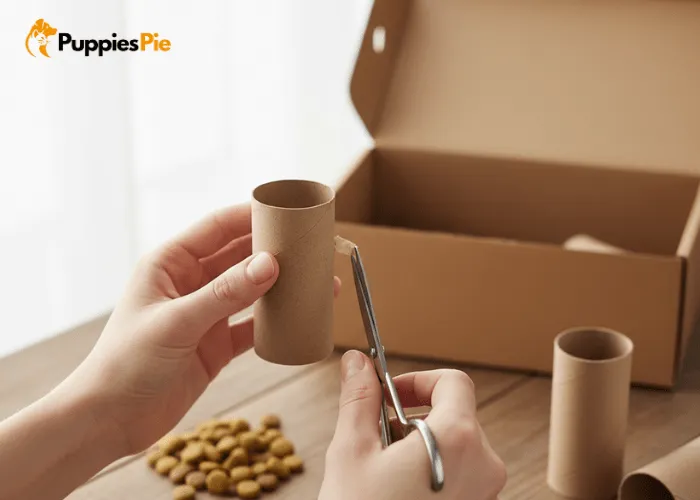
Inspect each roll for any leftover paper or residue. You want clean, dry cardboard. If your pet tends to chew aggressively, avoid sharp edges or staples.
Step 2 – Choose Your Setup Style
You can build this puzzle in different ways depending on your pet’s age and skill level:
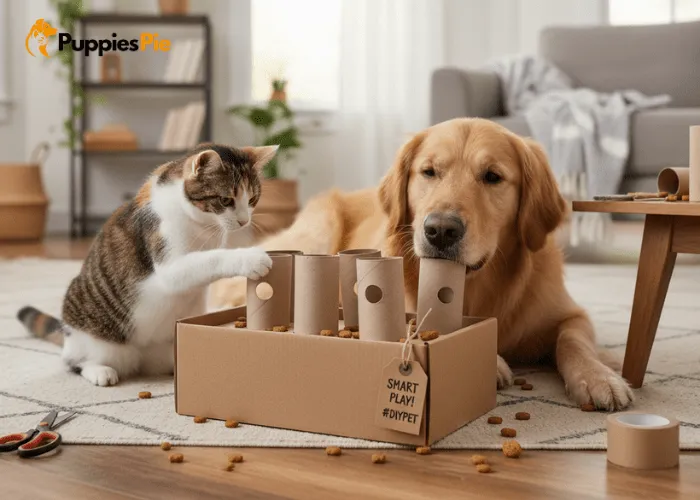
1. Basic Setup: Place several toilet rolls upright in a small box. Drop treats inside each one.
2. Intermediate Setup: Pinch the ends of each roll to close them slightly. This makes treats harder to reach.
3. Advanced Setup: Cut small holes along the sides of each roll and place treats inside. Your pet will have to roll it around to release the food.
Step 3 – Add Treats or Kibble
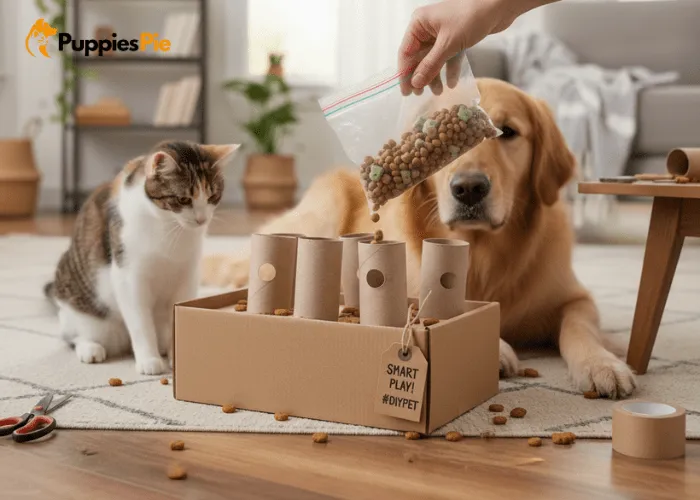
Use small, dry treats that roll easily or pieces of kibble. Avoid sticky or greasy foods. For cats, you can also use catnip or crunchy dental treats.
Step 4 – Secure and Present
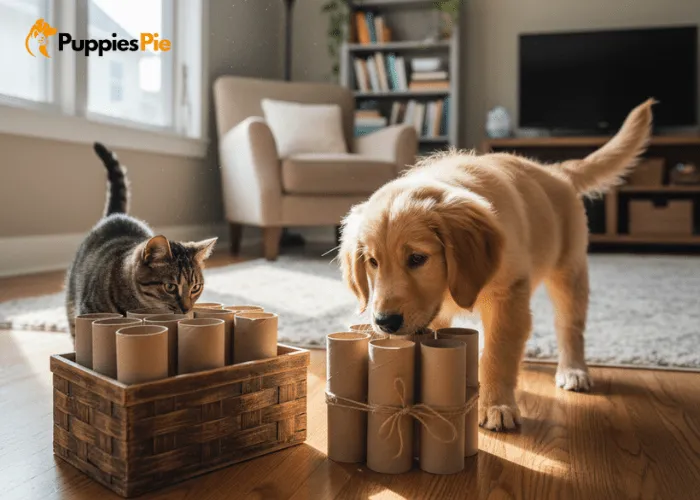
If you’re using a box, stand the rolls up snugly so they don’t tip over too easily. If you’re using the rolls alone, group them together with tape or tie them with a string (nothing your pet can swallow).Then, place the puzzle on the floor and watch your pet investigate.
Tips for Making It Fun and Safe
Start Simple
If your pet is new to puzzles, start easy. Keep the openings wide and the treats visible. Once they get the hang of it, you can make it trickier by sealing ends or hiding treats deeper inside.
Supervise Playtime
Always watch your pet during the first few sessions. Some dogs or cats might try to chew and swallow cardboard instead of playing gently.
Keep It Clean
Replace toilet rolls regularly, especially if they get soggy or chewed up. Avoid using rolls that have come from bathrooms with strong cleaning products or aerosols nearby.
Mix It Up
Change the setup now and then. You can:
- Add ping pong balls on top of the rolls.
- Use a paper towel tube cut in half for larger dogs.
- Scatter treats among a few “empty” rolls to make them think.
This keeps the game interesting and mentally stimulating.
Benefits of This DIY Treat Puzzle
Eco-Friendly Entertainment
Instead of tossing out toilet rolls, you’re giving them a second life. It’s sustainable, cheap, and fun.
Promotes Slow Feeding
For dogs that eat too quickly, this puzzle makes them work for their food. Slower eating helps prevent bloating and indigestion.
Boosts Problem-Solving Skills
Your pet learns to think creatively, they paw, sniff, and push until they get their reward. It’s like enrichment therapy disguised as playtime.For pets who love nose-work activities, a DIY Scented Snuffle Mat is another great enrichment option that builds focus and keeps their mind active.
Strengthens the Pet-Owner Bond
Watching your pet figure out a puzzle you made is surprisingly satisfying. It builds trust and connection through positive play.
When to Avoid or Modify the Puzzle
This activity is safe for most pets, but there are a few exceptions.
Avoid or modify the puzzle if:
- Your pet chews and eats cardboard aggressively.“If your pet tends to chew through cardboard quickly, a soft alternative like a Felt Ball Dog Toy can offer safer, long-lasting playtime without the mess.
- You have a small animal (like a hamster) that could get stuck in the roll.
- Your pet has food allergies, always use approved treats.
- The toilet rolls have ink, glue, or glossy coatings.
If your dog or cat tends to be rough, try using sturdier cardboard or make a similar version using plastic bottles (with holes cut safely).
Vet-Approved Safety Tips
- Watch for choking hazards: Only use large rolls for big dogs.
- Choose healthy treats: Avoid sugar-laden or high-fat snacks.
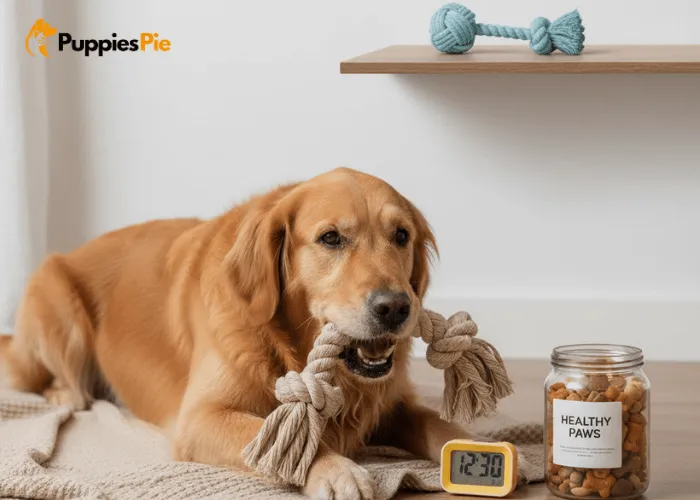
- Limit playtime: 10–15 minutes a day is plenty for enrichment.
- Keep it clean: Replace rolls weekly to prevent bacteria buildup.
- Encourage gentle play: Praise calm sniffing and pawing, not chewing.
Turning It Into a Regular Routine
You can use this DIY puzzle as part of your pet’s daily enrichment plan. Try swapping it in place of one meal a few times a week. That way, feeding becomes both a physical and mental workout.
Here’s a quick routine idea:
1. Morning: A short walk or playtime.
2. Midday: Puzzle feeding session with toilet rolls.
3. Evening: Cuddles or calm grooming time.
This balance of stimulation and rest keeps your pet happy and less anxious when you’re away.
Creative Variations to Try Next
Once your pet masters the toilet roll version, level it up with these ideas:
- Paper towel roll maze: Create a tunnel with multiple rolls joined end-to-end.
- Frozen treat puzzle: Seal one end of the roll, add wet treats, and freeze.
- Box grid puzzle: Cut holes in a cardboard box and place the rolls inside for an extra layer of challenge.
Keep experimenting, the goal is to keep your pet curious and engaged.If your pet enjoys cardboard challenges, you can also explore our Cardboard Puzzle Feeder, another fun DIY activity that encourages problem-solving and slow feeding.
Conclusion
You don’t need to spend money on fancy toys to keep your pet’s brain sharp. With a few toilet rolls and a handful of treats, you can turn ordinary waste into a fun challenge that keeps your pet entertained and mentally active.
Try making one today, watch how your furry friend lights up with excitement. If they love it, share this guide with other pet parents and help more pets discover the joy of simple, homemade playtime.