
If your dog’s collar looks like every other one at the park, it’s time for an upgrade, not by buying a new one, but by adding your own personal touch. Dog collar embroidery is a simple, creative way to make your pet’s everyday accessory stand out. Whether you’re stitching your dog’s name, adding cute symbols, or experimenting with color patterns, embroidery turns a basic collar into something unique and meaningful.
It’s not just about looks, either. An embroidered name or phone number can help your dog get home safely if they ever wander off. The process is easier than it sounds, and you don’t need fancy tools, just a steady hand and a little patience. Let’s break down exactly how to create a durable, stylish, embroidered collar your dog will proudly wear every day.
Why Embroider Your Dog’s Collar?
A collar isn’t just an accessory, it’s your dog’s identity tag, fashion statement, and safety net all in one. Adding embroidery offers benefits that go beyond aesthetics:
- Personalization: Stitch your dog’s name, nickname, or your phone number directly onto the collar.
- Durability: Embroidery won’t fade or peel like printed text.
- Style: Choose your own color combos, fonts, and patterns.
- Safety: In case the ID tag breaks or falls off, your dog’s info is still visible.
- Sentiment: It’s handmade, that always means more.
Plus, embroidery gives even an old, worn collar a second life, a sustainable way to refresh something your dog already uses daily.
What You’ll Need to Get Started
No need to run to an expensive craft store, you probably have most of these supplies already.
Materials:
- A sturdy dog collar (nylon, canvas, or fabric-based)
- Embroidery thread (cotton or polyester)
- Embroidery needle
- Embroidery hoop (optional, but helps with grip)
- Chalk or washable fabric marker
- Scissors
- Thimble (for thicker collars)
Optional but useful:
- Small pliers (to help pull the needle through thick fabric)
- Ruler or measuring tape
- Seam ripper (for removing mistakes without damaging the collar)
Choose a thread color that contrasts with your collar’s base color, that’s what makes your design pop.
Choosing the Right Collar for Embroidery
Not every collar is made for stitching. Here’s what to look for before you begin:
- Material: Fabric or nylon webbing works best. Avoid thick leather, it’s hard to pierce without special tools.
- Width: Go for at least ¾ inch wide so you have enough space for letters.
- Condition: The collar should be clean and flat. Wash and dry it before starting to remove dirt or oils.
- Removability: Detach any tags, buckles, or charms so they don’t get in the way.
If your current collar doesn’t fit the bill, grab an affordable blank one, it’ll still cost less than a custom-embroidered store version.
Step-by-Step Guide to Embroider a Dog Collar
Step 1, Plan Your Design
Decide what you want to embroider. Most people go with their dog’s name or phone number, but you could also add symbols like:
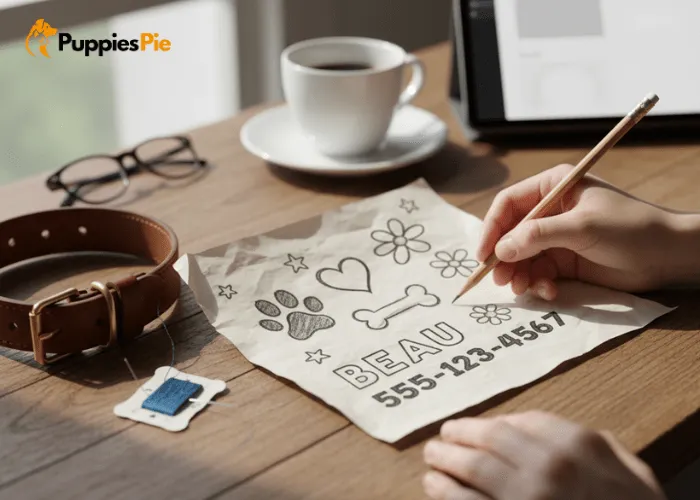
- A small paw print
- A heart
- A bone outline
- Stars or flowers
Sketch it out on paper first. Keep it simple, small space means clean lines matter more than detail.
Step 2, Mark the Collar
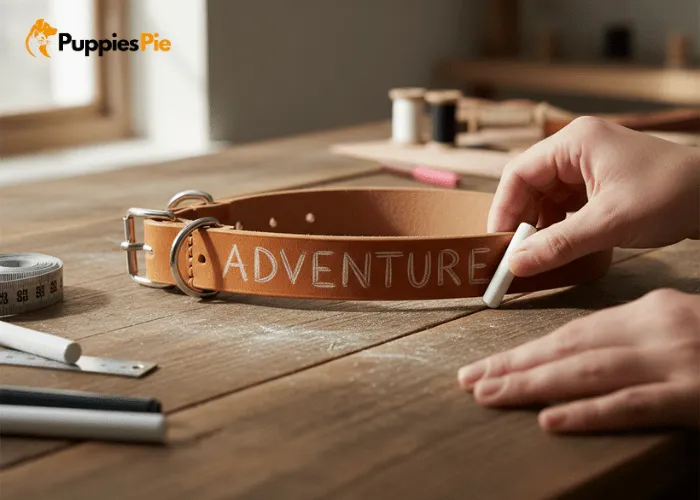
Lay the collar flat and use chalk or a washable marker to lightly sketch your design or letters. Make sure it’s centered and spaced evenly. If you’re doing text, leave a bit of space near the buckle and D-ring to prevent the design from hiding when worn.
Step 3, Thread Your Needle

Cut a length of embroidery floss around 18 inches long. Longer than that, and it’ll tangle easily. Split the thread if you want thinner lines (most embroidery flosses have six strands, two or three is ideal for collar work).
Step 4, Start Stitching
Insert the needle from the underside of the collar so the knot stays hidden. Use a backstitch for clear, strong lines.
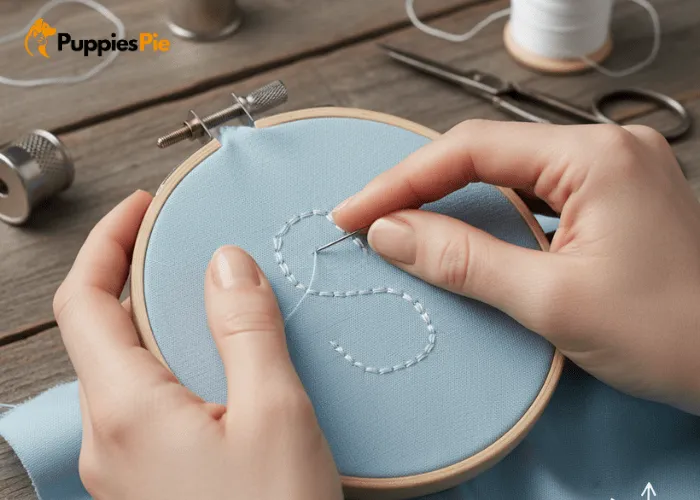
How to backstitch:
1. Bring the needle up through the fabric.
2. Move one stitch length forward and push the needle back down.
3. Bring it up again one stitch ahead and insert it into the end of the previous stitch.
Repeat until you’ve completed your word or design.
Step 5, Lock and Finish Your Thread
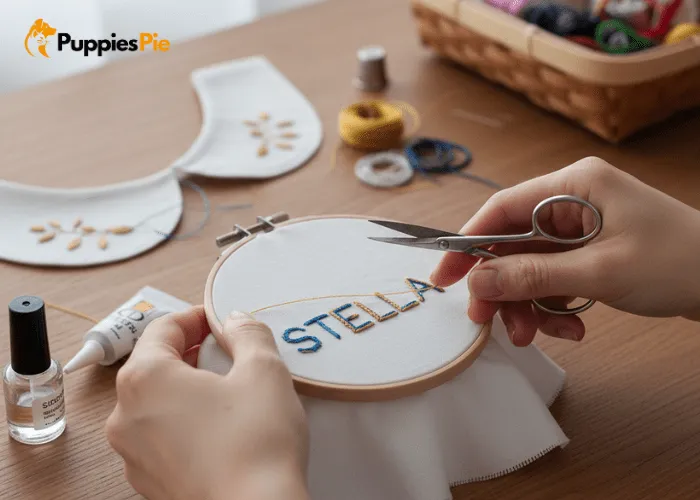
When you reach the end, tie a small knot on the underside of the collar. Trim the thread close to the knot and dab a touch of clear nail polish or fabric glue to prevent fraying.
If you’re doing multiple colors (like outlining the name or adding shapes), finish one section before starting the next to keep the back tidy.
Step 6, Add Details (Optional)
Once the main embroidery is done, you can:
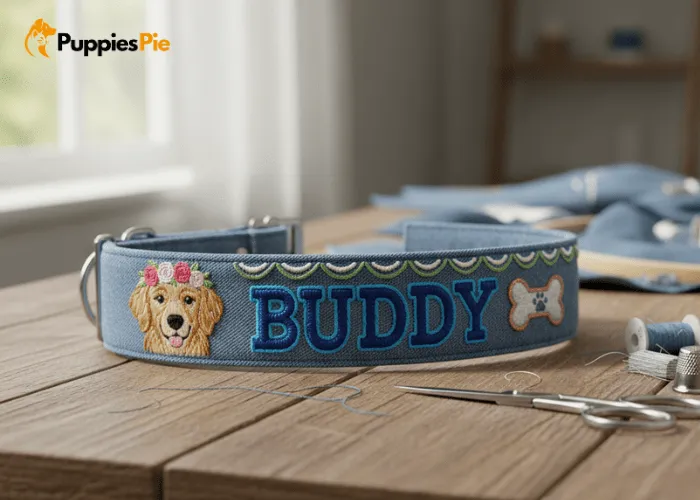
- Outline the name with a contrasting color.
- Add a small border or symbol next to it.
- Stitch a decorative line or wave along the collar edge.
Just don’t overcrowd it, a few details go a long way on a narrow surface.
Pro Tips for a Clean, Professional Look
- Use a tight hoop if possible, it keeps the collar fabric stable.
- Keep your stitches short and even for neat lettering.
- Use a fabric stabilizer under the collar if the fabric is soft or stretchy.
- If it’s your first time, practice on scrap fabric before working on the real collar.
- For thick collars, a thimble and pliers help push and pull the needle smoothly.
The first attempt may not be perfect, but the second one will look like something from a boutique.
Customization Ideas to Make It Unique
If you want your dog’s collar to really stand out, try one (or several) of these creative twists:
1. Double Color Stitching
Outline the name in one color and fill it with another. Example: white letters outlined in red for a bold pop.
2. Gradient Effect
Blend thread colors, start light and move darker across the name. It’s subtle but eye-catching.
3. Themed Embroidery
Match the collar to your dog’s personality:
- Adventure dogs: Compass, trees, or mountain outlines.
- City dogs: Simple line art or initials.
- Playful pups: Bright colors, hearts, or cartoon bones.
If you love upcycling old clothing into pet accessories, consider making a Dog Jacket using an old sweater for a warm, personalized touch.
4. Holiday Touches
Switch up your embroidery for holidays, red and green for Christmas, orange and black for Halloween, or pastel tones for spring walks.
Maintenance & Care Tips
Your embroidered collar will last a long time if you treat it right.
- Hand wash only: Machine washing can distort stitches. Use mild soap and warm water.
- Dry flat: Avoid dryers, the heat can weaken thread fibers.
- Trim loose ends: If a thread starts to fray, trim and dab with fabric glue.
- Reinforce high-wear areas: If the embroidery sits near the buckle or D-ring, go over it again once a year.
A bit of care keeps your hard work looking new, even after countless walks and rainy days.
When to Replace or Redo Your Embroidery
Even the best stitching can fade over time, especially if your dog’s an outdoor explorer. Here’s when you might want to refresh or redo it:
- The thread has faded or discolored.
- The collar material is fraying or stretched.
- The embroidered name is no longer readable.
Luckily, redoing it is easy, just unpick the old thread and start fresh with a new design or color scheme.
Common Mistakes and How to Avoid Them
1. Starting without marking: Leads to uneven spacing. Always sketch it first.
2. Pulling too tight: Causes puckering or warping. Keep your tension consistent.
3. Using too thick thread: Makes small letters look clumsy. Split the thread for finer detail.
4. Stitching near metal parts: Can damage needles, leave at least half an inch of space.
5. Not securing the back properly: Results in loose, messy threads that catch easily.
A little patience up front saves a lot of frustration later.
Cost Comparison: DIY vs. Custom Store Embroidery
Option
DIY Embroidery
Store-Bought Embroidered Collar
Cost
$3–$8
$20–$40
Time Required
1–2 hours
0 hours
Personalization
Fully customizable
Limited options
You save money, add personality, and get bragging rights every time someone asks, “Where’d you get that collar?”
Eco-Friendly Advantage of DIY Embroidery
Instead of tossing out an old collar, embroidery lets you give it new life. It’s a simple form of upcycling that reduces waste, and since you’re using small bits of thread and fabric you already have, there’s almost zero environmental impact.
For another practical and eco-friendly project, you can also try making a Dog Raincoat using repurposed fabric to keep your pup dry in style.
Every small act of reuse adds up. Plus, handcrafting things for your pet builds a stronger emotional bond, it’s personal, intentional, and sustainable.
Creative Add-Ons to Pair with Your Embroidered Collar
Take your project further by adding matching accessories:
- Embroidered leash handle: Stitch initials or small motifs to match the collar.
- Mini charm tag: Attach a small embroidered keychain to the collar ring.
- Bandana match: Use leftover thread to decorate a small fabric bandana for a coordinated look.If you enjoy matching accessories, you might also love creating simple Dog Bandanas that pair beautifully with embroidered collars.
These subtle extras make your DIY setup look like a designer set.
Why This DIY Project Is Worth It
You’re not just decorating a collar, you’re creating something personal, durable, and meaningful. Unlike factory-made accessories, dog collar embroidery carries your time and effort, which somehow makes it feel warmer and more “yours.”
It’s a small project that combines creativity, practicality, and love for your pet, a trifecta that sums up why DIY pet crafts are so satisfying.
Conclusion:
An embroidered dog collar says a lot, that you care about your dog’s comfort, safety, and style. It’s affordable, fun, and totally doable, even if you’ve never held an embroidery needle before.
Start with your dog’s name or a simple heart symbol. Once you get the hang of it, you can customize every collar they own. The end result? A functional accessory that tells your dog’s story, one stitch at a time.
One Comment