If you’ve ever fumbled with a torn bag of treats or left them out long enough to go stale, you already know how frustrating it can be. A Mason Jar Treat Dispenser is a clever, inexpensive fix that keeps your dog’s snacks fresh and easy to grab. It’s part décor, part functional storage, and completely satisfying to make yourself.
In this guide, you’ll learn how to build your own dog treat dispenser using simple materials, no power tools or advanced skills needed. You’ll also get customization ideas, safety tips, and creative upgrades to make it truly your own. By the end, you’ll have a durable and adorable dispenser your dog (and kitchen) will thank you for.
Why Make a Mason Jar Treat Dispenser?
Store-bought treat dispensers often look generic, break easily, or don’t seal properly. Mason jars, on the other hand, are durable, airtight, and blend beautifully with any space.
Here’s why this DIY project makes sense:
- Keeps treats fresh: The airtight seal prevents moisture and pests.
- Eco-friendly: Repurposes jars you might already have.
- Customizable: You control the size, design, and dispensing style.
- Budget-friendly: Costs a fraction of what pet stores charge.
- Stylish: Looks great on the counter instead of hidden away.
Beyond function, it’s also fun. You’re crafting something by hand that turns daily treat time into a little ritual.
What You’ll Need to Build It
The best part about a Mason Jar Treat Dispenser is how simple the setup is. Most of what you need is already lying around your home.
Basic materials:
- 1 Mason jar (quart or half-gallon size)
- 1 small pet food dispenser base or gravity feeder base (from a thrift store or old setup)
- Drill (or screwdriver and hammer)
- Metal or plastic spigot adapter (optional, for advanced versions)
- Non-toxic sealant or glue
- Treats or kibble to test the flow
Optional materials for customization:
- Wooden stand or crate (for elevation)
- Paint or chalk labels
- Decorative ribbon or tags
- Screw lid dispenser or flip-top lid
Safety note: Always ensure materials are food-safe and non-toxic. Avoid using paint or adhesives not labeled as such.
What You’ll Need to Build It
The best part about a Mason Jar Treat Dispenser is how simple the setup is. Most of what you need is already lying around your home.
Basic materials:
- 1 Mason jar (quart or half-gallon size)
- 1 small pet food dispenser base or gravity feeder base (from a thrift store or old setup)
- Drill (or screwdriver and hammer)
- Metal or plastic spigot adapter (optional, for advanced versions)
- Non-toxic sealant or glue
- Treats or kibble to test the flow
Choosing the Right Mason Jar Size
Mason jars come in several standard sizes, pint, quart, and half-gallon. The right one depends on your dog’s size and treat volume.
Small dogs (under 20 lbs): Pint or quart jar, compact and easy to handle.
Medium dogs (20–50 lbs): Quart jar, holds enough for a week’s worth of treats.
Large dogs (50+ lbs): Half-gallon jar, more storage and fewer refills.
If you have multiple pets, you might even make a multi-jar setup, each labeled for a specific pet or treat type.
Step-by-Step: How to Make a Mason Jar Treat Dispenser
Building your dispenser only takes a few minutes once you’ve got the materials ready.
Step 1: Clean and Dry the Mason Jar
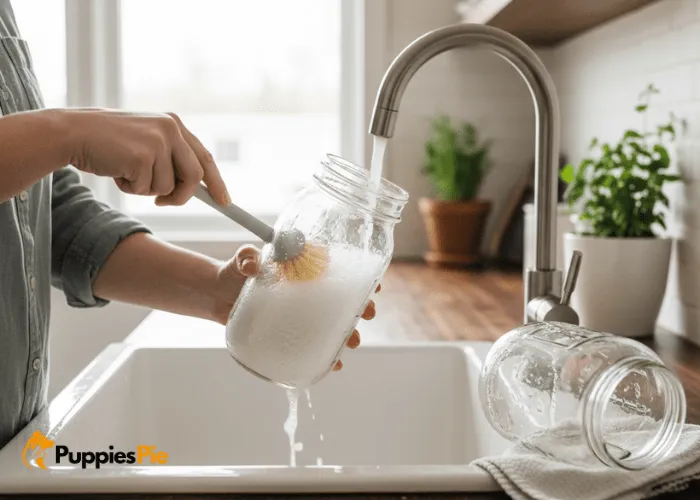
Wash the jar thoroughly with warm, soapy water to remove dust and residues. Let it dry completely, moisture can ruin treats over time.
Step 2: Prepare the Dispenser Base
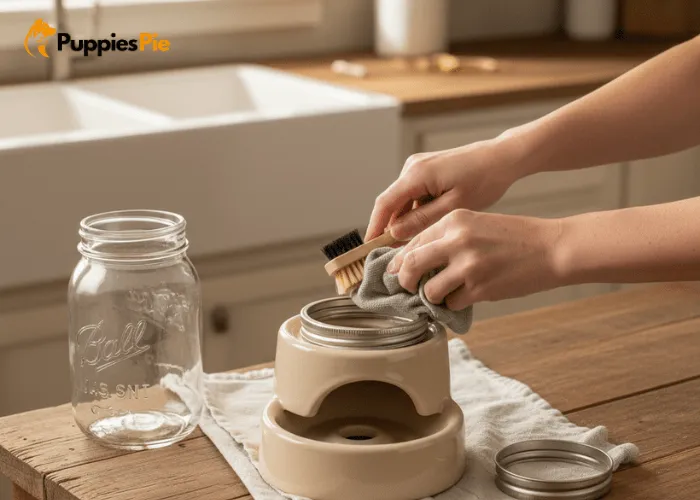
If you’re using a pre-made dispenser or feeder base, clean it too. Remove any old adhesive or dust. Ensure the opening matches your Mason jar’s mouth size.
Step 3: Create the Opening
You’ll need a hole in the dispenser base or the lid to allow treats to fall through.
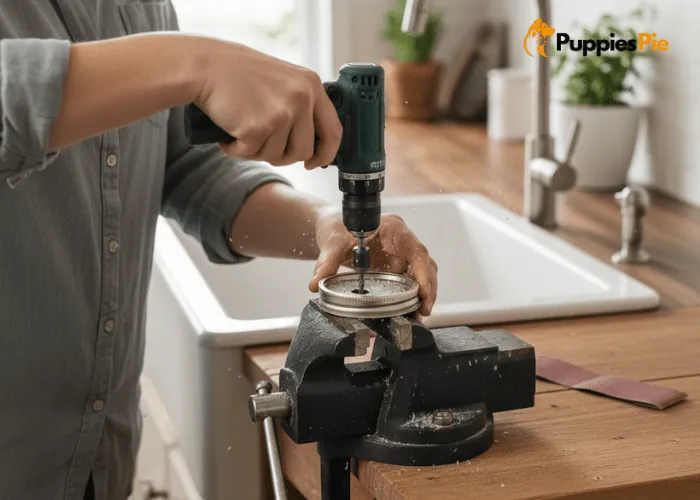
- For gravity-style dispensers, drill a 1-inch hole in the lid’s center.
- If you’re using a flip-top cap, skip this step and use the built-in opening.
Make sure the hole is smooth, sand the edges if necessary to prevent treat crumbs from catching.
Step 4: Attach the Jar to the Base
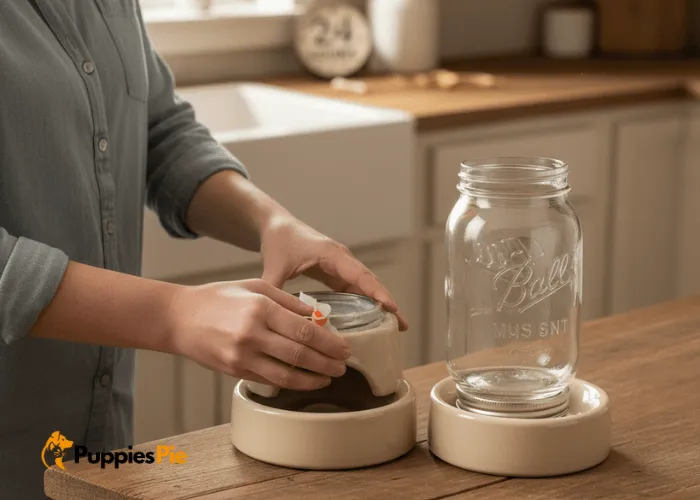
Use food-safe adhesive or a sealing ring to secure the Mason jar’s lid to your base. Make sure it’s airtight but still removable for refilling.
Let the adhesive cure as directed (usually 24 hours). Once it’s secure, flip the jar upside down onto the base.
Step 5: Fill and Test the Flow
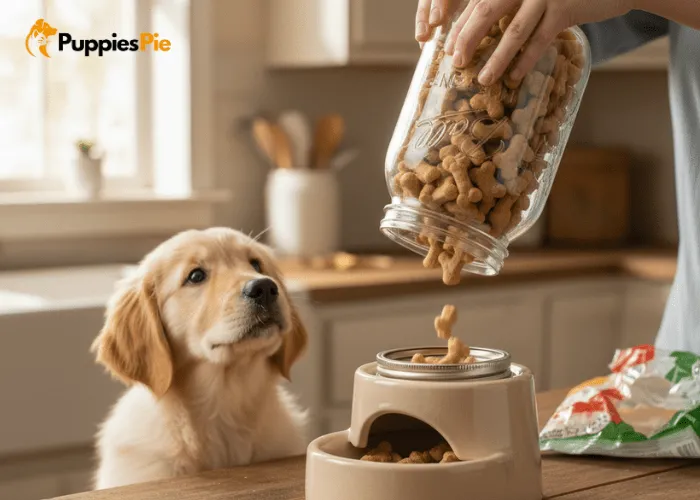
Pour in your dog’s favorite treats and see how easily they come out. Adjust hole size or treat size if it jams. For larger treats, a wider hole (1.5 inches) might be needed.
Step 6: Decorate and Personalize
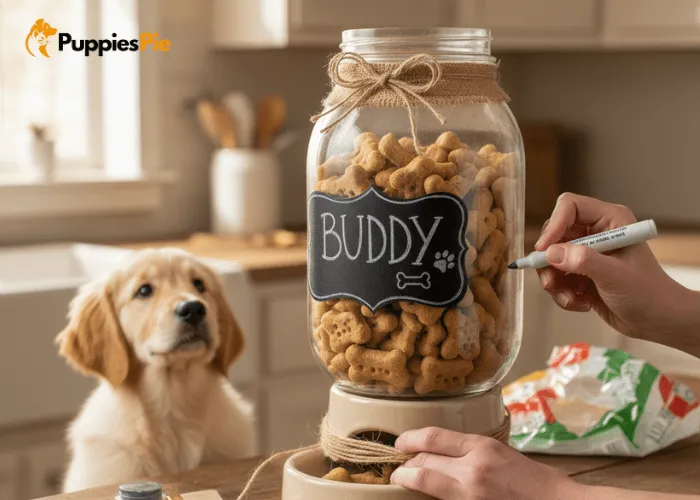
Now the fun part, make it your own. Paint the lid, wrap twine around the base, or add a chalkboard label with your dog’s name.You’ve just built your own functional piece of pet décor.
Ideas for Customizing Your Treat Dispenser
Customization turns a simple jar into something both personal and practical.
Design ideas:
- Rustic look: Use distressed wood, burlap ribbon, and neutral tones.
- Modern style: Go minimal with matte black paint and clean labels.
- Whimsical theme: Use bright colors, paw print decals, or tiny dog bone stickers.
- Multi-tier setup: Stack jars vertically for different treats (training treats, chews, biscuits).
Functional upgrades:
- Add a spigot-style lid for precise dispensing.
- Install a spring flap to prevent treats from spilling.
- Use a wooden base with feet to elevate it off countertops.
Creativity is half the charm. Make it match your space, and your dog’s personality.
For inspiration on personalizing your jar, check out our Treat Jar Label Ideas to make each dispenser both stylish and easy to identify.
Dog Treat Ideas to Use With the Dispenser
The jar’s design works best with dry or semi-dry treats that don’t stick or crumble easily.
Best treat types:
- Crunchy training treats
- Small dog biscuits
- Dry kibble
- Dehydrated meat bites
- Freeze-dried liver or chicken
Avoid:
- Moist or oily treats (can mold quickly)
- Large jerky pieces
- Sticky items like peanut butter bites
If you like rotating treats, make smaller batches and clean the jar between uses.
Making the Dispenser Puppy-Proof
If you’ve got a clever pup who loves problem-solving, they may try to “hack” the dispenser. A few design tweaks can keep it secure.
Tips for puppy-proofing:
- Use a metal lid instead of plastic, harder to chew.
- Add rubber padding under the base to prevent sliding.
- Secure the jar to a heavier wooden platform.
- Keep it at counter height if your dog is especially sneaky.
Training helps too. Reinforce that the dispenser is for you to use, not them.
Maintenance and Cleaning
Proper cleaning ensures your dispenser stays sanitary and treats remain safe to eat.
Cleaning routine:
1. Empty the jar every 1–2 weeks.
2. Wash the jar, lid, and base with warm, soapy water.
3. Dry thoroughly before refilling.
4. Disinfect occasionally with diluted vinegar or baking soda solution.
Pro tip: Avoid dishwashers if you’ve glued parts together, hand-wash to preserve seals.
Benefits of Using a Mason Jar Treat Dispenser
Besides looking great, this little device solves several daily pet-owner annoyances.
Practical benefits:
- Keeps treats fresher for longer.
- Reduces clutter from treat bags.
- Easy portion control during training.
- Simple to refill and clean.
- Adds a personal touch to your pet care routine.
Bonus: Dogs often get excited by the sound of the jar lid or dispenser, instant recall cue!
Common Mistakes to Avoid
Even simple DIY projects can go sideways if you rush.
Avoid these pitfalls:
- Wrong jar size: Too small and treats won’t flow properly.
- Poorly sealed lid: Leads to stale treats or bug infestations.
- Non-food-safe materials: Paints or glues can leach chemicals.
- Overfilling: Can clog the dispenser opening.
Take your time with assembly and test before finalizing.
Creative Alternatives Using Mason Jars
Once you master the treat dispenser, you can build other pet-related projects using Mason jars.
Try these:
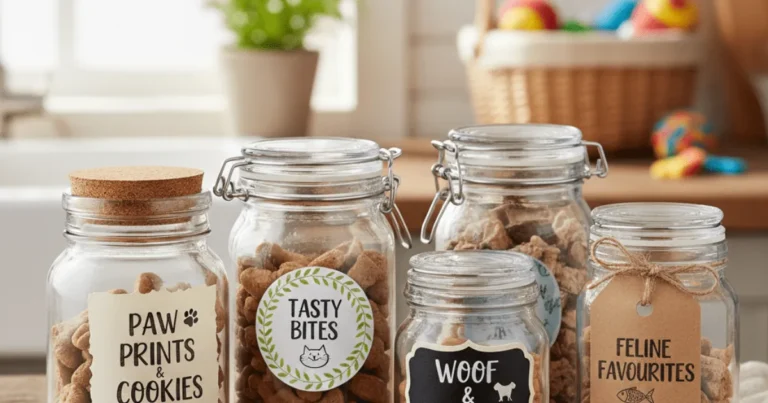
- Dog treat storage jars: Simple airtight jars with chalk labels.If you want more storage options, consider a Treat Box for keeping extra treats organized and easy to access.
- Homemade dog treat mix jars: Layered ingredients for gifting to other dog owners.
- Hydration station: Mason jar with a spigot for outdoor water bowl refills.
- Mini toy jar: For small fetch toys or chews.
The versatility of Mason jars makes them a pet owner’s DIY best friend.
Make It Interactive – DIY Puzzle Treat Dispenser
If you want to level up beyond a basic dispenser, turn your Mason jar into a puzzle toy that releases treats when nudged or rolled.
Simple method:
1. Use a wide-mouth Mason jar and replace the lid with a drilled cap.
2. Insert a few small holes, just big enough for treats to slip through.
3. Fill it halfway with treats and let your dog figure it out.
This encourages problem-solving, slows eating, and adds enrichment to their daily routine. Always supervise to ensure they don’t break the jar.
Using Mason Jars for Homemade Dog Treat Storage
If you make homemade dog treats, the jar serves double duty.
Storage tips:
- Store dry treats in a cool, dark place.
- For baked goods, use parchment paper layers to avoid sticking.
- Refrigerate homemade treats with perishable ingredients.
Label each jar with treat type and date for freshness tracking. Mason jars look great displayed on shelves, so they double as décor.
Sustainability Bonus – Zero Waste Dog Care
DIY projects like this cut down on plastic packaging. Each treat refill skips a disposable container.
Sustainability benefits:
- Reduces plastic waste from store packaging.
- Reuse materials you already have.
- Encourages mindful pet ownership.
- Saves money long-term.
This small change adds up, especially for multi-dog households or frequent treat buyers.You can also make a Portable Water Bottle Dispenser to keep your dog hydrated on walks while continuing your zero-waste, DIY-friendly approach.
Advanced Version – Automatic Mason Jar Treat Dispenser
Feeling ambitious? You can build a motion-activated treat dispenser using your Mason jar base and a few extra gadgets.
You’ll need:
- Small servo motor
- Arduino or Raspberry Pi controller
- Infrared sensor
- Battery pack
- 3D-printed or wooden dispenser cap
When your dog approaches, the sensor releases a treat. It’s a fun weekend project for tinkerers or anyone who loves mixing pets with tech.
Always use sturdy mounting and avoid fragile glass near the dispensing mechanism.
Cost Breakdown – How Much It Really Costs
Let’s compare this DIY project to store-bought dispensers.
Item
Mason Jar
Feeder base or cap
Adhesive/sealant
Paint or décor
TOTAL
Approx. Cost (USD)
$3–$5
$5–$10
$3
$2–$5
$10–$20
Comparable store-bought dispensers range from $25–$60, often with lower-quality seals. That’s a decent saving for a project you can fully personalize.
Dog Behavior Connection – Why Treat Rituals Matter
A treat dispenser isn’t just storage, it becomes part of your dog’s daily rhythm. Dogs thrive on predictable cues and small rewards. When you use a dispenser, the sound and motion form a pattern your dog recognizes.
This consistency:
- Reinforces training.
- Builds anticipation and focus.
- Reduces food guarding by creating routine.
Every time you twist that lid, you’re not just giving a snack, you’re strengthening the bond between you and your pet.
Conclusion
Building a Mason Jar Treat Dispenser blends practicality, creativity, and love. It’s a simple way to bring organization and charm into your pet’s routine. You save money, reduce waste, and get a handmade tool that makes treat time smoother.
Start with one jar, test your design, then expand. Soon, you’ll wonder how you ever lived with torn treat bags and cluttered counters. It’s proof that even small DIY projects can make daily life better, for both you and your dog.